Printable Fuel Log: Free Fuel and Maintenance Pages
A printable fuel log with a page-by-page guide: fuel log, maintenance log, repair record and costs. Free one-page PDF to start. Print on US Letter.
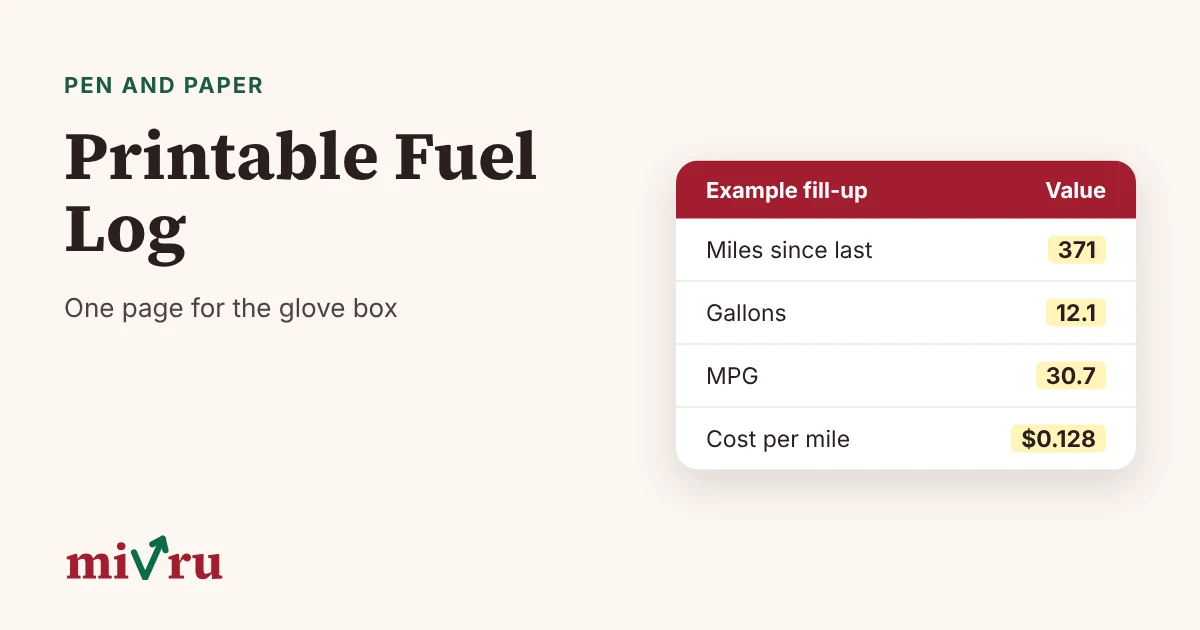
A printable fuel log is the quickest way to start tracking what your car uses: one page in the glove box, a pen, and a minute at each fill-up. This guide shows what to write, how to work out MPG on paper and which other pages are worth printing.
The numbers are made up. Our free fuel and maintenance log is the one-page version of everything here.
What to write at each fill-up
- Date.
- Odometer. The mileage on the dash when you stop.
- Gallons. From the pump.
- Price per gallon and total. From the pump or receipt.
- Miles. This odometer minus the last one.
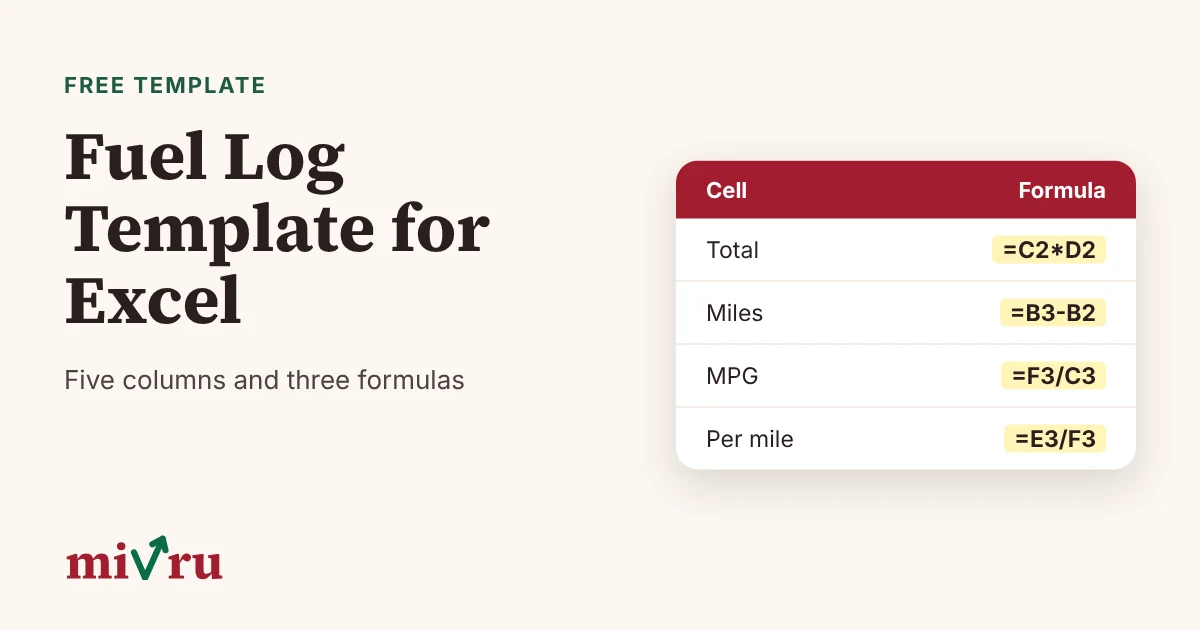
- MPG. Miles divided by gallons.
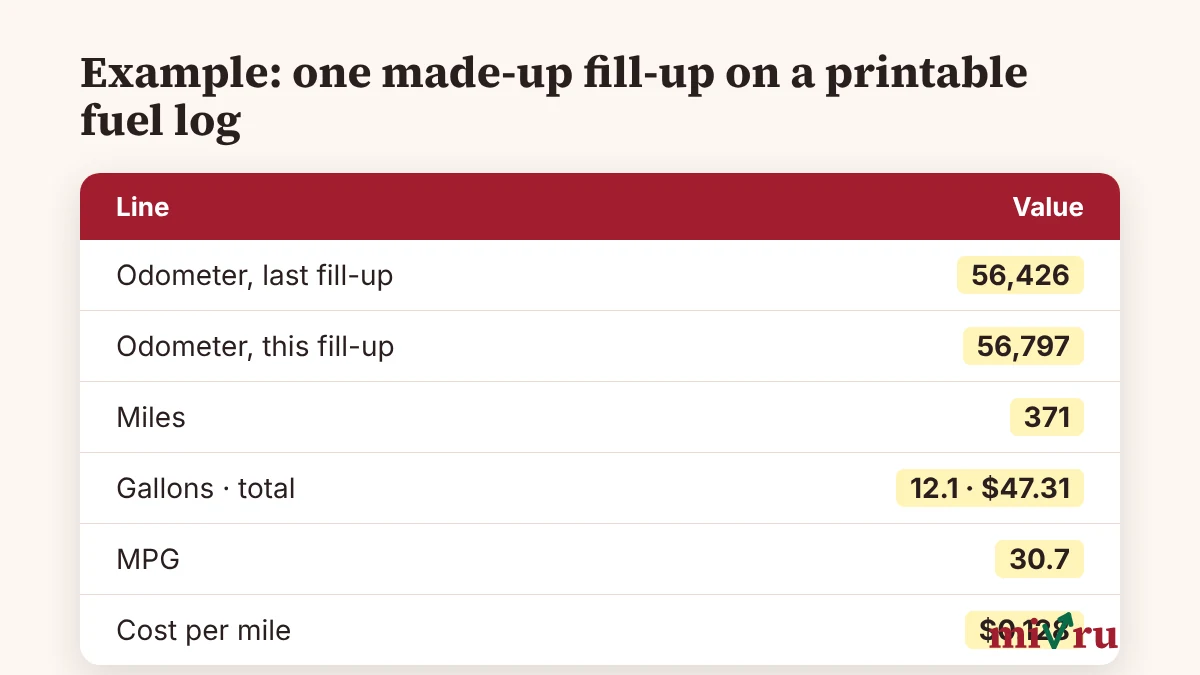
Example (made up): Last fill-up odometer 56,426. This fill-up 56,797 with 12.1 gallons for $47.31. Miles: 56,797 - 56,426 = 371. MPG: 371 / 12.1 = 30.7. Cost per mile: $47.31 / 371 = $0.128.
For a fair MPG, fill the tank each time. If you only top up, the miles and gallons do not match.
Why MPG changes
A single fill-up is noisy. Weather, traffic, tire pressure and the way you drive all change it. The US government's fuel economy site says keeping tires inflated to the recommended pressure improves gas mileage by about 0.6% on average and that using the manufacturer's recommended motor oil can improve it by 1% to 2%. Look at the average of five or more fill-ups, not one.
Page 2: Maintenance log
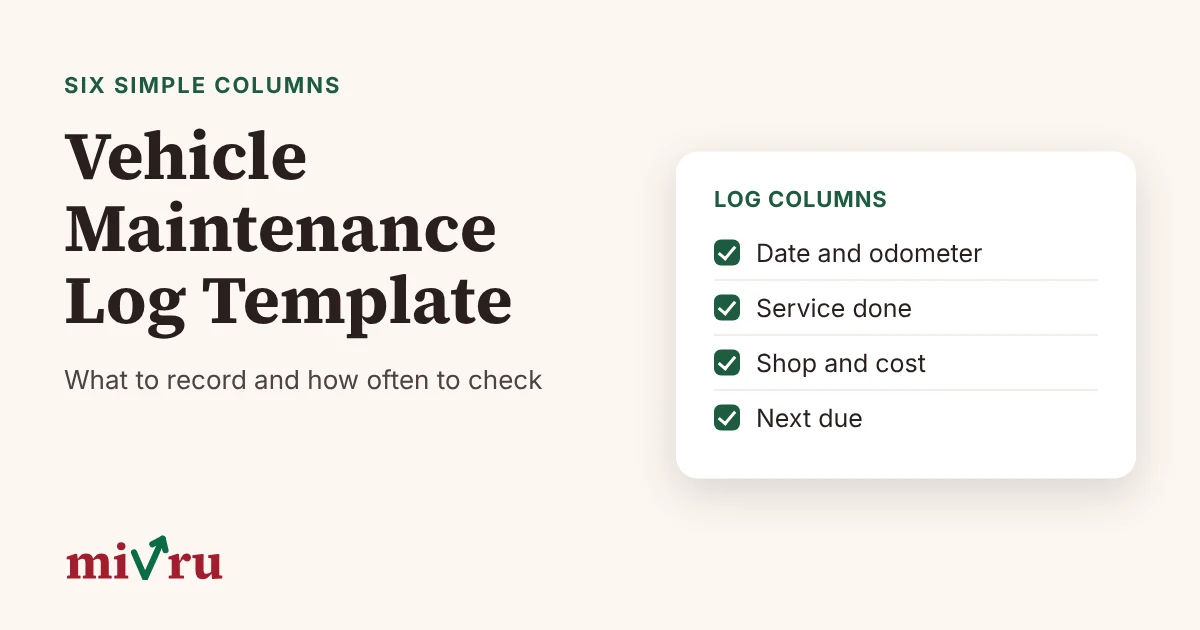
A table with date, odometer, service, shop, cost and next due. This is where oil changes, tire rotations, brakes and batteries go. See our vehicle maintenance log template guide for what to record and how often to check things.
Page 3: Repair and parts record
Bigger jobs: what failed, who fixed it, what it cost and the warranty end date. Warranty dates are the most useful thing on this page because a repair that fails inside its warranty should not cost you twice.
Page 4: Monthly costs
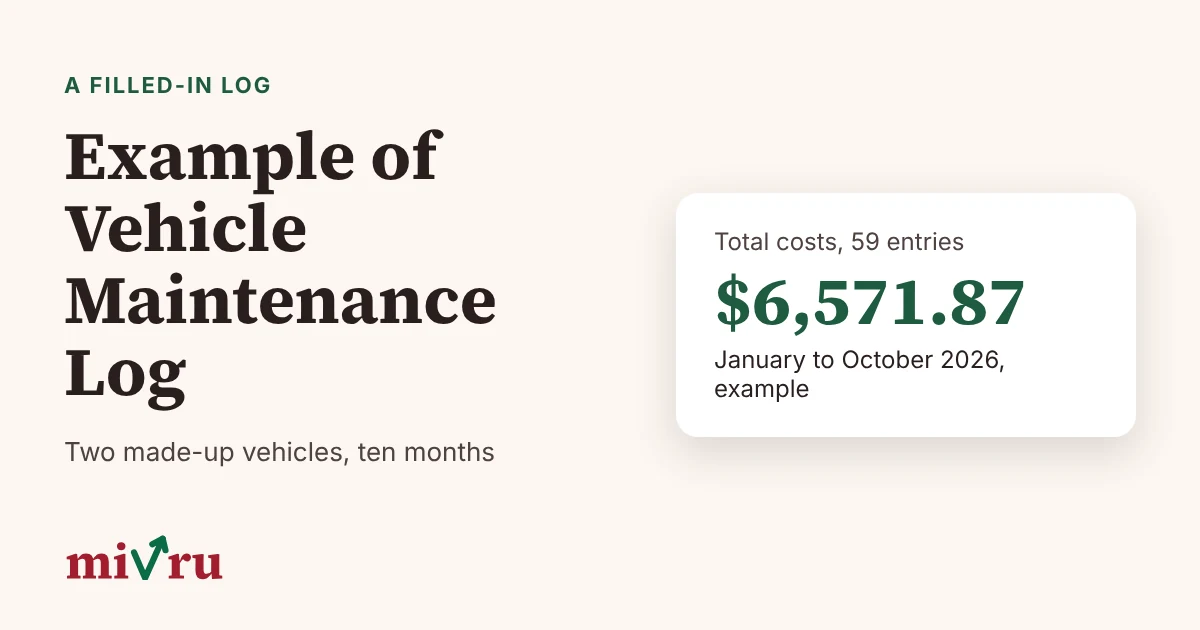
A grid with a row for fuel, oil, tires, repairs, insurance, registration and parking, and a column for each month. At the end of a month, add up the receipts and write the totals. In our vehicle maintenance log example, the two made-up vehicles cost $6,571.87 over ten months, and January was the most expensive month at $1,603.93 because of insurance.
Page 5: Routine checks
A checklist: tire pressure, lights, wipers and fluids monthly; oil and tire rotation every few months; brakes, air filter, registration and insurance yearly. Your owner manual has the intervals for your vehicle, so follow it and write the date and mileage when you do each one.
From paper to totals
Paper cannot add up a year for you. Once a month, copy the totals into a simple spreadsheet. If you want to build one, read the vehicle expense log in Excel guide. AAA's 2025 Your Driving Costs study put the average cost of owning and operating a new vehicle at $11,577 a year, including costs a log does not capture such as depreciation. A log shows your own running costs.
Mileage and taxes
If you drive for business or other qualifying reasons, the IRS publishes standard mileage rates that change from year to year. Keep dates, odometer readings and the purpose of each trip. A fuel log helps with records, but it is not tax advice: ask a tax professional what applies to you.
Related pages
If you also print a bill page, see our printable bill tracker, and for everyday spending the printable expense tracker.
Three formulas for the pump
| What | How | Example from above |
|---|---|---|
| Miles driven | This odometer reading minus the last one | 56,797 - 56,426 = 371 |
| MPG | Miles divided by gallons | 371 / 12.1 = 30.7 |
| Cost per mile | Cost divided by miles | $47.31 / 371 = $0.128 |
The example is made up. Use a calculator and write the three numbers on the page at each fill-up. A single reading can be off, so look at the average of several fill-ups, not one.
Why one fill-up can mislead
If you do not fill the tank to the same point each time, one fill-up can be too low and the next too high. The two roughly cancel out, so the average over several is more accurate. Always record the odometer, and try to fill up at the same pump and to the same click.
What to do with the numbers
- Watch the MPG over time. A fall that lasts may be worth getting checked.
- Compare vehicles. Cost per mile lets you compare a small car with a truck.
- Plan trips. Divide the miles by your MPG to see the gallons, and multiply by the price.
- Keep the pages. A log of fuel and service helps if you sell the car.
Where to keep the log
Keep the page in a folder or clipboard in the glove box with a pen. At each fill-up, write the date, the odometer, the gallons and the cost before you drive off. Once a month, bring the pages home and copy the totals to the monthly costs page. If you keep the pages for the life of the car, you will have a record of what it really cost to run.
Get the full printable set
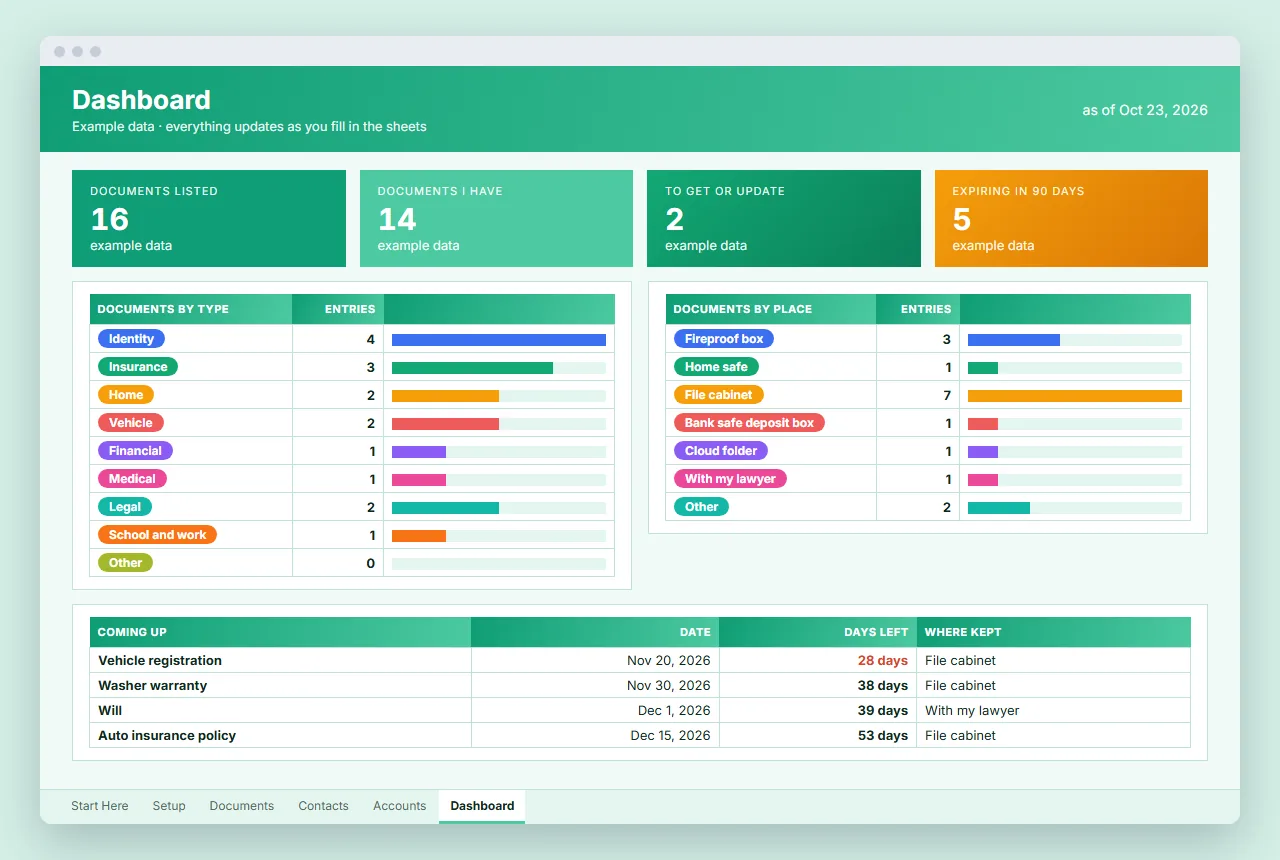
The Mivru Vehicle Expense, Fuel & Maintenance Log includes an 11-page printable in color and black and white (vehicle information, two fuel log pages, a maintenance log, a repair and parts record, monthly costs, a yearly summary and routine checks), plus a spreadsheet for Excel and Google Sheets with a dashboard, miles, MPG and cost per mile. See the Vehicle Expense, Fuel & Maintenance Log.
Frequently asked questions
Is there a free printable fuel log?
Yes. Mivru has a free one-page PDF with a fuel log table and a routine maintenance checklist. You get the download link when you join the email list.
How do I use a printable fuel log?
At every fill-up write the date, odometer, gallons and price. Work out MPG by dividing the miles since the last fill-up by the gallons you just added.
What size paper does it use?
US Letter, 8.5 by 11 inches. It fits a glove box folder or a small three-ring binder.
Where should I keep it?
In the glove box in a plastic sleeve or folder, so it is there at the pump. Copy the numbers into a spreadsheet at the end of the month if you want totals.
Should I use paper or a spreadsheet?
Paper is quick at the pump. A spreadsheet adds totals, months and cost per mile. Many people use both.