Vehicle Maintenance Log Template: What to Record
A vehicle maintenance log template guide: the columns to use, how often to check each part and what to record. Free fuel and maintenance log included.
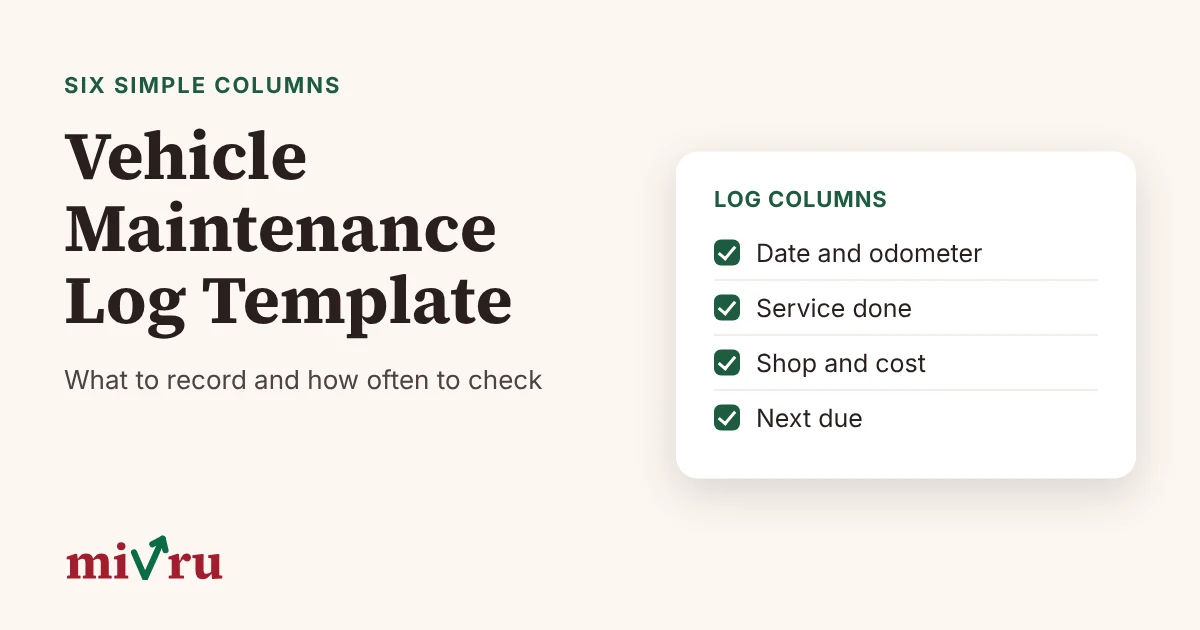
A vehicle maintenance log template is a simple table you fill in every time something is done to your car: the date, the odometer, what was done, who did it, what it cost and when it is due next. This guide explains which columns to use, what to record and how to keep the log going for years.
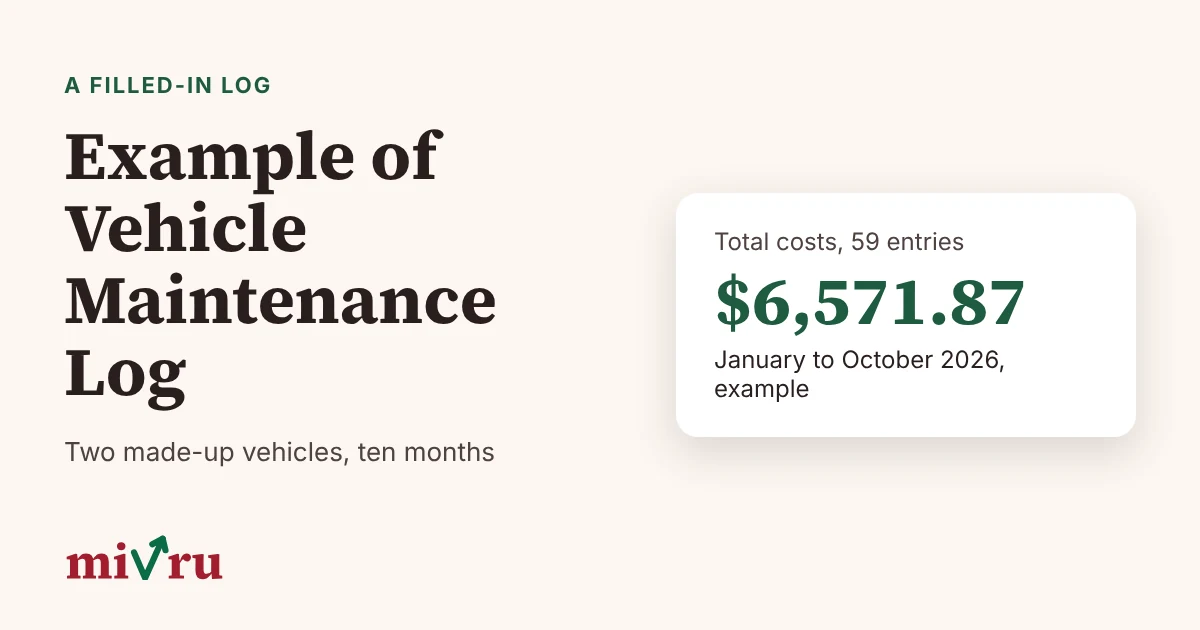
The numbers in the examples are made up. For a filled-in version, see our vehicle maintenance log example.
Why bother keeping a log
Memory is a poor record of car care. Was the last oil change in June or August? When were the tires rotated? A log answers those questions in seconds, and it has three other uses:
- Costs stop being a surprise. A year of small bills adds up. AAA's 2025 Your Driving Costs study put the average cost of owning and operating a new vehicle at $11,577 a year, and a log shows what the maintenance part of that is for your own car.
- Fewer missed services. A "next due" column turns into a short to-do list.
- A better story when you sell. A dated record of oil changes and repairs is easy to show a buyer.
The 6 columns every log needs
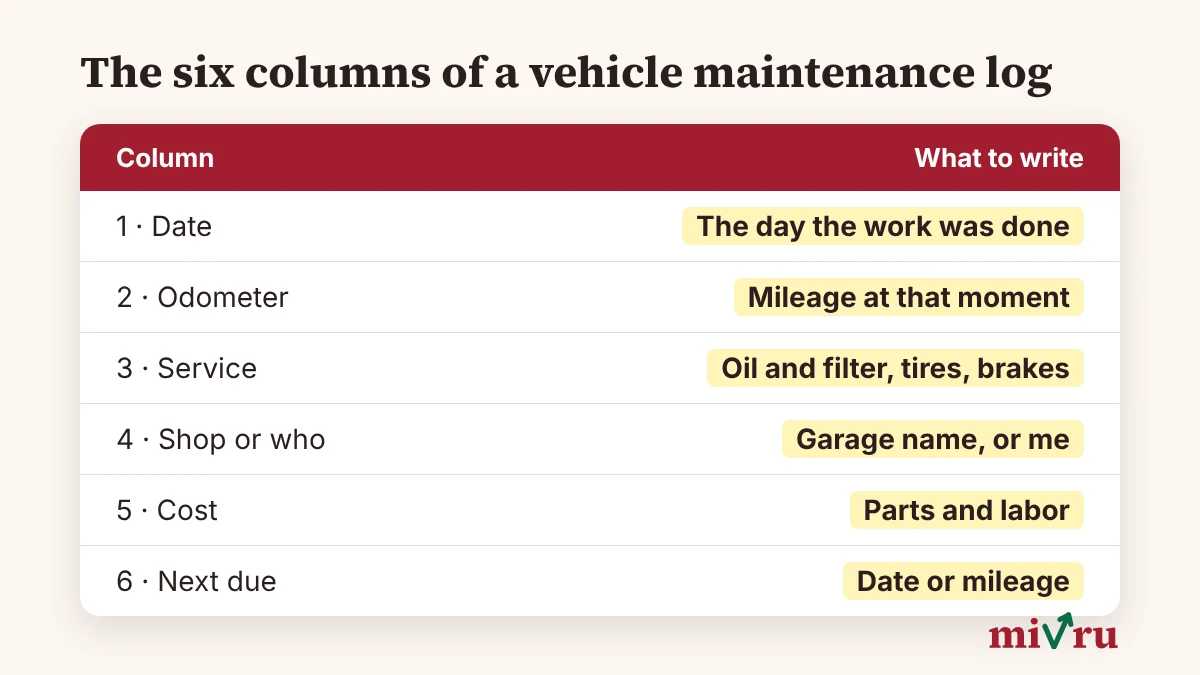
- Date. The day the work was done, not the day you wrote it down.
- Odometer. The mileage at that moment. This is the most useful number because service is often due by mileage as well as by time.
- Service. What was done: oil and filter, tire rotation, brake pads, battery, wiper blades.
- Shop or who. The garage, or "me" if you did it yourself.
- Cost. What you paid, including parts and labor.
- Next due. The date or mileage for the next time. If you do not know, check your owner manual.
If you have more than one vehicle, add a seventh column for the vehicle, or keep a separate page for each.
What to record, by category
Oil and fluids. Oil changes, coolant, brake fluid, transmission fluid, washer fluid. Note the oil grade. The US government's fuel economy site says that using the manufacturer's recommended grade of motor oil can improve gas mileage by 1% to 2%, so it is worth writing down.
Tires. Rotations, replacements, alignments and repairs. Write the tire pressure you set. The same site says proper inflation improves mileage by about 0.6% on average, and that the right pressure is on the sticker in the driver door jamb or glove box, not the maximum number on the tire.
Brakes and suspension. Pads, rotors, shocks, anything done to stop or steer.
Battery and electrical. New battery, bulbs, fuses, alternator or starter.
Filters and belts. Engine air filter, cabin filter, serpentine belt.
Inspections and paperwork. State inspection, emissions test, registration, safety recalls.
Repairs. Anything not on the schedule. Write what failed and what fixed it, so a pattern is easy to spot.
How often to do each job
There is no single schedule that fits every vehicle. Your owner manual lists the intervals for your engine and driving conditions, and a shop can tell you if heavy city driving or towing means you should do things sooner. A simple rhythm many drivers use is:
- Every month: check tire pressure, lights, wipers and fluid levels.
- Every few months: oil change and tire rotation, as your manual says.
- Every year: brake check, air filter, registration and insurance renewal.
Write these into the log's "next due" column so the answer is on the page.
Paper or spreadsheet
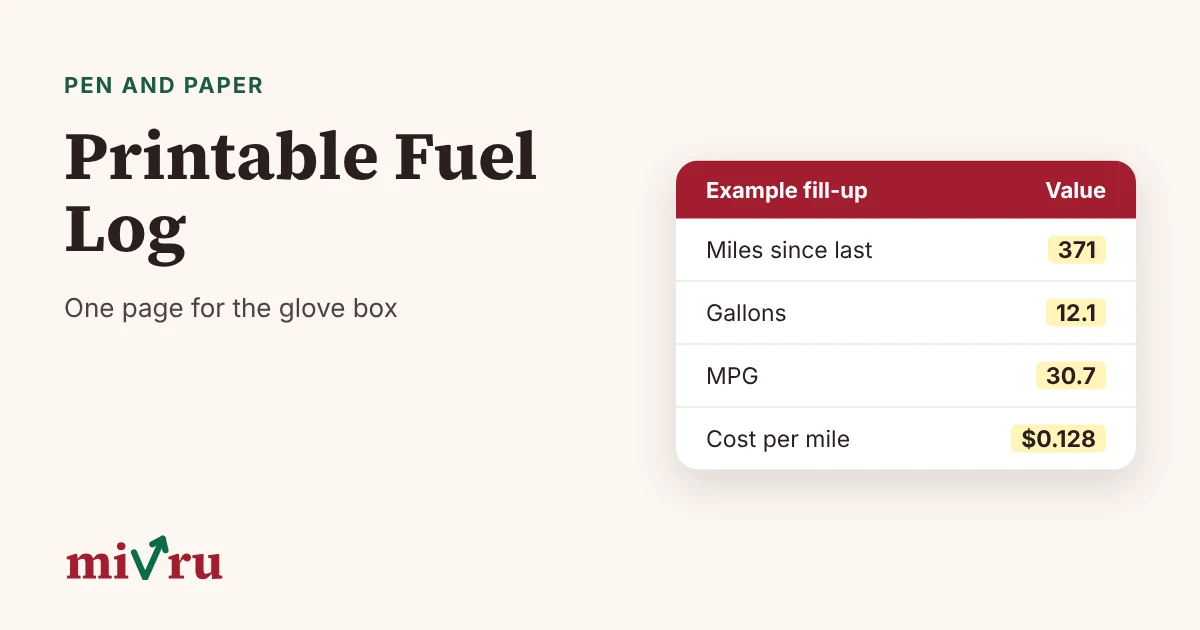
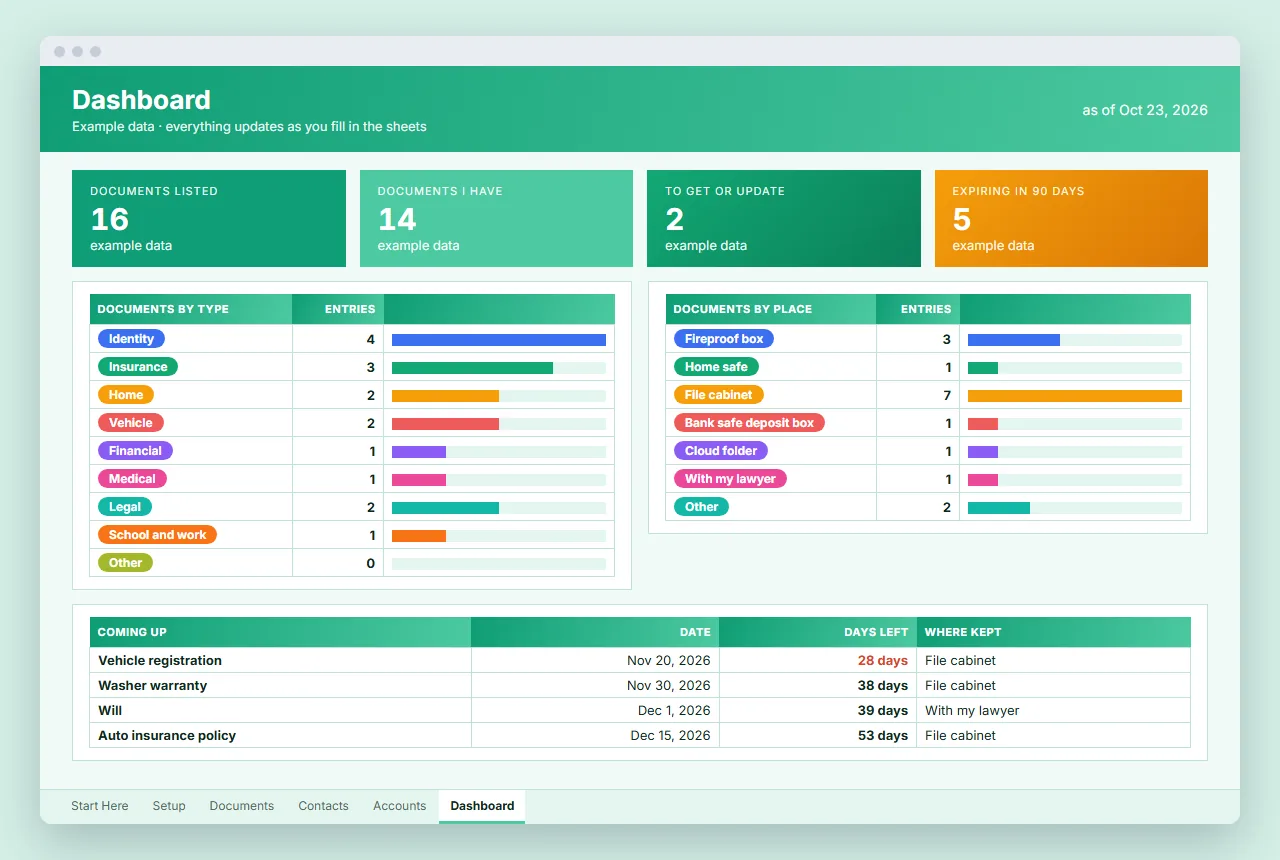
A paper log in the glove box is easy to fill in and works anywhere. A spreadsheet can add up costs by month and category, and a dashboard can show what you spent on tires versus fuel. Many people keep a printable log in the car and a spreadsheet at home. Our free fuel and maintenance log is a one-page printable you can start with today.
Starting from today
You do not need to recreate the past. Write today's date and the current odometer in the first row, then add the services you remember and can prove with receipts. From there, every service gets a line. In a year you will have a useful record.
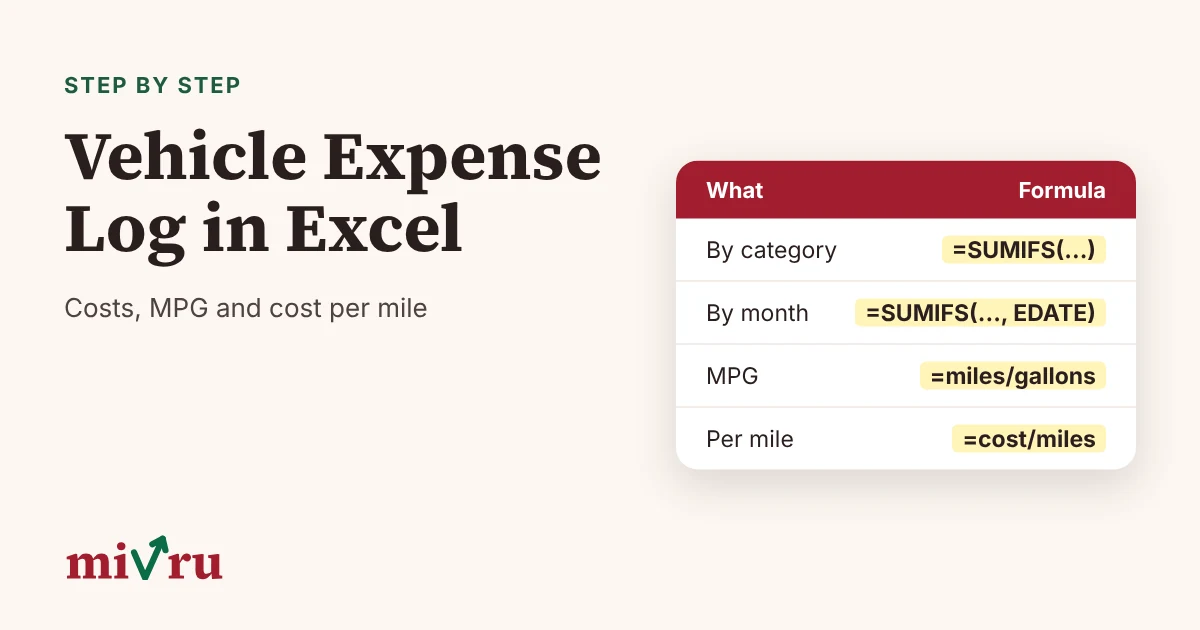
If you want to build the spreadsheet yourself, follow our vehicle expense log in Excel guide. To keep paperwork like registration and insurance dates in one place, see the household binder printables guide. This is general information, not mechanical or tax advice: follow your owner manual.
A made-up row, so you can see how it looks
| Date | Odometer | What was done | Who did it | Cost | Next due |
|---|---|---|---|---|---|
| Example date | Example miles | Oil and filter change | Example garage | Example cost | Example date or miles |
Fill in the first five columns every time, and use the last column to say when you will need to do the job again, in miles, in months or both. Your owner's manual lists what your vehicle needs and how often. Use it, not a general rule, to set the next-due column.
Tips for keeping the log going
- Write it down when you leave the garage. The receipt is in your hand and the details are fresh.
- Keep the receipts. Staple or clip each one to the page.
- Record the odometer, not just the date. Some jobs are due by distance.
- Note what you were told. If the mechanic says a part will need replacing soon, write it in the notes.
- Keep the log with the vehicle's papers, or in a folder on your phone. It is useful when you sell the car, because it shows what was done and when.
Want it ready-made?
The Mivru Vehicle Expense, Fuel & Maintenance Log has one log for fuel, oil, tires, repairs, insurance and registration, a dashboard with a month picker, miles, MPG and cost per mile, and an 11-page printable log in color and black and white. See the Vehicle Expense, Fuel & Maintenance Log.
Frequently asked questions
What is a vehicle maintenance log?
It is a dated record of everything done to a vehicle: oil changes, tires, brakes, repairs and inspections, with the odometer reading, the shop, the cost and when the next service is due.
What columns should a vehicle maintenance log template have?
Date, odometer, service done, shop or who did it, cost, and next due date or mileage. Add a column for the vehicle if you have more than one.
How often should I do maintenance?
Follow the schedule in your owner manual, because it depends on the vehicle and how you drive. The log records when you did each job so you can see when the next one is due.
Why keep a maintenance log?
It helps you remember when jobs were done, catch costs that add up, show a buyer the car was cared for and avoid paying twice for work that is still under warranty.
Should I keep receipts too?
Yes. Keep receipts in an envelope or scan them. The log is the summary and the receipt is the proof.