Medical Expense Tracker Example: A Year of Costs
A medical expense tracker example: 36 made-up entries for a family of four, costs by person and category, HSA and FSA totals and missing receipts.
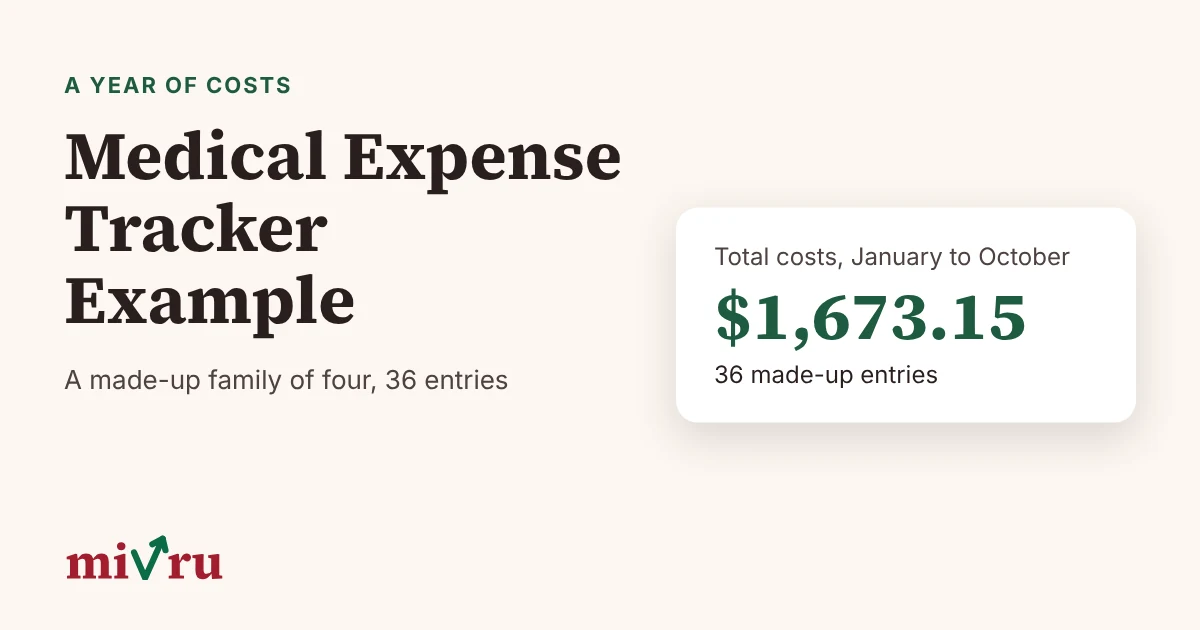
This medical expense tracker example shows a made-up family of four over ten months: 36 entries and $1,673.15 in costs, with totals by person, category and month. Every name and number is invented, and there are no diagnoses. It is a pattern for your own tracker, not medical, tax or insurance advice.
The family
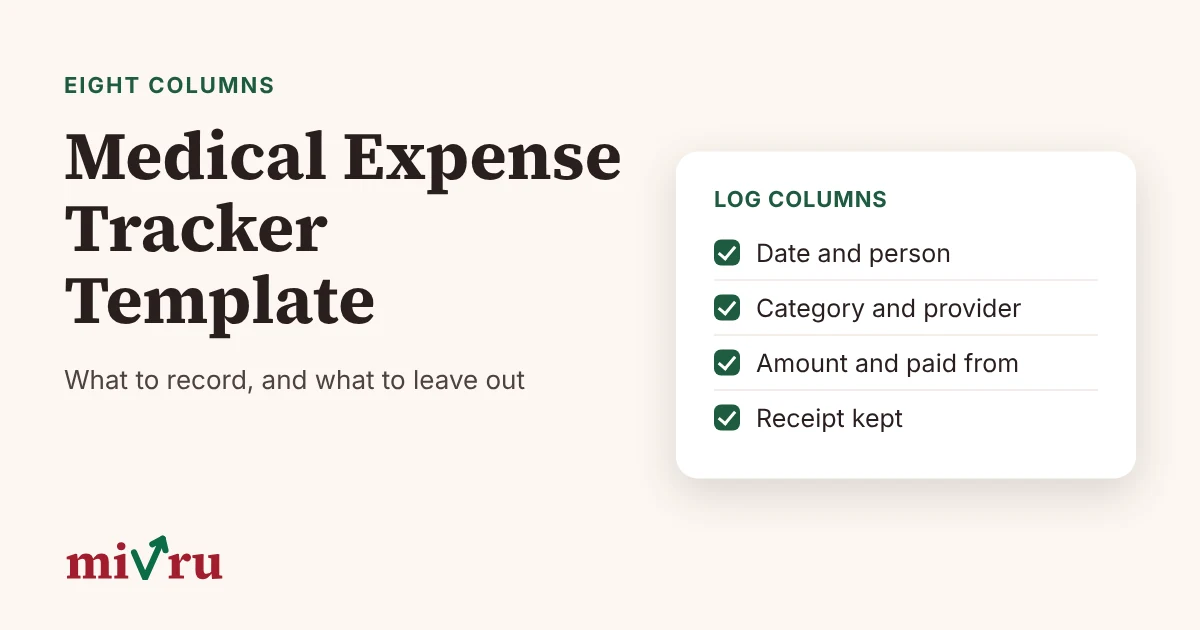
The made-up family has four people: Me, Partner, Child 1 and Child 2. Each entry has a date, the person, a category, the provider, the amount, where the money came from and whether the receipt was kept. The log covers January to October 2026.
Costs by category
| Category | Total | Entries |
|---|---|---|
| Vision | $314.00 | 2 |
| Hospital and lab | $293.00 | 2 |
| Dental | $280.00 | 4 |
| Prescriptions | $273.00 | 15 |
| Doctor visits | $240.00 | 7 |
| Therapy and counseling | $180.00 | 2 |
| Travel to care | $61.00 | 3 |
| Equipment and supplies | $32.15 | 1 |
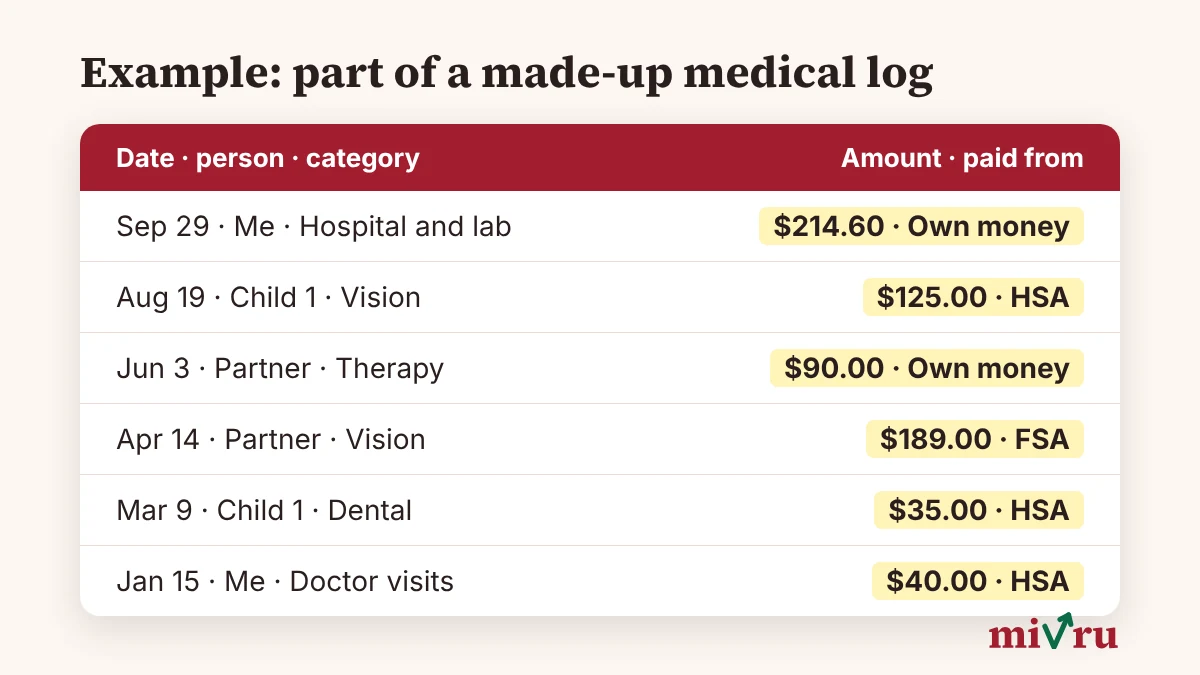
Example: Vision is the biggest category at $314, from two pairs of glasses ($189 and $125 with an eye exam). Prescriptions are the most frequent, with 15 small entries. The two hospital and lab entries include a $214.60 urgent care bill in September.
Costs by person
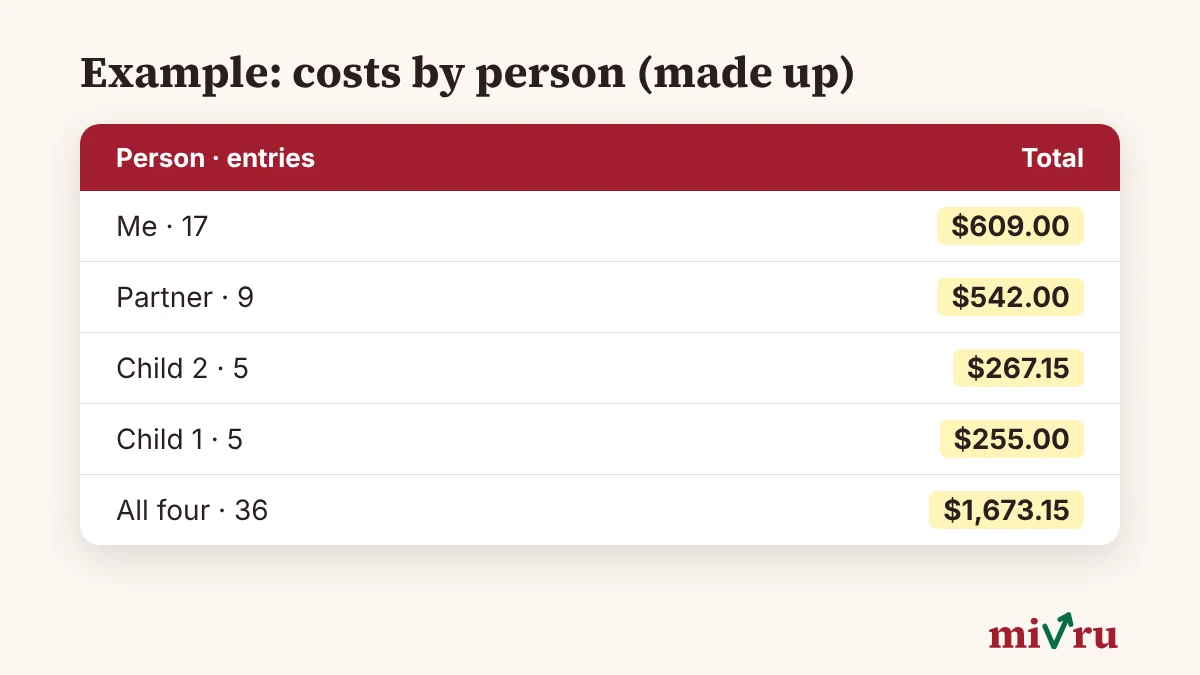
| Person | Total | Entries |
|---|---|---|
| Me | $609.00 | 17 |
| Partner | $542.00 | 9 |
| Child 2 | $267.15 | 5 |
| Child 1 | $255.00 | 5 |
Splitting by person shows that the costs are spread fairly evenly. It is also useful if a plan or an account covers some people and not others.
Month by month
September is the most expensive month at $279.60, followed by June at $245.00 and April at $234.00. July is the cheapest at $49.15. October has three entries so far, totaling $182.00. A month-by-month view helps you plan for months that are usually heavier, such as the start of the school year.
Where the money came from
| Paid from | Total | Entries |
|---|---|---|
| HSA | $795.55 | 22 |
| Own money | $633.60 | 12 |
| FSA | $244.00 | 2 |
The IRS says that for a Health Savings Account you should keep records showing that distributions were used only for qualified medical expenses. The "paid from" column gives the example family a quick total for the HSA, and the receipt column shows whether the records exist. What counts as qualified depends on the rules for the account, so the family would ask its plan administrator.
Receipts
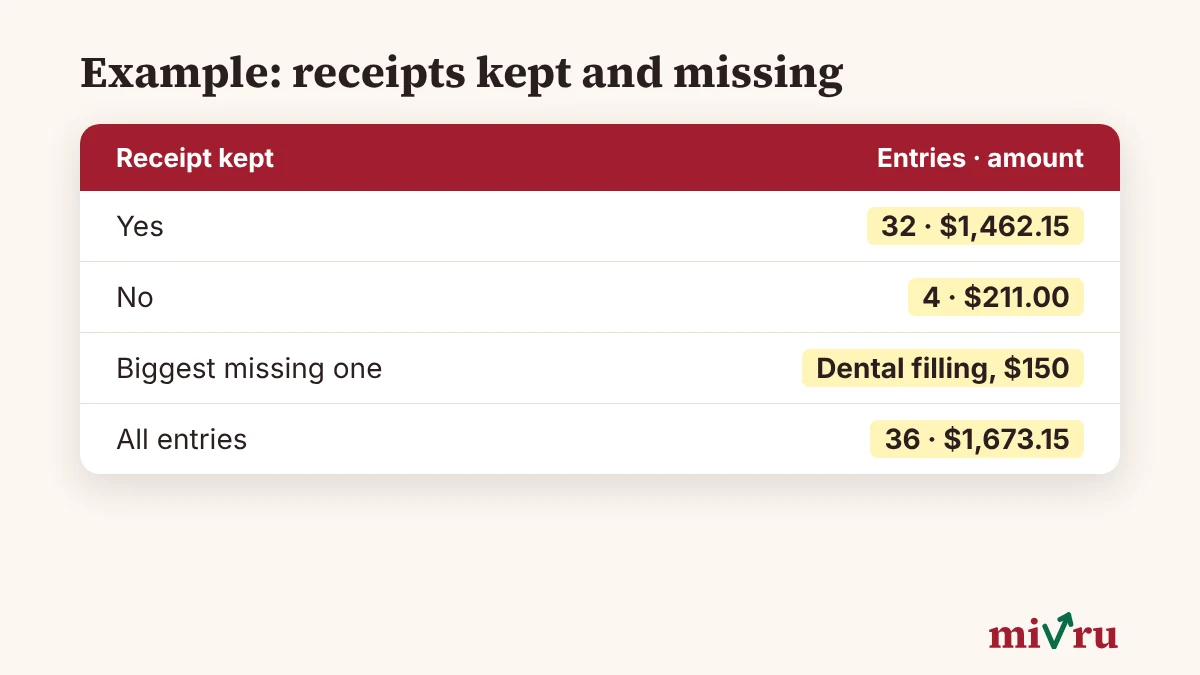
Of 36 entries, 32 have a receipt ($1,462.15) and 4 do not ($211.00). The missing ones are three small travel entries (parking and gas) and a dental filling for $150 with a note "receipt to find". That last one is the one worth chasing, because it is the biggest.
What the example teaches
- Small items add up. Fifteen prescription entries are $273.
- One bill stands out. The $214.60 urgent care bill is about 13% of the whole year.
- A receipt column pays off. It turns "I think I have that" into a short list.
- The monthly view shows rhythm. Some months are almost empty, others are heavy.
- Short notes are enough. The example never records why anyone saw a provider, only what kind of cost it was.
The IRS notes in its page on medical and dental expenses that expenses reimbursed by insurance or otherwise do not count toward the medical expense deduction, so a record of what was reimbursed is useful too. A tax professional can tell you what applies to your situation.
Build your own
Start with the medical expense tracker template guide, then build the sheet in Excel or Google Sheets. For the HSA side, read our HSA expense tracking spreadsheet guide. For everyday spending, see the expense tracker example. This is general information, not medical, tax or insurance advice.
The year by category, with shares
| Category | Total | Share of all costs |
|---|---|---|
| Vision | $314.00 | 19% |
| Hospital and lab | $293.00 | 18% |
| Dental | $280.00 | 17% |
| Prescriptions | $273.00 | 16% |
| Doctor visits | $240.00 | 14% |
| Therapy and counseling | $180.00 | 11% |
| Travel to care | $61.00 | 4% |
| Equipment and supplies | $32.15 | 2% |
| Total | $1,673.15 | 100% |
The shares are rounded, so they may not add to exactly 100%.
Averages that put the numbers in scale
| Measure | Value |
|---|---|
| Average per entry | $46.48 |
| Average per month (10 months) | $167.31 |
| Biggest single bill | $214.60 |
The averages are $1,673.15 divided by 36 entries and by 10 months. The biggest bill, urgent care, is above four times the average entry, which is why it stands out in the monthly view.
Questions you can answer from this log
- What did each person cost? Add up by person.
- Which month was the heaviest? September, at $279.60.
- How much came from the HSA? $795.55 across 22 entries.
- Which receipts are missing? Four, worth $211.00.
Using the example for your own log
Copy the same eight categories, add a person column and a paid-from column, and log each cost the day you pay it. After a month you will have the same kind of summary. Keep notes short and neutral, such as "check-up" or "refill", and never write a diagnosis.
Want the example ready-made?
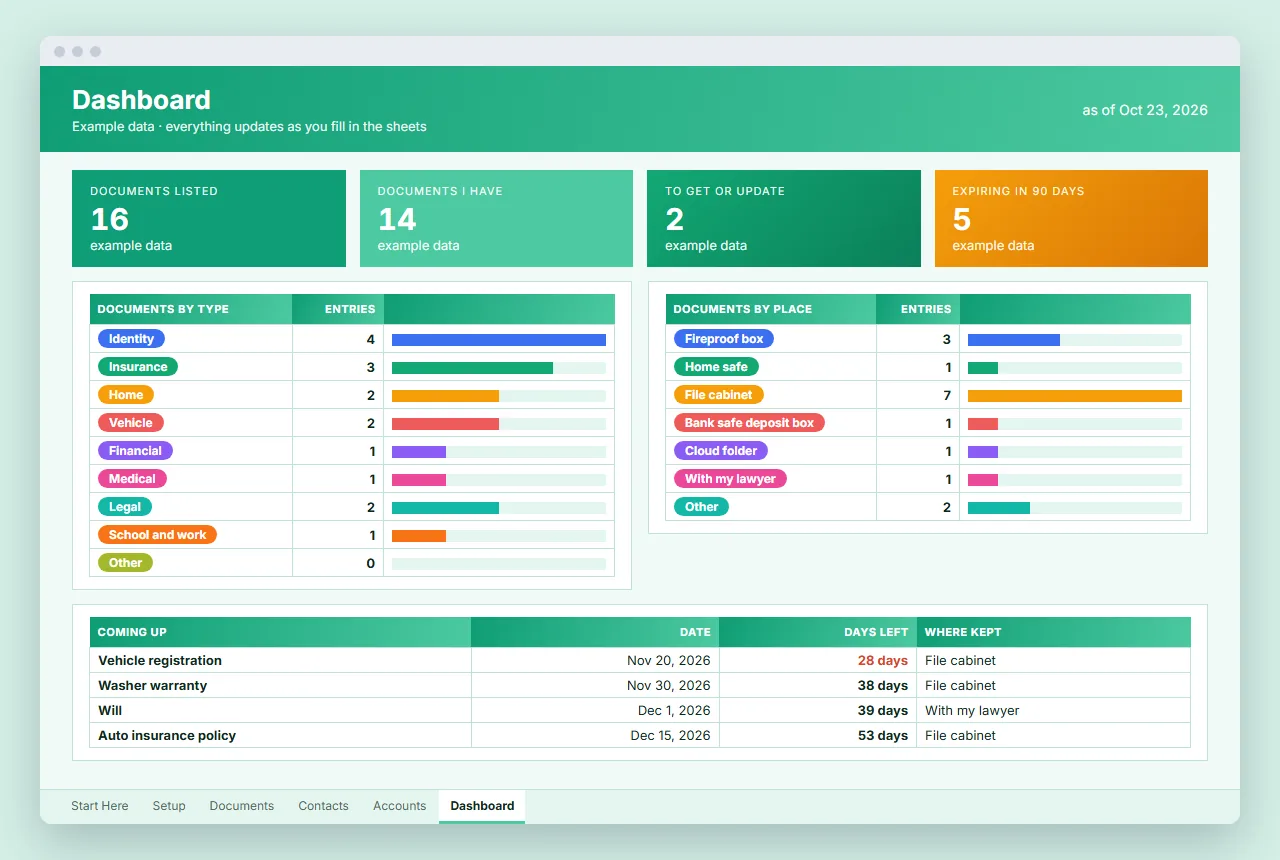
The Mivru Medical & HSA Expense Tracker includes this example, so you can click around before you clear it and add your own costs. It has a Medical Log, a Dashboard with a month picker, a Monthly sheet and a Paid From & Receipts sheet in five color themes, plus an 12-page printable. See the Medical & HSA Expense Tracker.
Frequently asked questions
What does a medical expense tracker example look like?
It lists each cost with the date, person, category, provider, amount, where the money came from and whether the receipt was kept, then adds up by person, category and month. This page shows a made-up one.
Are the numbers in this example real?
No. The family, providers and costs are made up to show how a tracker works. Use your own numbers.
How much did the example family spend?
$1,673.15 across 36 entries from January to October 2026.
What is the Paid from column for?
It shows whether a cost came from an HSA, an FSA or your own money, which helps with records for each account.
Can I copy this example?
Yes. The Mivru medical expense tracker includes this example data, so you can click around, then clear it and add your own.