Christmas Gift Budget for Kids: How Much to Spend Per Child
Set a fair Christmas gift budget for kids with a per-child limit, the want-need-wear-read rule and a simple example you can copy for any family size.
Parents are often the biggest spenders at Christmas, and the easiest to overspend, because kids' wish lists never end. A Christmas gift budget for kids keeps the number clear: how much each child gets, what it is spent on and where the money comes from.
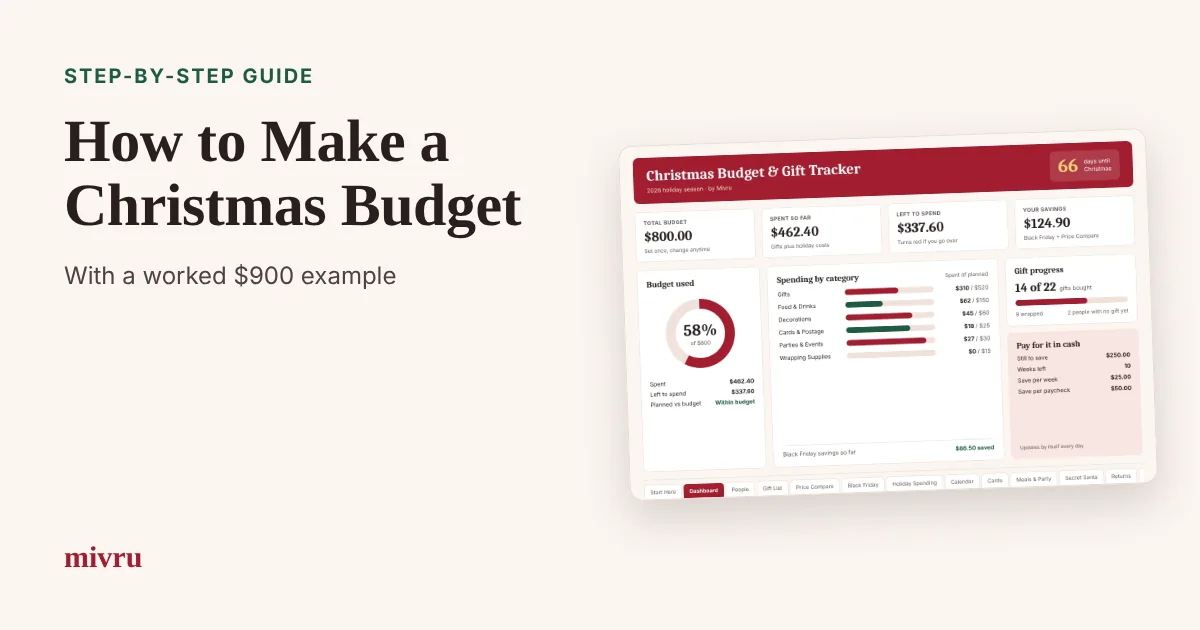
This guide shows how to set a fair per-child amount and gives you a simple rule for choosing gifts. It uses the same example as our Christmas budget guide: a family of four with $900 for Christmas and $540 for gifts.
Start with the total, not the wish list
Do not begin with what the children asked for. Begin with the gift budget and work backwards. In the example, the $540 gift budget is shared between everyone on the list: the two kids, the two adults, grandparents, teachers and a few friends.
A sample split:
| Group | Budget |
|---|---|
| Two children ($100 each) | $200 |
| Partner and each other | $80 |
| Grandparents and relatives | $120 |
| Friends, teachers and neighbors | $90 |
| Spare for last-minute gifts | $50 |
| Total gifts | $540 |
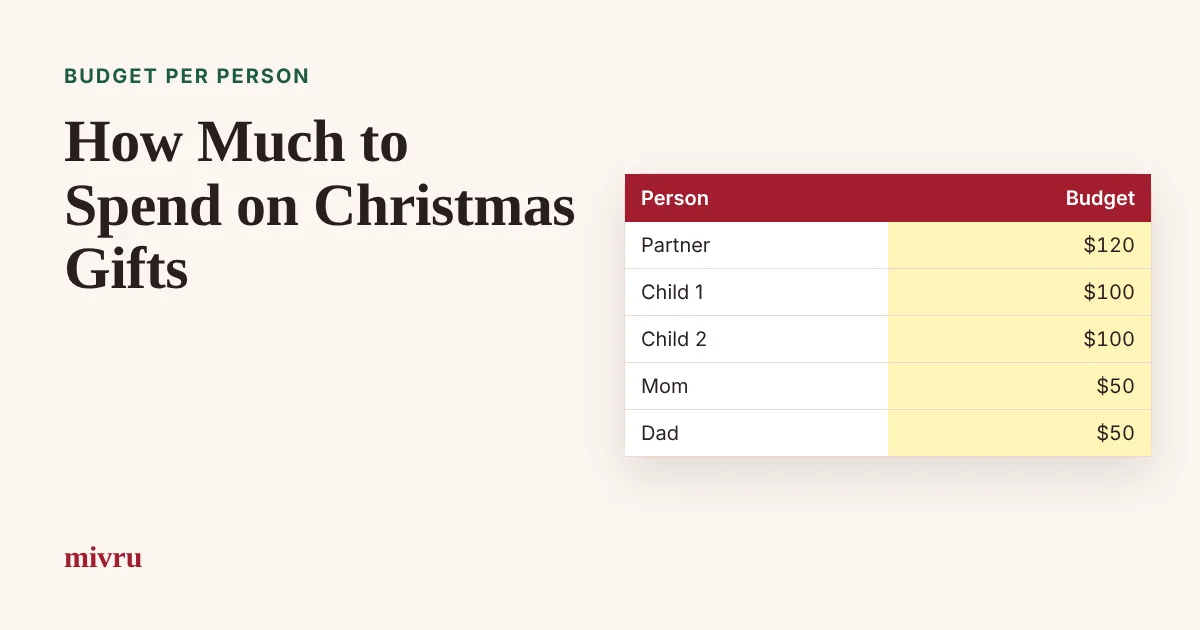
These numbers are an example, not a rule. Our guide on how much to spend on Christmas gifts explains how to choose them for your own family.
For context, Gallup's October 2025 poll found Americans planned to spend about $1,007 on holiday gifts that year, and the National Retail Federation's survey put planned gift spending at $627.93 per person. Those are averages for everyone, not targets. Your own budget matters more than any average.
Use the want, need, wear, read rule
Many parents use a simple rule to keep the number of gifts small: something they want, something they need, something to wear and something to read. It is a guideline, not a law, but it works well because every gift has a job and the budget splits itself.
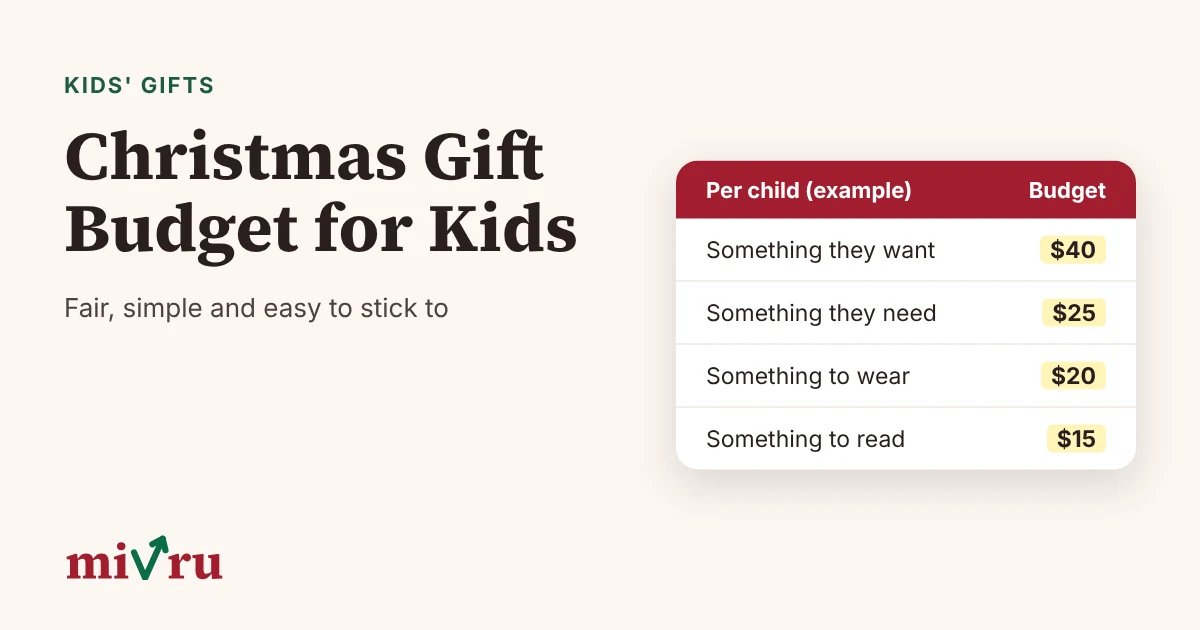
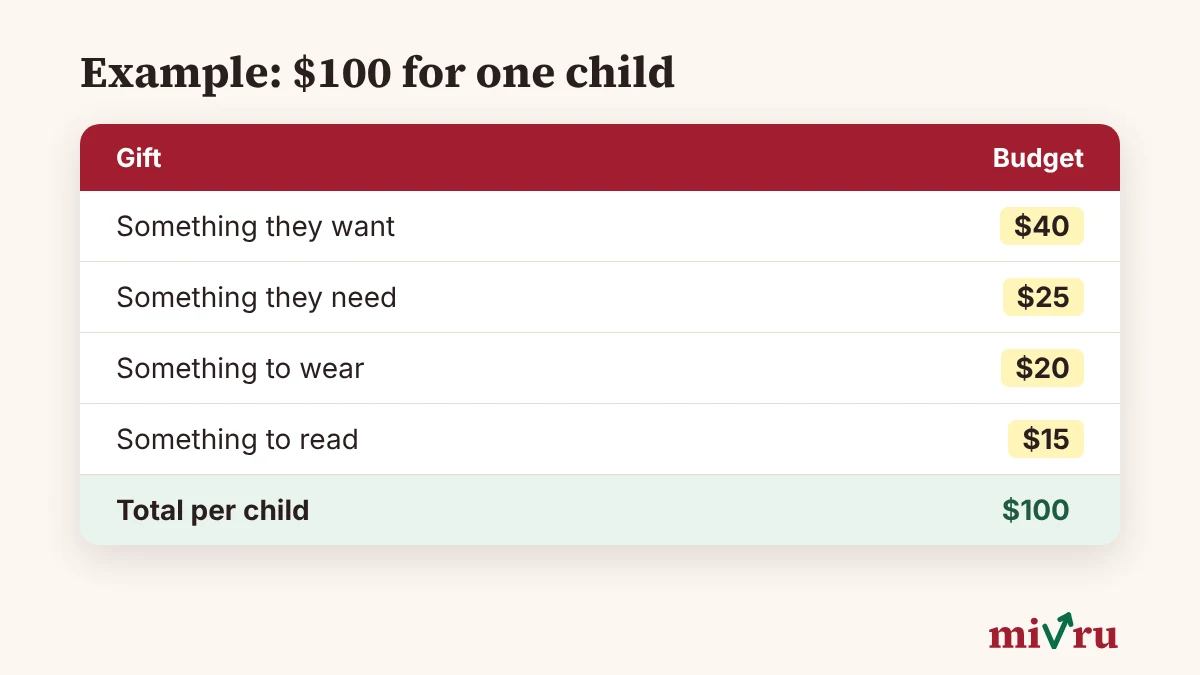
Example: $100 for one child - Something they want: $40 - Something they need: $25 - Something to wear: $20 - Something to read: $15
Total: $100. The amounts are examples. Swap them to fit your child and your total.
If you prefer a different rule, such as one big gift plus stocking fillers, the idea is the same: decide the categories before you shop.
Be fair, but not identical
Children compare piles of gifts. A simple way to keep things fair:
- Give siblings the same budget, even if the gifts are different.
- Count the cost, not the number of boxes. Three small gifts can equal one large one.
- Keep gifts from relatives separate. Do not count grandparents' gifts in your budget, but know about them so you can adjust.
- Plan for age differences. An older child may need one more expensive item (such as a phone case) while a younger child needs more small things.
Ways to keep the cost down
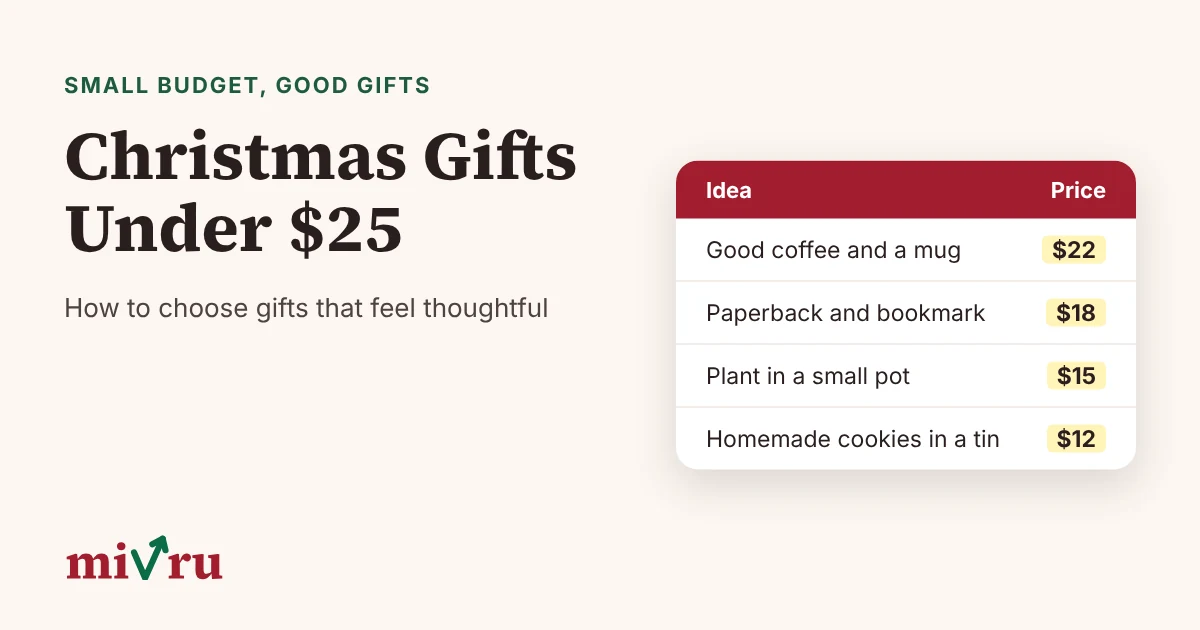
- Choose one "big" gift per child and keep the rest small. Our guide to Christmas gifts under $25 has ideas for the smaller ones.
- Check what they already have. A quick clear-out of toys before Christmas makes room and shows what is missing.
- Buy from the list. Our Black Friday shopping list guide explains how to set a target price before the sales start.
- Ask relatives to coordinate. If grandparents ask what to buy, give them a specific idea so you avoid duplicates.
- Do not forget the extras: batteries, wrapping, and the cost of an outfit for the school concert. See hidden holiday costs.
Track it as you go
Write down each purchase and add up what is left for each child. A spreadsheet or the free printable gift list makes this easy.
If you want something that adds the totals for you, our Christmas Budget & Gift Tracker includes a gift list, price compare and a 22-page printable planner.
The four-part rule at different totals
The "want, need, wear, read" idea works at any total. Here it is as percentages: want 40%, need 25%, wear 20% and read 15%.
| Total for one child | Want | Need | Wear | Read |
|---|---|---|---|---|
| $100 | $40 | $25 | $20 | $15 |
| $150 | $60 | $37.50 | $30 | $22.50 |
| $200 | $80 | $50 | $40 | $30 |
The percentages are one example. Change them to fit your family: a child who has outgrown all their clothes may need a bigger "wear" slice, and one who loves books may need a bigger "read" slice.
How to talk about the budget with children
- Ask for a short list, not a long one. Three wishes are easier to choose from than thirty.
- Explain that every family has a limit. Keep it simple and calm.
- Let older children help. Letting a child compare two options teaches them about trade-offs.
- Avoid promising anything until you have checked it against the plan.
Adding up more than one child
Write the total for each child on the same page, add them, and compare with your overall gift budget. If the sum is too high, lower each child's total by the same small amount, or move a little from a category that matters less.
A note on fairness
If you have more than one child, write each child's total on the same page where you can see them side by side. Children notice differences, so it helps to have a reason you can explain: ages, needs and what each one already has. Equal totals are not always fair, and different totals are fine if you can say why.
Summary
Set the total gift budget first, give each child a fair number, split it with the want-need-wear-read rule, and track what you spend. Children remember the day, not the price, so a small, well-chosen pile is enough.
Frequently asked questions
How much should I spend on each child at Christmas?
There is no right number. Decide your total gift budget first, set aside what the adults on your list need, and divide the rest fairly between the children. In our example, $200 for two children is $100 each.
What is the want, need, wear, read rule?
It is a popular parent guideline: buy each child one thing they want, one thing they need, one thing to wear and one thing to read. It keeps the number of gifts small and the budget clear.
Should every child get the same amount?
Same-age siblings usually feel fairest with the same budget. A simple rule is to match the budget for each child and let the gifts differ, so the pile looks balanced.
How do I stop kids' gifts from going over budget?
Write the limit next to each child's name, keep a running total of what you spend, and decide before you shop which one big gift each child will get.