Hidden Holiday Costs That Wreck Christmas Budgets
Hidden holiday costs like shipping, wrapping and party food add up fast. See 12 Christmas expenses people forget and how to budget for each.
Most people plan the gifts and forget everything around them. These hidden holiday costs are not big on their own: a roll of tape, a few stamps, a box of batteries. But together they can take a hundred dollars or more out of a budget that looked fine on paper.
This guide lists twelve costs people often forget, shows what they can add up to in a worked example, and explains how to give each one a place in your plan. It builds on the $900 Christmas from our Christmas budget guide.
Gifts are not the whole bill
Gifts are the biggest line, but not the only one. In the National Retail Federation's 2025 holiday survey, shoppers planned to spend an average of $890.49 per person, and $627.93 of that was for gifts. The other $262.56 went on seasonal items such as food or candy, decorations and greeting cards.
That means roughly 30 percent of the average Christmas budget is not gifts at all. If your plan only has a gift number, the rest of that spending has nowhere to live.
12 hidden holiday costs to plan for
- Wrapping. Paper, tape, ribbon, bags and tags. Buy once, early, and count it.
- Shipping and postage. Gifts for people far away cost money to send, sometimes as much as the gift.
- Greeting cards and stamps. See our Christmas card list guide for the real cost per card.
- Batteries, cables and chargers. Many toys and gadgets are not usable out of the box.
- Party food and drinks. Hosting, bringing a dish or buying snacks for visitors.
- Extra groceries. Baking, a bigger dinner and guests staying over raise the weekly shop.
- Travel extras. Tolls, parking, a meal on the road or a checked bag. Our holiday travel budget guide covers these.
- Last-minute gifts. The person you forgot, a host gift or a child's friend's party.
- Teacher, neighbor and coworker gifts. Small, but easy to leave off the list.
- Decorations and lights. Replacement bulbs, a new tree stand, candles.
- Outfits and events. A school concert outfit, a party ticket or a charity jumper.
- Return shipping. Some returns cost money to send back. The FTC advises checking who pays return shipping before you order. See our guide to Christmas return deadlines.
Example: what extras can add up to
These amounts are examples, not averages. Your numbers will differ.
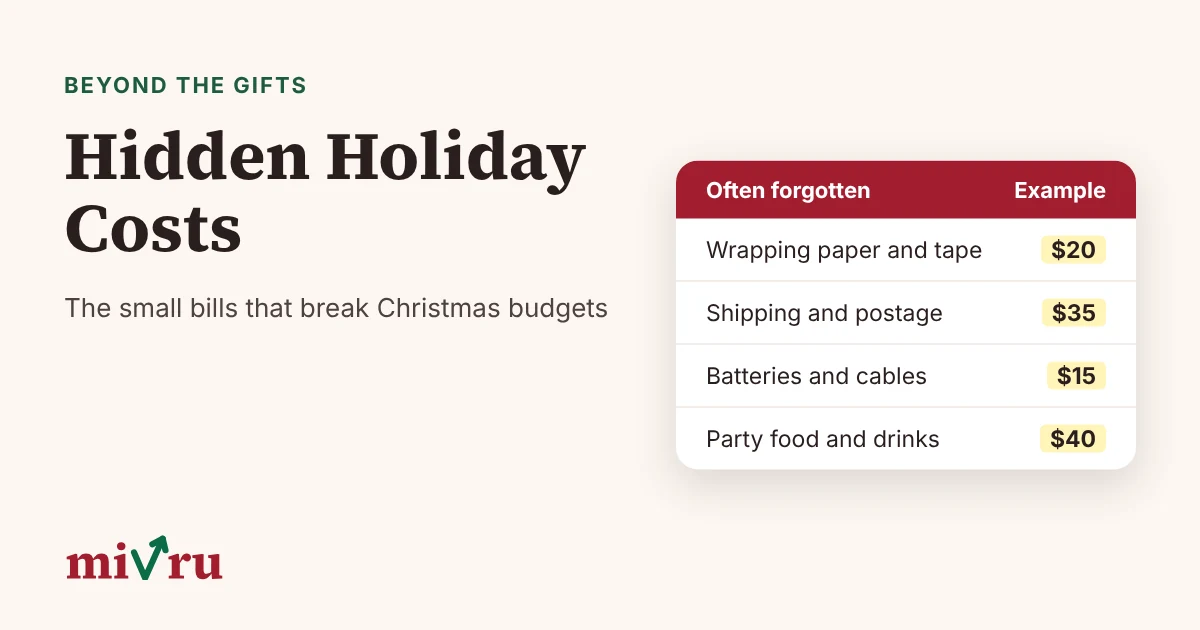
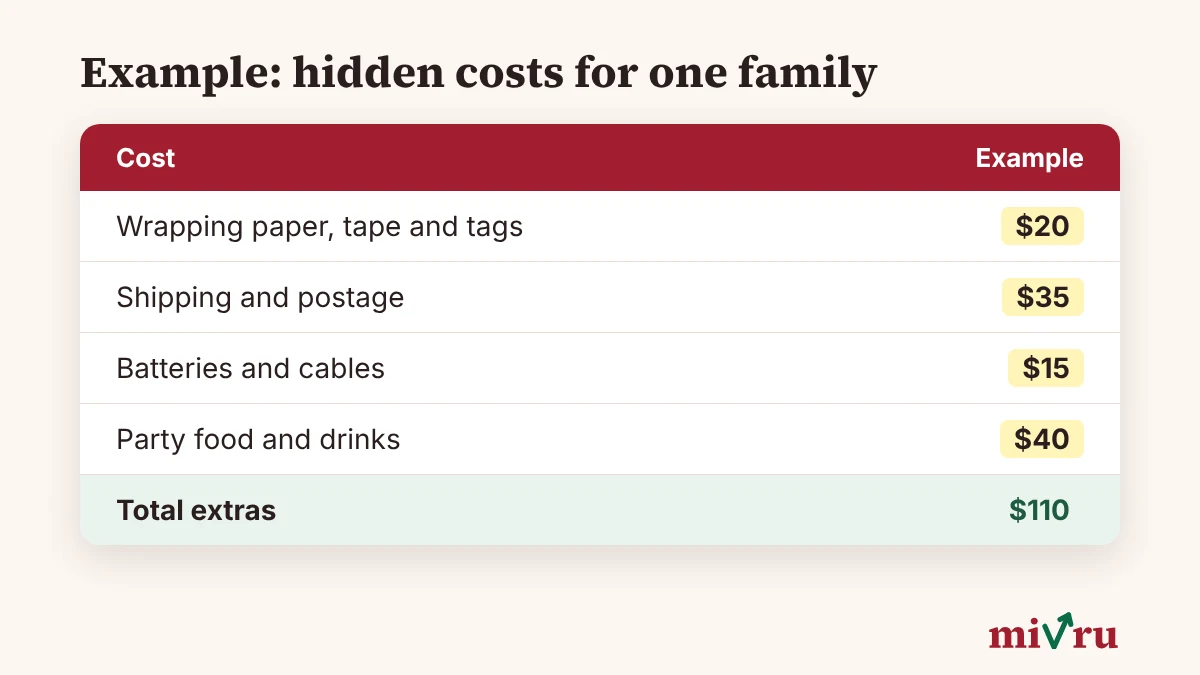
An example "extras" list for one family: - Wrapping paper, tape and tags: $20 - Shipping and postage: $35 - Batteries and cables: $15 - Party food and drinks: $40
Total: $110. In our sample budget, decorations ($45), cards ($30) and the buffer ($45) add up to $120. So these extras would take almost the whole buffer, leaving nothing for a surprise.
How to budget for them
Step 1: add an "Extras" line. Put it in your budget next to gifts, food and travel. If you do not have one, extras quietly borrow from the gift line.
Step 2: estimate before you spend. Go through the twelve items above and write a rough number for each. Delete any that do not apply to you.
Step 3: keep a buffer. A buffer of 10 to 15 percent of your total is a common rule of thumb. On $900 that is $90 to $135. It exists for the things you cannot predict.
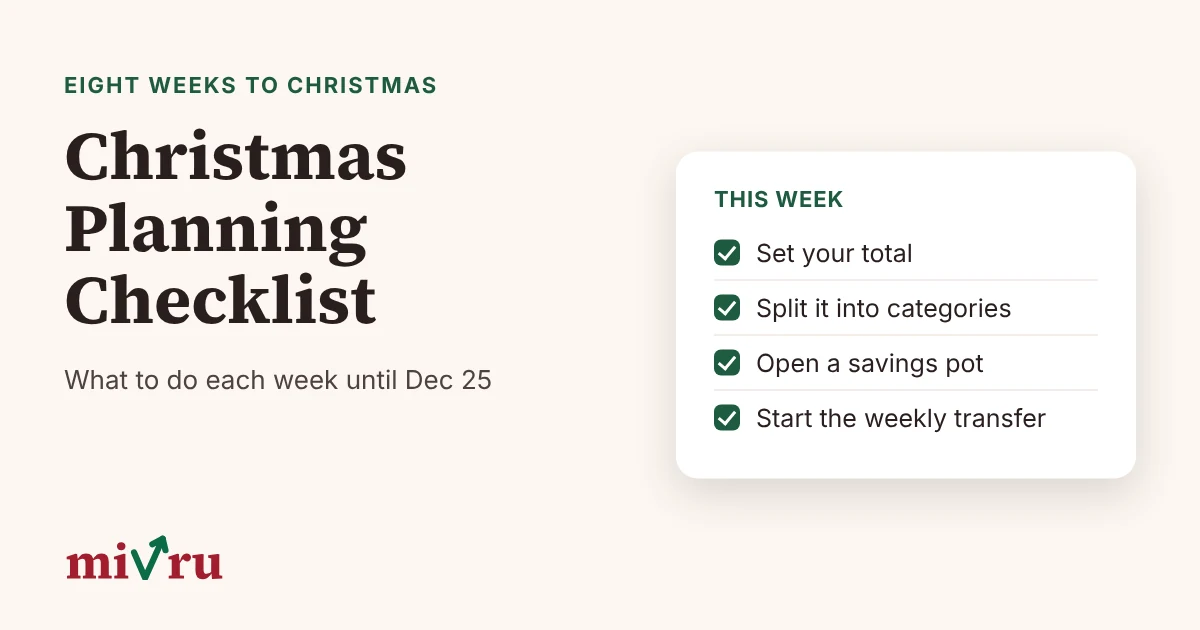
Step 4: write purchases down the same day. A running total is the best defence against small spending. Our planning checklist shows where this fits in the weeks before Christmas.
Where the money usually leaks
- Shipping gifts at the last minute. Paying for fast delivery can cost more than the gift. Send early with standard shipping.
- Buying wrapping in December. Prices go up and choice goes down. Buy in late October or after Christmas for next year.
- Convenience food. Quick dinners in a busy week cost more than the same meals cooked at home.
- One more gift "just in case." An unplanned gift for a name not on your list is a budget decision, so make it on purpose.
Track it in one place
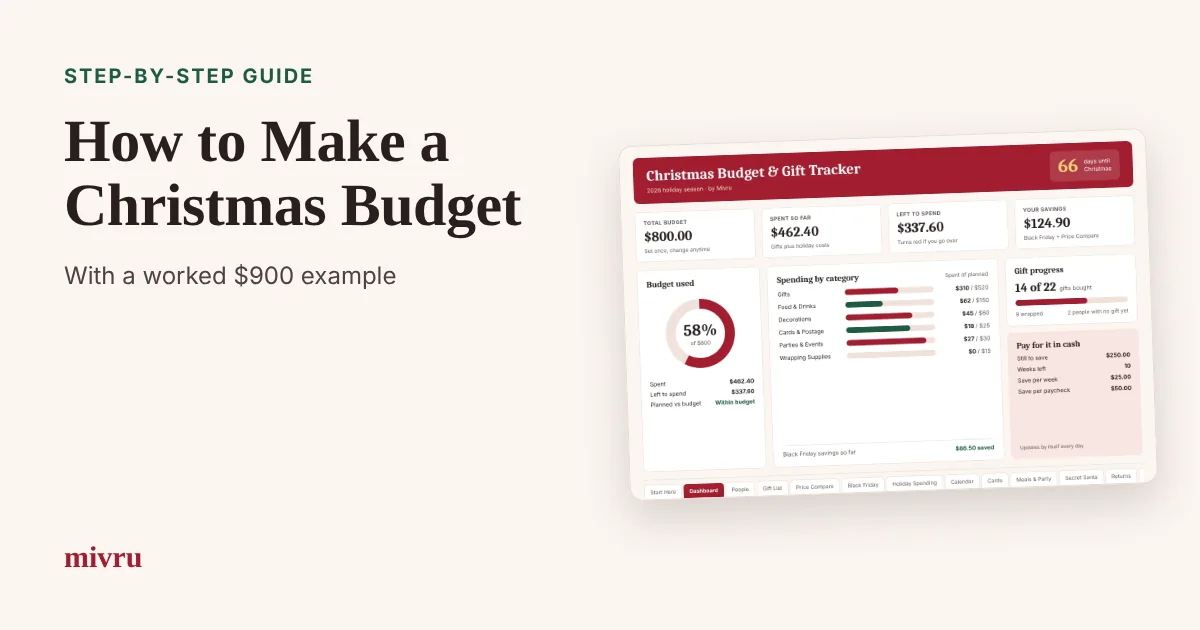
A spreadsheet adds your totals for you and shows what is left in every category, including extras. Our Christmas Budget & Gift Tracker has the budget, gift list, price compare and a savings plan in one file, with a 22-page printable planner.
If you would rather start on paper, the free printable list covers the gift part of the plan.
A simple way to find your own hidden costs
- Look at last year. Check your card statement for December and the weeks before it. List anything that was not a gift.
- Group the small items. Wrapping, postage, batteries, food and travel are common groups.
- Give each group a rough amount. A guess is better than zero.
- Add a line called "small things" to your Christmas budget. Put the total there, so it is planned and not a surprise.
- Track what you actually spend in that line. Next year you will have a real number.
The goal is not to spend less on these items. It is to see them before they arrive, so the gifts you do choose do not have to be trimmed at the last minute to pay for tape and postage.
Summary
Gifts are only about 70 percent of the average Christmas budget. Add an extras line, estimate the twelve hidden costs above, keep a buffer and write purchases down the day you make them. The small stuff will stop being a surprise.
Frequently asked questions
What are the hidden costs of Christmas?
Anything that is not the gift itself: shipping and postage, wrapping, batteries, cards and stamps, party food, travel extras, last-minute gifts and returns shipping. They are small one by one and large together.
How much extra should I budget for hidden holiday costs?
A simple rule is to set aside 10 to 15 percent of your total as a buffer. On a $900 Christmas that is $90 to $135.
How can I stop overspending on small Christmas purchases?
Write every purchase down in one place on the day you buy it. Small purchases feel invisible until they are added up, and a running total makes them visible.
Do gifts make up most of Christmas spending?
Gifts are the biggest part, but not all of it. In the National Retail Federation's 2025 survey, shoppers planned $627.93 on gifts out of $890.49 in total, with the rest going to food, decorations and cards.