Black Friday Shopping List 2026: Plan Your Deals Before November 27
Black Friday is November 27, 2026. Build a shopping list with target prices and a spending cap, so you only buy what you planned and keep the savings.
Black Friday 2026 falls on Friday, November 27, the day after Thanksgiving. Cyber Monday follows on November 30 — and plenty of stores start "early Black Friday" deals weeks before that.
That is a lot of sales, a lot of pressure and a lot of "only today" banners. The people who actually save money on Black Friday have one thing in common: they decided what to buy before the sales started. This guide shows you how to build that list in an evening.
Why you need a list before the sales
Sales are designed to make you buy more, not to make you spend less. A list flips that around.
The numbers show how much money moves in a few days. Adobe measured $11.8 billion in US online sales on Black Friday 2025 and $14.25 billion on Cyber Monday — and more than $1 billion of Cyber Monday spending used buy now, pay later.
And the January hangover is real. A LendingTree survey found 37% of Americans took on holiday debt last season, averaging $1,223. A list with a spending cap is the simplest way not to be part of that number.
Step 1: Start from your Christmas budget
Your Black Friday list is not a separate budget. It is part of your gift budget, bought a few weeks early.
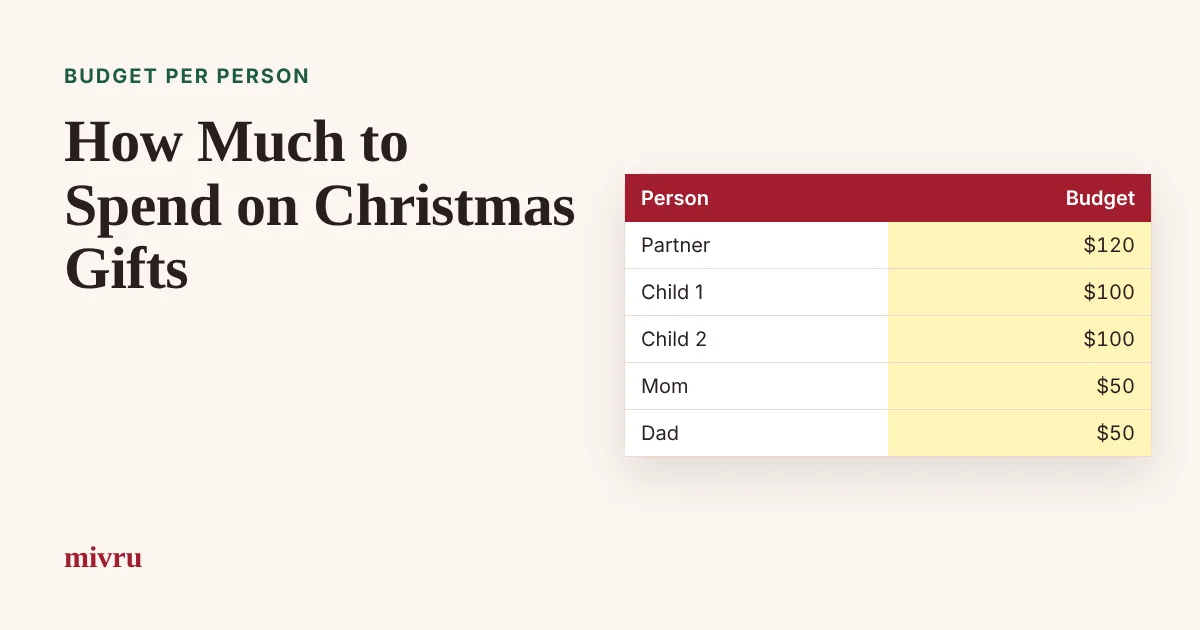
If you have not set one yet, start with our guide to making a Christmas budget. In its example, a family has $900 for Christmas and $540 for gifts, shared out per person — exactly what we explain in how much to spend on Christmas gifts.
Your Black Friday cap is the money left in those gift budgets for the items you plan to buy on sale. Not a dollar more.
Step 2: Write down each item and its usual price
For every gift you might buy on Black Friday, write:
- Who it is for
- The exact item (brand, model, size or color)
- Its usual price — what it costs on a normal week
Be specific. "Headphones" will lead you to twenty tempting options; "the wireless headphones Child 2 asked for, in black" will lead you to one.
Step 3: Set a target price for each item
A target price is the most you will pay. Write it down before the sale and stick to it.
How to choose one:
- Check price history. Browser extensions and price-tracking sites show what an item has cost over the past months. If it was cheaper in the summer, that is your benchmark.
- Know typical discounts. At their peak in 2025, Adobe saw average discounts of about 31% on electronics, 28% on toys and 25% on apparel. A 10% "deal" on headphones is not special.
- Leave room for "no". If the item never reaches your target, you buy later or choose something else. That is the list working.
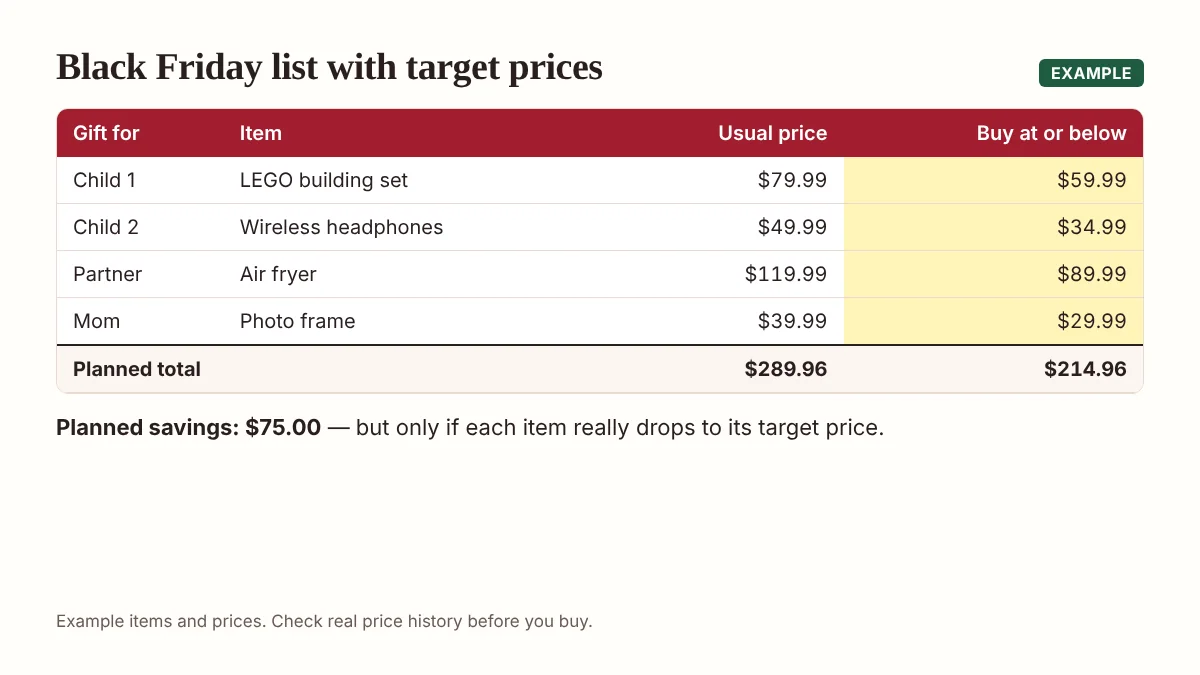
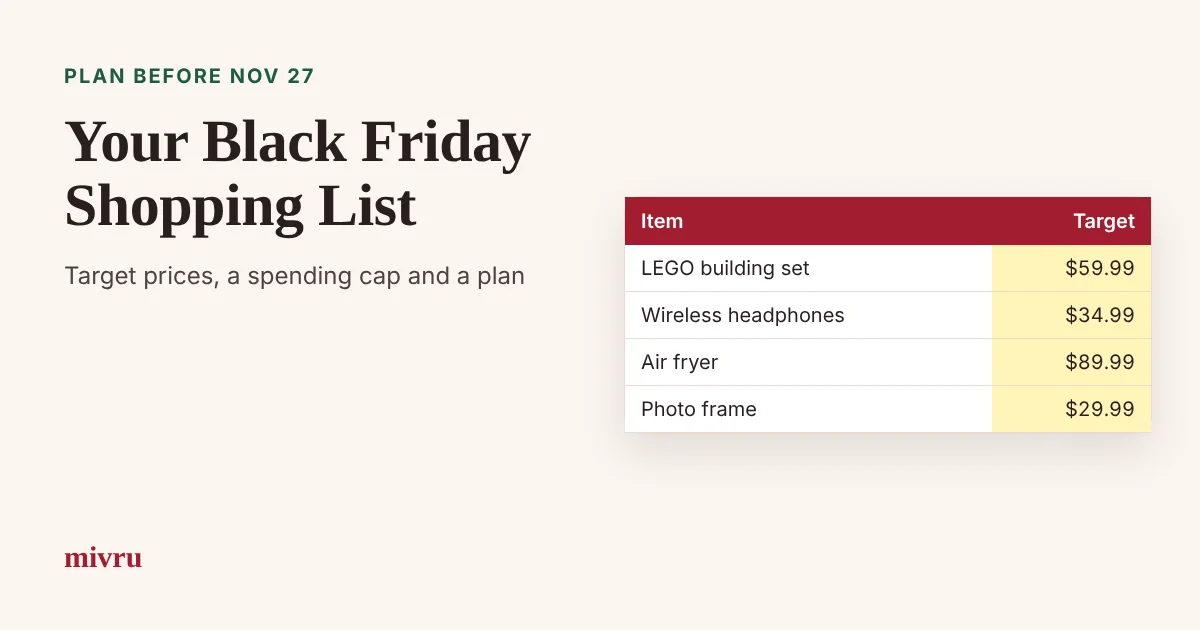
| Gift for | Item | Usual price | Buy at or below |
|---|---|---|---|
| Child 1 | LEGO building set | $79.99 | $59.99 |
| Child 2 | Wireless headphones | $49.99 | $34.99 |
| Partner | Air fryer | $119.99 | $89.99 |
| Mom | Photo frame | $39.99 | $29.99 |
| Total | $289.96 | $214.96 |
In this example, the list saves $75 — but only if every item reaches its target. If two of them do not, the family still stays inside their gift budget, because the cap was set from the budget, not from the discounts.
Step 4: Check whether the deal is real
"Was $199, now $99" only matters if it really was $199. Consumer group Which? tracked 175 popular products across eight UK retailers and found that every single one was the same price or cheaper at another time in the six months either side of Black Friday.
That does not mean Black Friday is useless. It means the label on the day is not proof. Your own target price, based on price history, is.
Black Friday or Cyber Monday: when to buy
You do not need to buy everything on one day. A few patterns help you decide:
- Cyber Monday has become the biggest online day. In 2025, Adobe measured more online spending on Cyber Monday ($14.25 billion) than on Black Friday ($11.8 billion), and called the whole Thanksgiving-to-Cyber-Monday stretch "Cyber Week".
- Discounts are deepest in some categories. Electronics, toys and clothing saw the biggest average price cuts at their 2025 peaks, while furniture, appliances and sporting goods saw smaller ones. If your list is full of toys and tech, the sale weekend matters more.
- Early deals start weeks before. Many stores now run "Black Friday" prices from early November. If an item on your list hits its target price on November 10, buy it then — the goal is the price, not the date.
What to skip
Some things are rarely worth rushing for on Black Friday:
- Anything not on your list, however good the discount looks.
- Bundles that add accessories you would never have bought on their own.
- Store credit cards offered at the checkout for an extra 10% off — they often carry high interest rates.
- Gift cards bought "on sale" from unknown sellers. Buy them directly from the store or a trusted retailer.
Step 5: Shop safely
Rushed shopping is when scams work best. Two habits from the US Federal Trade Commission's holiday shopping advice:
- Pay online with a credit card, which usually gives you more protection if something goes wrong — then pay the card off in full.
- Never pay a "seller" with gift cards. Anyone who asks for payment by gift card is running a scam.
And one of our own: type store addresses yourself instead of tapping "deal" links in texts and emails.
Step 6: After the sales, update your budget
The weekend is over. Now take ten minutes to:
- Tick off what you bought and write the price you actually paid.
- Move any savings back into your budget — to the buffer, or to a person whose gift costs more than planned. Do not spend it on extra "deals".
- Write down return deadlines. Holiday return windows vary by store, and some items bought in November must go back before Christmas.
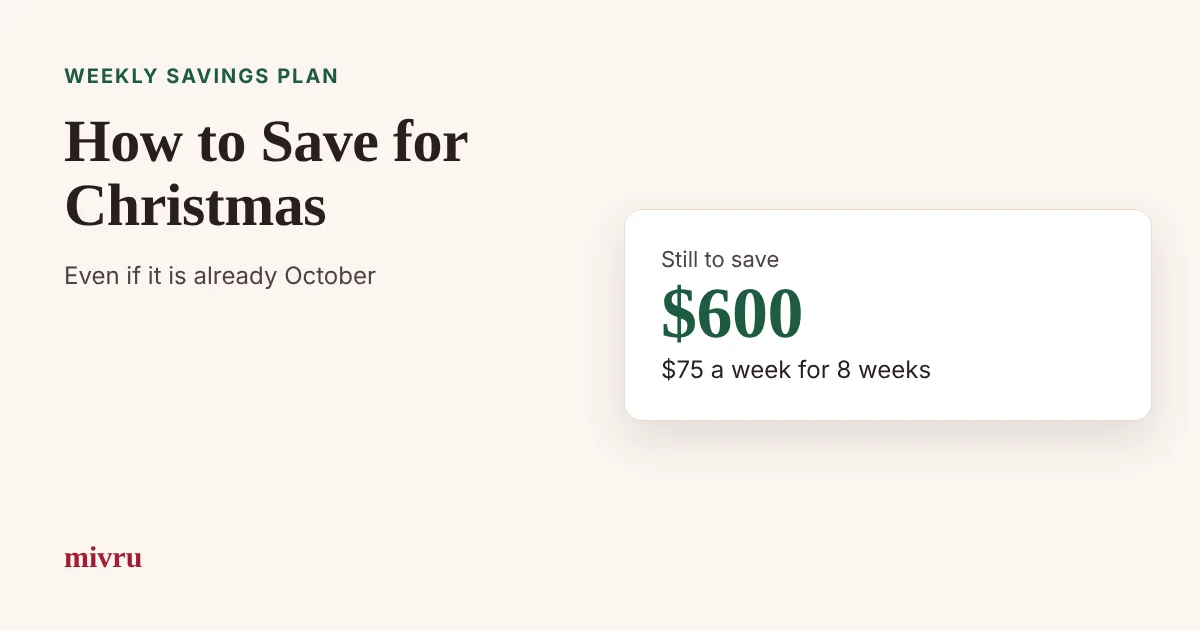
If you are still saving toward your total, our weekly plan for saving for Christmas shows how to finish the job by mid-December.
Make your list in a spreadsheet
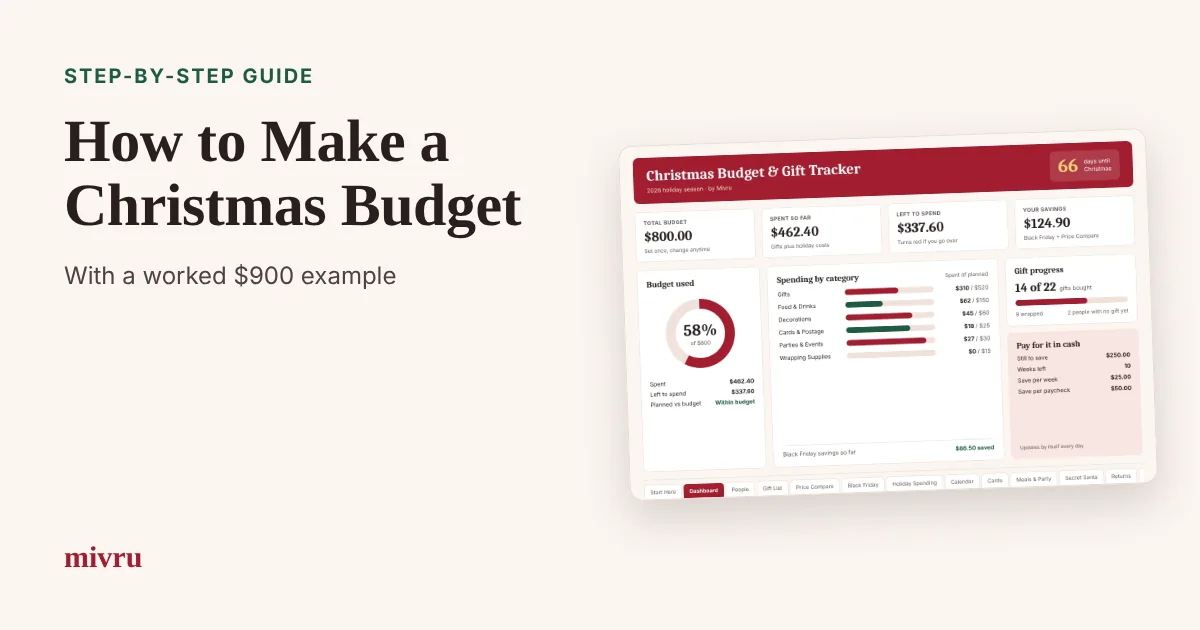
Paper works, but a spreadsheet does the adding up. Our Christmas Budget & Gift Tracker has a Black Friday tab built for the November 27–30, 2026 sales: plan the deals you are watching, record what you paid and see what you saved. Your Black Friday savings also show on the dashboard, next to your budget, so everything stays in one place.
Your Black Friday checklist
- Set your gift budget per person first.
- List each item with its usual price.
- Set a target price based on price history.
- Ignore anything that is not on the list.
- Pay safely, and never by gift card.
- Afterwards, update the list and note return dates.
Do these six things and Black Friday becomes what it should be: a way to buy the gifts you already planned, for less.
Frequently asked questions
When is Black Friday 2026?
Black Friday is Friday, November 27, 2026, the day after Thanksgiving (November 26). Cyber Monday is November 30, 2026. Many stores start their sales earlier in November.
Are Black Friday deals really cheaper?
Sometimes, but not always. Consumer group Which? tracked 175 products in the UK and found every one was the same price or cheaper at some other point in the six months before or after Black Friday. Check price history before you buy.
What is a target price?
It is the highest price you are willing to pay for an item, written down before the sale. If the item does not drop to that price, you skip it or wait — no matter how big the "% off" label looks.
Should I use buy now, pay later on Black Friday?
Only if you would also be happy to pay in full today. Buy now, pay later splits the cost but not the total, and several small payments are easy to lose track of in January.