How to Make a Christmas Budget (7 Steps, With a Worked Example)
Set a Christmas total you can pay without debt, split it by category and person, and track it weekly. A step-by-step guide with a worked $900 example.
Christmas rarely goes over budget because of one big purchase. It goes over because of forty small ones — a stocking stuffer here, an extra bag of groceries there, a last-minute gift for a neighbor — and none of them felt like much at the time.
That is why a Christmas budget works best when it is written down before the shopping starts. In this guide you will set a total you can actually afford, split it across every holiday cost, give each person on your list a number, and track it week by week. We will use one worked example from start to finish: a family of four planning a $900 Christmas.
Why a Christmas budget matters this year
Holiday spending is big and still growing. The National Retail Federation expects November and December retail sales in 2026 to grow 4.2% to about $1.013 trillion.
For households, the numbers are just as real. In Gallup's October 2025 poll, Americans said they expected to spend about $1,007 on holiday gifts. And when the bills came in, a LendingTree survey found that 37% of Americans took on holiday debt, averaging $1,223.
None of that means you should spend less than you want. It means the plan should come first, so that the money you spend is money you chose to spend.
Step 1: Pick a total you can pay without debt
Your Christmas total is not a wish. It is the answer to one question: how much can I pay in cash by mid-December?
Add up two things:
- Money already set aside for the holidays (a savings account, a Christmas club, gift cards you already have).
- What you can save from now until about December 15, without missing bills.
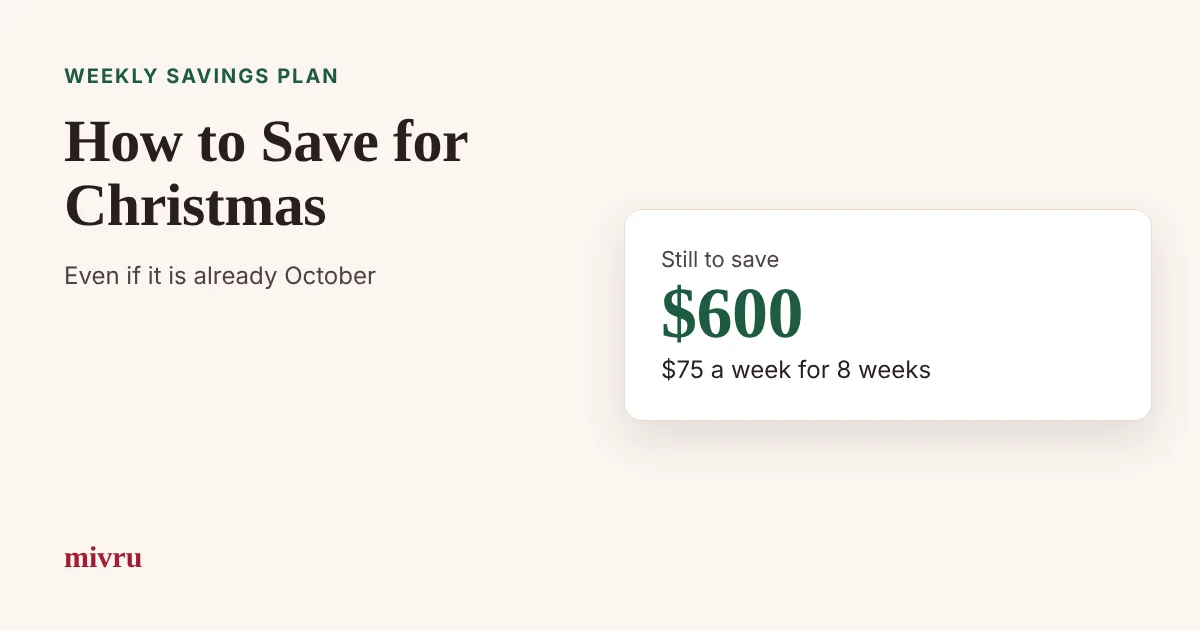
Example: Our family already has $300 saved. They can comfortably set aside $75 a week for the eight weeks from late October to mid-December — another $600. Their Christmas total is $900.
If your number feels small next to the averages above, that is fine. A $400 Christmas paid in full feels much better in January than a $1,200 Christmas on a credit card.
Step 2: List every holiday cost, not just gifts
Most Christmas budgets fail in the categories nobody wrote down. Before you split your total, list everything the season will cost you:
- Gifts — family, friends, teachers, coworkers, Secret Santa
- Food and hosting — the big dinner, baking, drinks, extra groceries for guests
- Travel — fuel, flights, train tickets, a hotel night
- Decorations — a tree, lights, wreaths, wrapping paper and tape
- Cards and postage — cards, stamps, shipping for gifts you mail
- Events — a work party outfit, a concert, a holiday market
- A buffer — for the gift you forgot and the price that went up
Step 3: Split the total by category
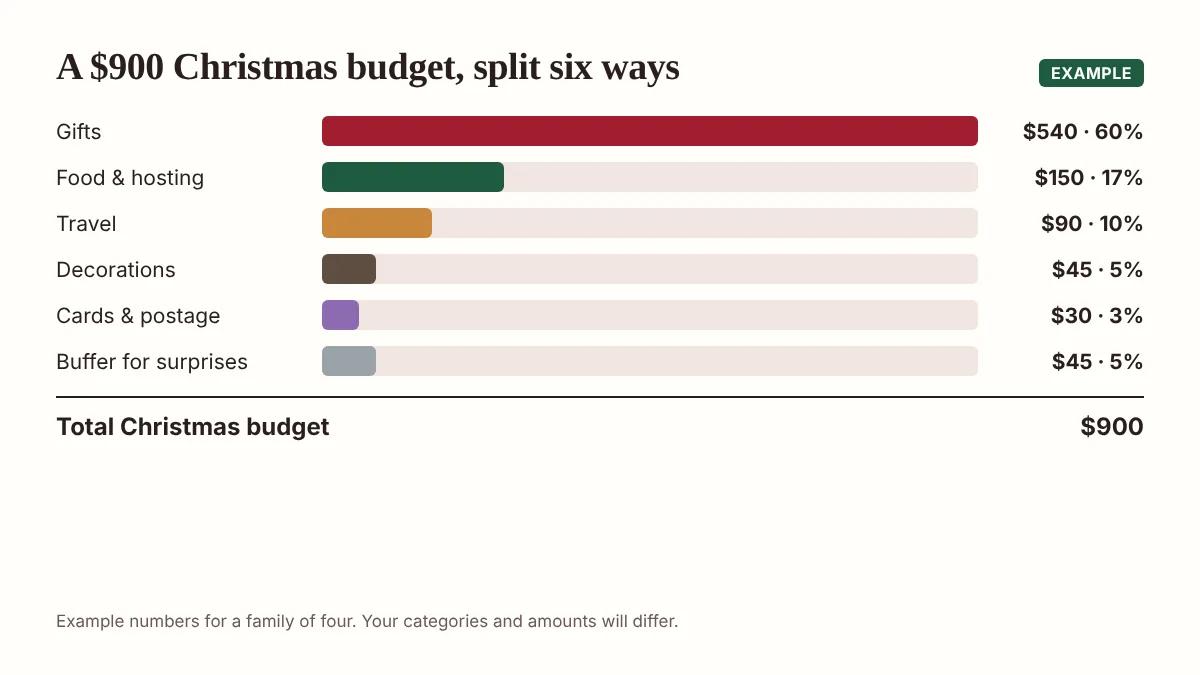
Now give every category a share of the total. There is no perfect split; what matters is that the numbers add up to your total and not a dollar more.
| Category | Amount | Share |
|---|---|---|
| Gifts | $540 | 60% |
| Food & hosting | $150 | 17% |
| Travel | $90 | 10% |
| Decorations | $45 | 5% |
| Cards & postage | $30 | 3% |
| Buffer for surprises | $45 | 5% |
| Total | $900 | 100% |
Two rules make this work. First, the buffer is not spending money — it is only for things you genuinely did not plan for. Second, if one category grows, another has to shrink. That trade-off is the whole point of a budget.
Step 4: Give every person a gift budget
"$540 for gifts" is too vague to shop with. Split it again, one line per person, so every gift has a ceiling before you start looking.
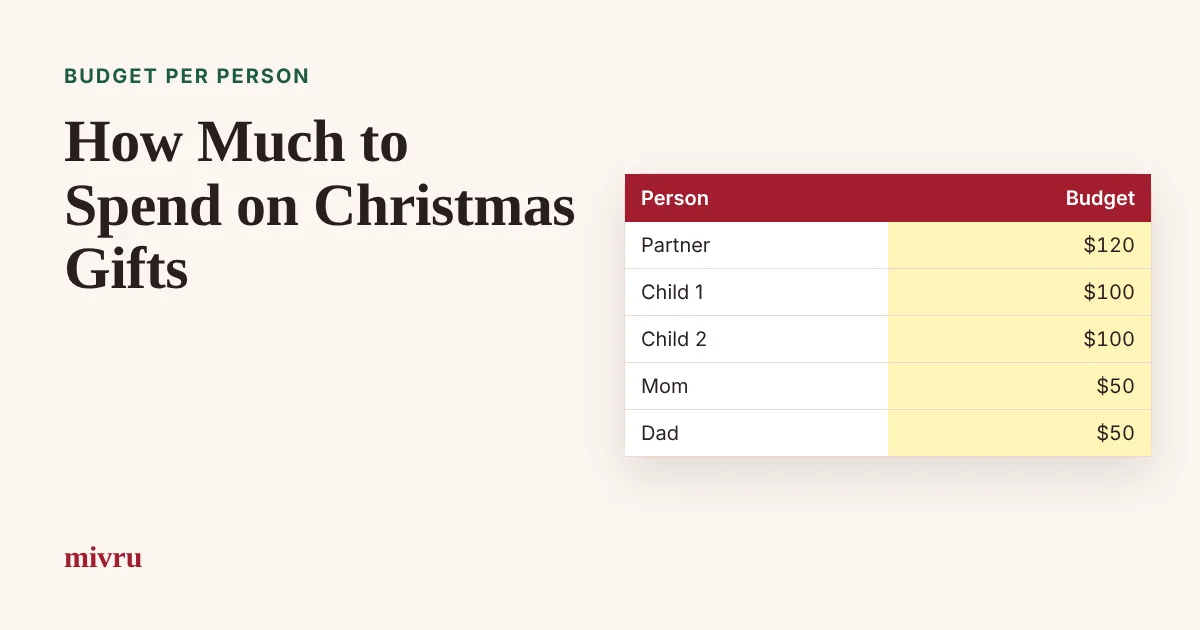
Our example family ends up with $120 for each other, $100 per child, $50 for each grandparent, and small amounts for teachers, a work Secret Santa and host gifts. We walk through the whole list — and how to choose fair amounts — in how much to spend on Christmas gifts.
If you like to plan on paper, our free one-page gift list has a budget column next to every name.
Step 5: Turn the total into a weekly savings number
A total is easier to reach when you break it into the weeks you have left. Take what you still need to save and divide it by the number of paydays or weeks before mid-December.
Example: $900 total − $300 already saved = $600 to save. Eight weeks left → $75 a week, or $150 per paycheck if you are paid every two weeks.
If that number is too high, change the plan now, not on December 20. Lower a category, or start a small monthly amount for next year. Our guide on how to save for Christmas has a week-by-week plan and ideas for finding the money.
Step 6: Plan Black Friday before it starts
In 2026, Black Friday falls on November 27 and Cyber Monday on November 30. Big sales can stretch your gift budget — or blow it up, if you buy things that were never on the list.
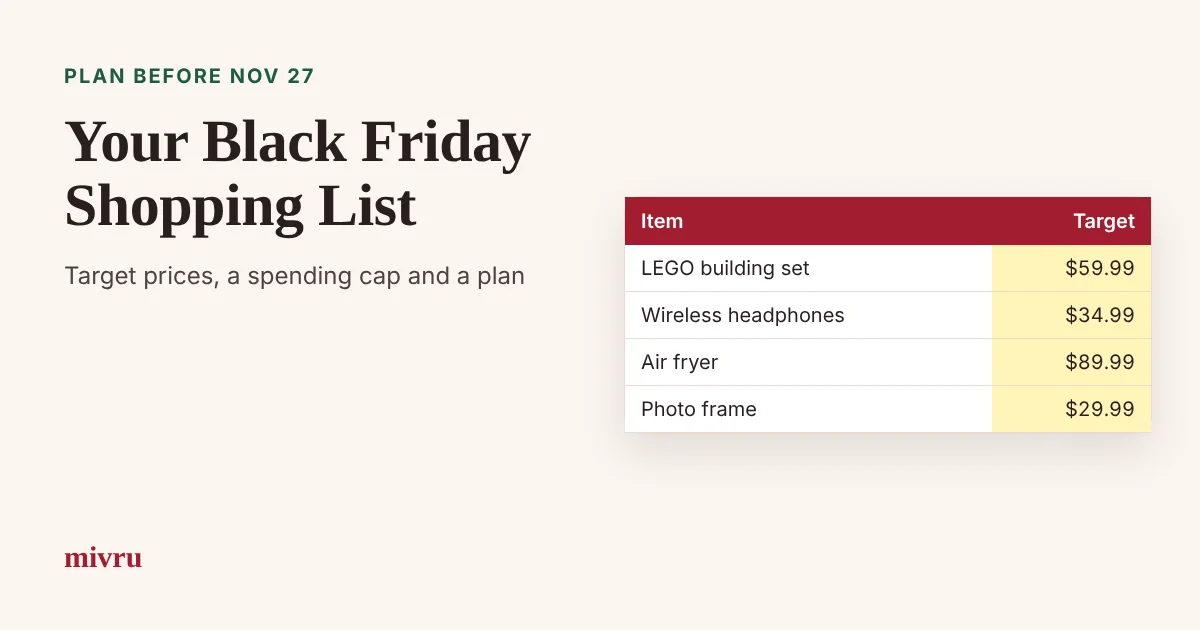
Before the sales begin, write down each gift you plan to buy, its usual price and the price you are willing to pay. Our Black Friday shopping list guide shows how to set target prices and why a "deal" is not always cheaper than the rest of the year.
Step 7: Track your spending every week
A budget you only look at once is a guess. Once a week — Sunday evening works well — write down what you bought, what it cost, and how much is left in each category.
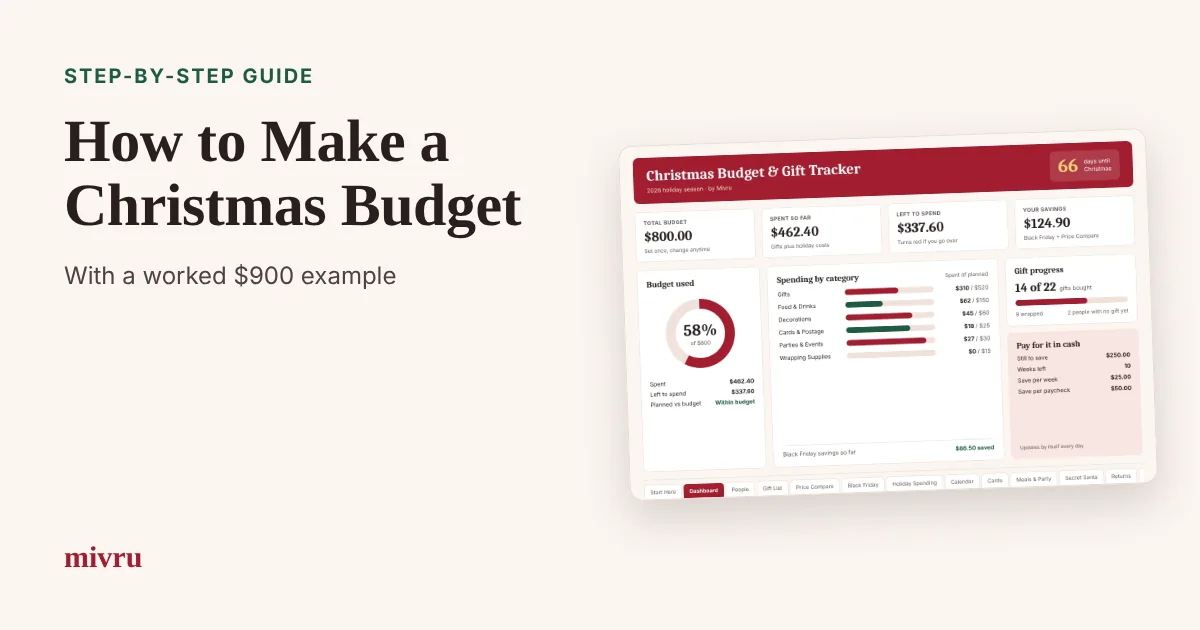
This is where a spreadsheet earns its keep. Each purchase updates the totals, and you can see at a glance which person still has no gift and which category is running hot.
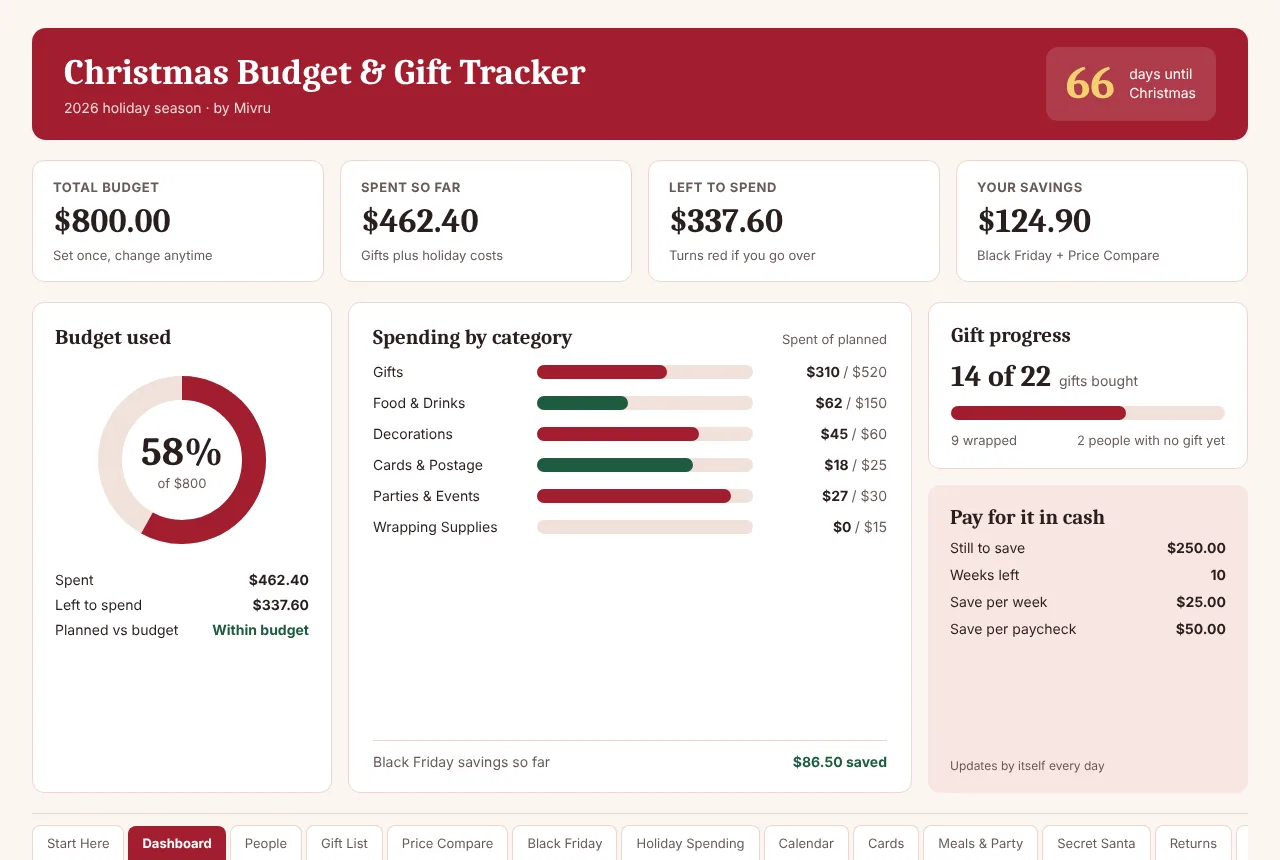
We built the Christmas Budget & Gift Tracker for exactly this. You type your budget and gifts into the yellow cells, and it handles the math: a budget per person, a gift list with room for 200 gifts, a Black Friday planner, a holiday spending tab and a savings plan that works out what to set aside each week or each paycheck.
Spreadsheet, app or paper?
All three can work. Pick the one you will actually open every week.
| Feature | Spreadsheet | Budgeting app | Paper planner |
|---|---|---|---|
| Totals and math | Automatic | Automatic | By hand |
| Budget per gift and person | Easy | Often not possible | Easy |
| Christmas-only categories | Easy to add | Depends on the app | Easy |
| Works offline | Yes (Excel) | Usually not | Yes |
| Cost | One-time or free | Often a subscription | One-time |
Many people combine them: a spreadsheet for the numbers and a printed list on the fridge for the family. If you want a simple general monthly worksheet as well, the US government's consumer site has a free printable budget worksheet.
Common Christmas budget mistakes
- Starting with gifts instead of the total. Decide what you can afford first, then fit the gifts inside it.
- Forgetting the non-gift costs. In our example, food, travel and decorations take almost a third of the total.
- Treating the buffer as extra gift money. Spend it in week one and the first surprise goes on a card.
- Buying "deals" that were not on the list. A discount on something you did not plan to buy is still spending.
- Not tracking returns. Write down return deadlines for gifts that might not fit. Money you get back can go straight to January bills.
- Planning only for this year. Even $25 a month from January makes next Christmas much easier.
Your next step
Take ten minutes today and do steps 1 to 3: find your total, list your categories and split the money. Everything else gets easier once those three numbers exist.
If you want the math done for you, the tracker below has every step of this guide already built in.
Frequently asked questions
How much should I budget for Christmas?
Start with the amount you can pay in cash by mid-December: what you already have set aside plus what you can save each week until then. Surveys put the average American gift budget around $1,000, but your number should come from your own income, not an average.
What percentage of a Christmas budget should go to gifts?
In our worked example, gifts take 60% and the rest covers food, travel, decorations, cards and a small buffer. If you host a big dinner or travel far, gifts may need to be a smaller share.
When should I start a Christmas budget?
As early as you can. Starting in October gives you about nine weeks of paychecks to save from. Starting in January, with a small monthly amount, makes next Christmas almost painless.
Is a spreadsheet better than a budgeting app for Christmas?
A spreadsheet is easier to shape around Christmas: one row per gift, a budget per person and a countdown to the day. Apps are better for everyday spending. Many people use both.