How Much to Spend on Christmas Gifts (A Fair Budget Per Person)
What do people really spend on Christmas gifts, and how do you set a fair amount for each person on your list? Real survey numbers and a worked example.
"How much should I spend?" is the question that stalls most Christmas shopping. Spend too little and it feels stingy; spend too much and January hurts.
The good news: there is no rule you have to follow. There is only your total, and a fair way to share it. This guide shows what people actually spend, then walks through setting a gift budget for every person on your list — with a worked example you can copy.
What people actually spend on Christmas gifts
Averages are useful as a reality check, not as a target. Here is what the latest surveys say:
- About $1,007 on gifts in total. That was the average Americans expected to spend in Gallup's October 2025 poll, almost the same as the year before.
- Income makes a big difference. In the same poll, households earning under $50,000 planned about $651, those earning $50,000–$99,999 about $847, and those earning $100,000 or more about $1,479.
- Total holiday spending is higher than gifts alone. Deloitte's 2025 holiday survey put expected spending per shopper at about $1,595, including experiences and non-gift costs like hosting and décor — and that figure was 10% lower than the year before.
So if your gift budget is $300 or $3,000, you are not "doing it wrong". The only number that matters is the one you can pay for.
Start with your total gift budget, not with people
It is tempting to start with names: "$100 for Mom, $100 for Dad…" and add it up later. That is how budgets quietly double.
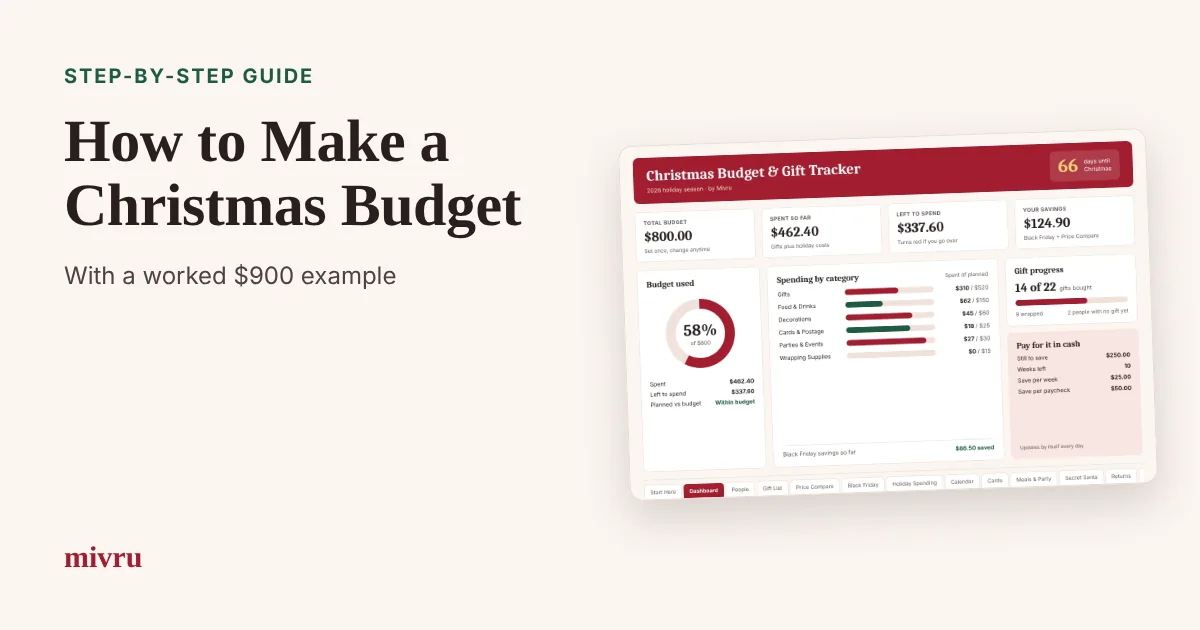
Start the other way round. Decide your whole Christmas budget first, then the share for gifts. In our guide to making a Christmas budget, the example family has $900 for the whole season and gives $540 (60%) to gifts. The rest covers food, travel, decorations, cards and a small buffer.
Now we share that $540 between people.
A simple way to set a budget per person
Sort everyone into three or four circles and give each circle an amount:
- Closest circle — partner and children. The biggest share.
- Family circle — parents, siblings, grandparents.
- Friends and "thank you" gifts — close friends, teachers, a host, a neighbor.
- Group gifts — work Secret Santa, a family gift exchange.
Then check the total against your gift budget. If it is too high, lower a whole circle at once instead of cutting one person — it feels fairer and is much faster.
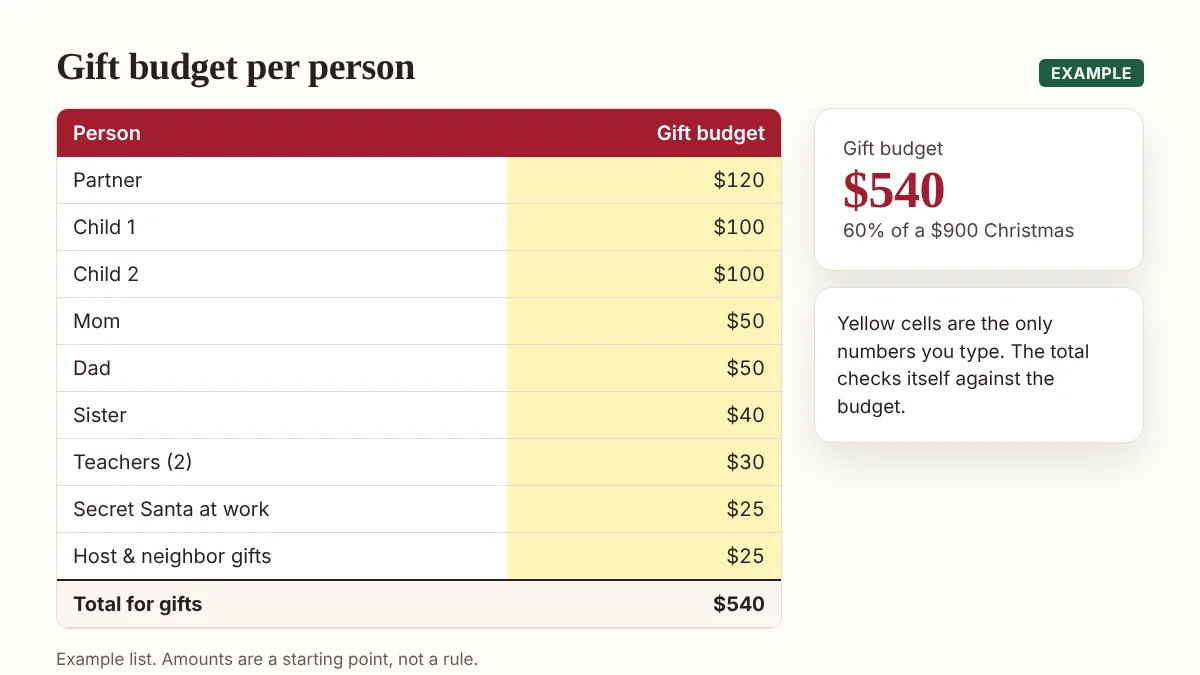
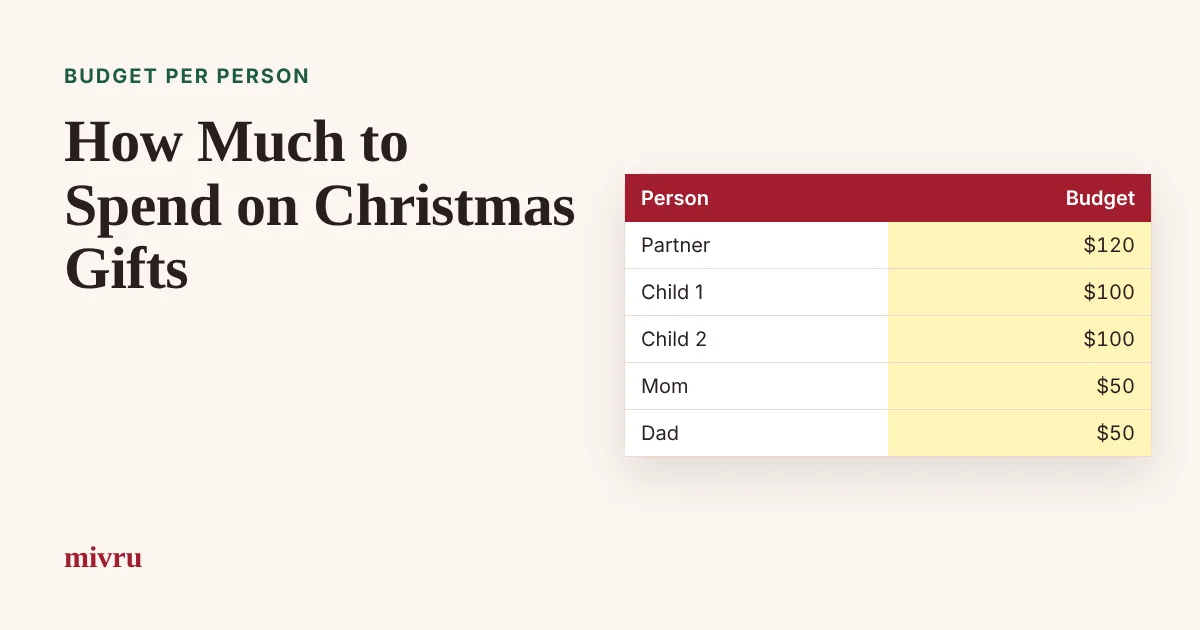
| Person | Circle | Gift budget |
|---|---|---|
| Partner | Closest | $120 |
| Child 1 | Closest | $100 |
| Child 2 | Closest | $100 |
| Mom | Family | $50 |
| Dad | Family | $50 |
| Sister | Family | $40 |
| Teachers (2) | Thank you | $30 |
| Secret Santa at work | Group | $25 |
| Host & neighbor gifts | Thank you | $25 |
| Total | $540 |
Who gets more, who gets less — and is that fair?
Spending different amounts on different people is normal. Children's gifts often cost more; adults often value something small and personal more than something expensive.
A few ways to keep it fair without matching dollar for dollar:
- Keep siblings equal. Children notice. If one present is cheaper, add a small extra so the piles look similar.
- Match within a circle, not across circles. Mom and Dad get the same; your coworker does not need to.
- Put time into the small gifts. A $15 teacher gift with a handwritten note lands better than a $30 gift card.
Ways to give more without spending more
If your list is longer than your budget, these ideas help:
- Suggest a family Secret Santa. Everyone buys one better gift instead of many small ones. Agree on a limit early.
- Give one gift per household to families you are not close to.
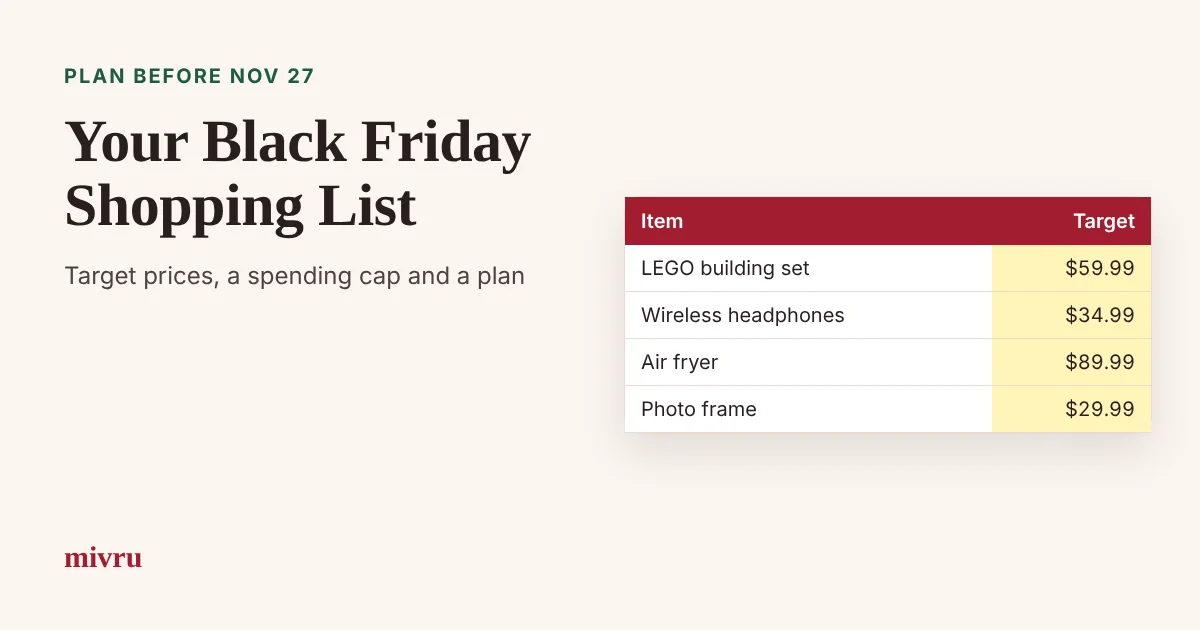
- Use Black Friday — with a list. Discounts on toys and electronics reached 28–31% at their peak in 2025, according to Adobe. Our Black Friday shopping list guide shows how to set a target price for each gift so you only buy what was planned.
- Make or bake. Cookies in a jar, a framed photo or a printed family recipe book cost little and are remembered.
- Give time. A "voucher" for a day out, babysitting or a home-cooked dinner.
Gift ideas by budget
Once a person has a number, it helps to shop by price band instead of by "something nice". A few starting points:
Under $25 — a good book in a genre they love, a nice notebook and pen, a cookie tin with homemade baking, a puzzle, a houseplant in a pretty pot, a framed photo, warm socks and a hot chocolate kit.
$25 to $50 — a board game for the family, a cozy throw blanket, a quality kitchen tool they keep borrowing, a set of skincare minis, a magazine subscription, a class or workshop voucher.
$50 to $100 — wireless headphones, a building set for a child, a small kitchen appliance, a day out (museum, zoo, cinema) for two, a good pair of slippers or gloves, a hobby starter kit.
$100 and up — usually for the closest circle: a bigger appliance, a piece of jewelry, a weekend experience, or one larger gift that the whole family shares.
A good idea list matters more than the price. Ask, listen in October and November, and write ideas down as soon as you hear them — the gift that someone mentioned once usually beats the one that looked impressive in a store.
How to talk to family about spending less
If your budget is smaller this year, it is better to say so early. Most families are relieved when someone goes first. A simple message works:
"We are keeping Christmas simpler this year. Would you like to do a Secret Santa for the adults, with a $30 limit, and keep presents for the kids?"
Suggest a clear alternative — a gift exchange, a limit, or gifts for children only — rather than just "let's spend less". People find it easier to say yes to a plan.
Keep it on track with a gift list
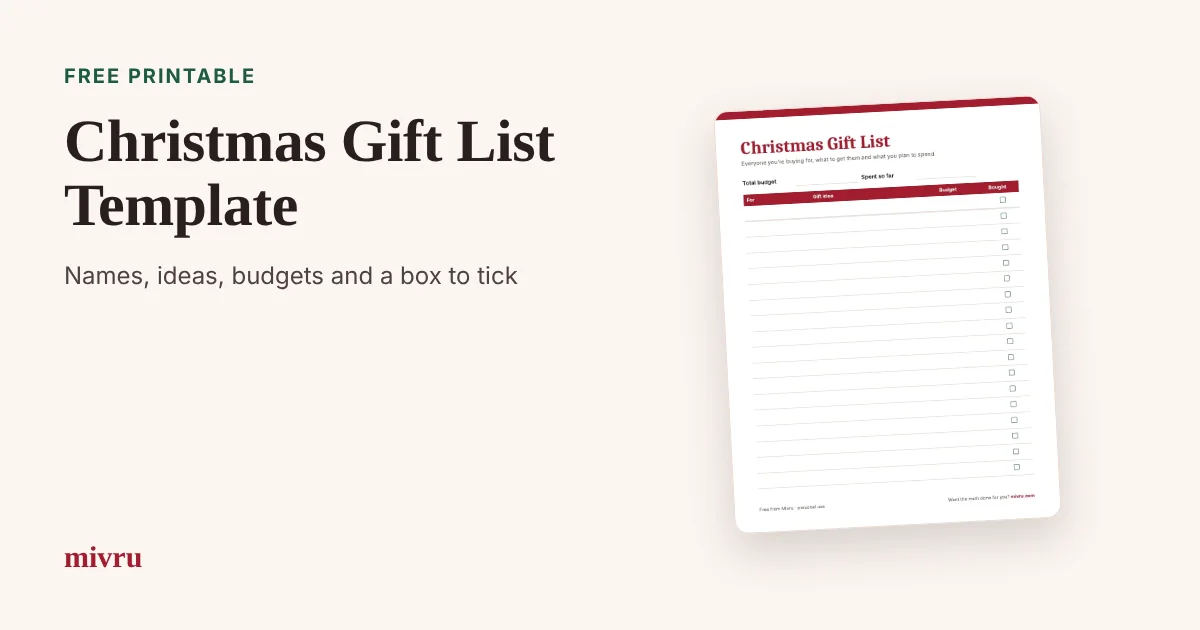
Once each person has a number, keep the list somewhere you will see it while shopping. Write the idea, the budget and whether it is bought — and check it before every purchase.
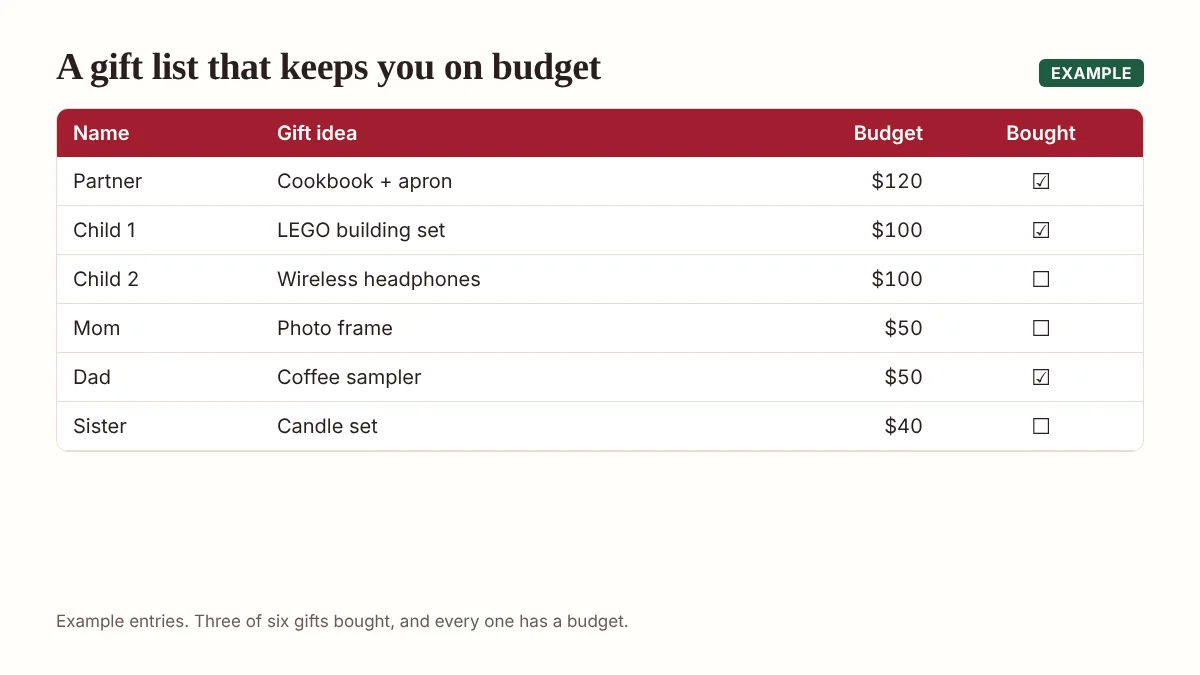
Our printable list is free, and it fits on one page. We explain how to fill it in — and how to use it with a spreadsheet — in Christmas gift list template.
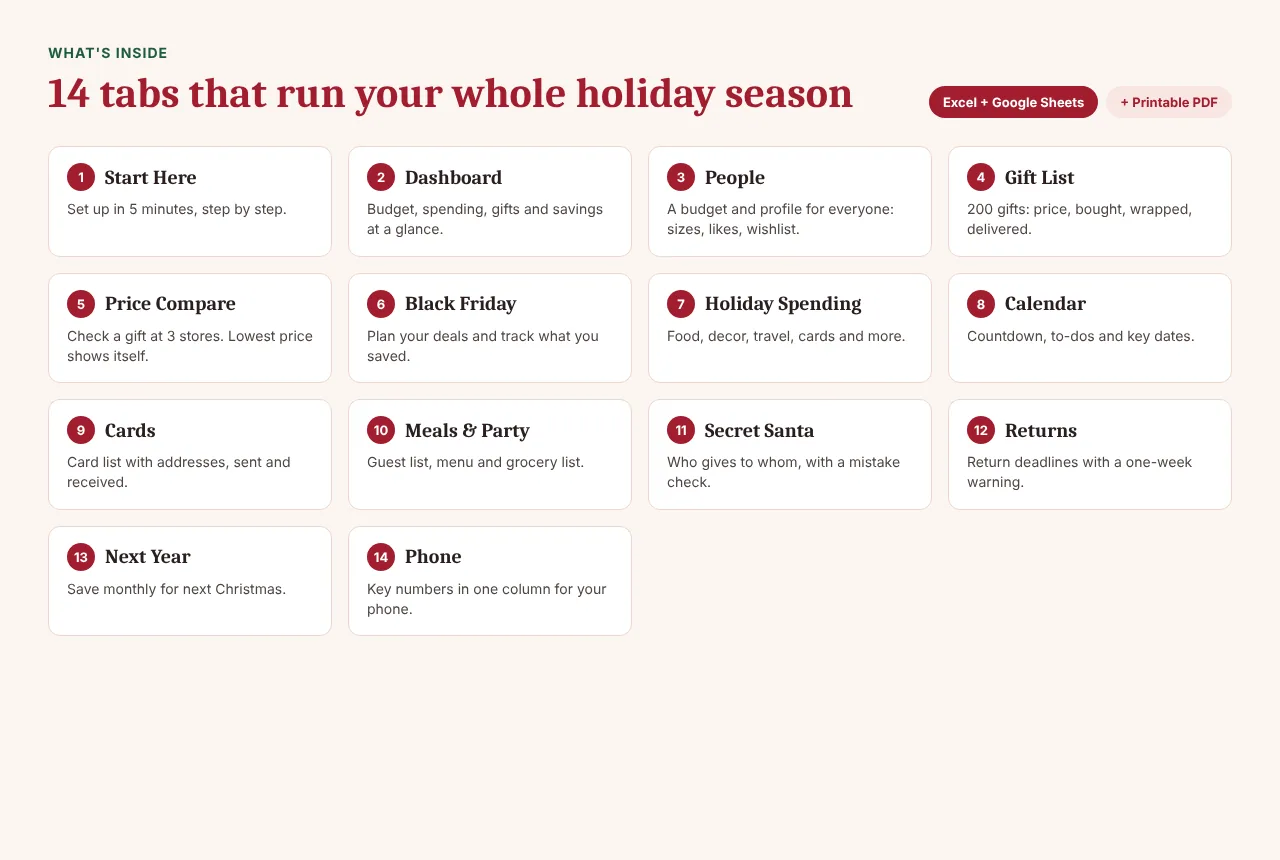
If you would rather not add things up by hand, our tracker does it as you type. The People tab gives everyone a budget and keeps notes on sizes, likes and wishlists; the Gift List tracks the price and status of every gift, and the dashboard turns red the moment you go over.
The short answer
Spend what you can pay for in cash, share it out by circles before you shop, and write the number next to every name. That turns "How much should I spend?" into a list you can simply work through — and a January without surprises.
Frequently asked questions
How much does the average person spend on Christmas gifts?
In Gallup's October 2025 poll, Americans expected to spend about $1,007 on holiday gifts in total. The amount varied a lot by income, from about $651 for households earning under $50,000 to about $1,479 for those earning $100,000 or more.
Is it rude to spend different amounts on different people?
No. Most people spend more on a partner and children than on extended family or coworkers. What matters is that each gift feels thoughtful, and that you can pay for all of them.
How much should I spend on a coworker or teacher gift?
Small and personal works best. In our example, $15 per teacher and $25 for a work Secret Santa. Many workplaces set a Secret Santa limit, so follow it.
What if my gift budget is too small for everyone on my list?
Shorten the list or change the format: a family Secret Santa, one shared gift per household, or homemade gifts for extended family. It is easier to agree on this in November than in late December.