Family Emergency Binder Printables Free Checklist
Family emergency binder printables: what to put in, a free one-page emergency contacts and documents checklist, and how to keep it ready. US Letter PDF.
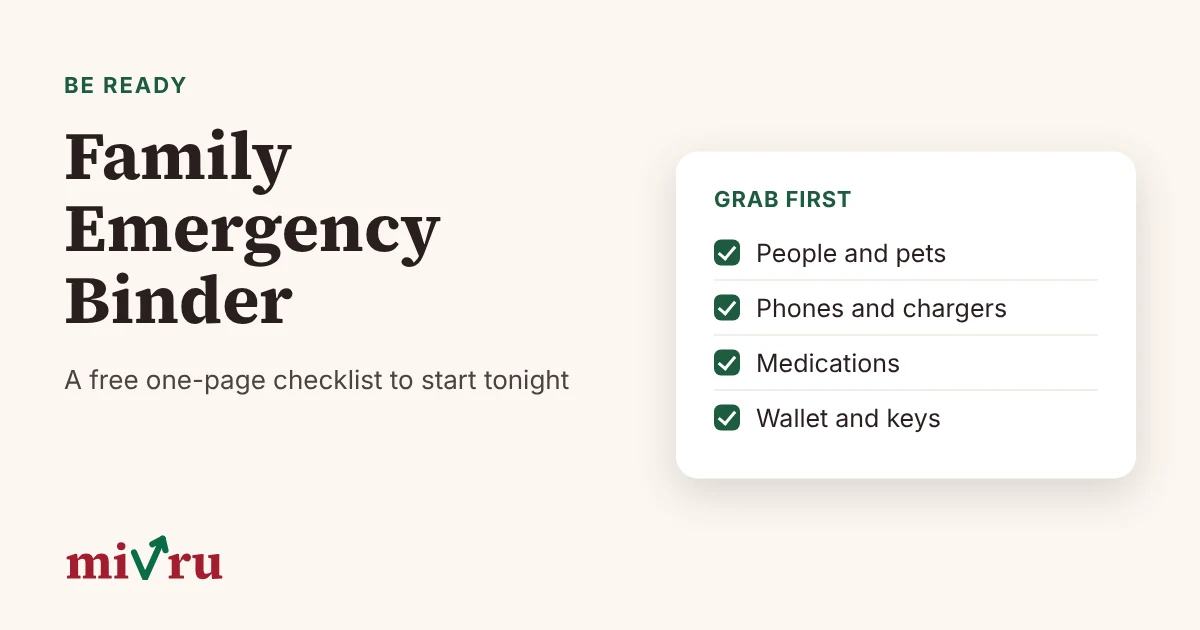
Family emergency binder printables give you one place for the phone numbers, papers and decisions you will not want to figure out in the middle of a bad day. This guide explains what belongs in a family emergency binder, with a free one-page checklist to start it tonight.
Nothing here replaces advice from your local emergency management office. It is a practical way to get organized. The example names and numbers are made up.
Start with the plan, not the paper
Ready.gov's Make a Plan page lists four steps: meet with your household to talk about alerts, shelter, evacuation routes and how you will communicate; assess your household's needs, such as ages, medical needs, languages and pets; write the plan down using its fillable family emergency plan form; and practice it. It also advises choosing a familiar, easy-to-find family meeting place.
A binder is where that written plan lives, next to the phone numbers and papers it depends on.
What goes in a family emergency binder
1. Emergency contacts. Family, a neighbor, doctors, the vet, insurance, utilities, school and work. Include an out-of-area contact: someone far away whom everyone can call to say they are fine. Ready.gov says to know how you will contact one another and reconnect if separated.
2. Meeting places. One near home and one outside the neighborhood.
3. A list of key documents. Ready.gov's financial preparedness page says to gather household identification, financial and legal records, and medical information and to keep a list of banks, insurance agents, health professionals and service providers. Write where each document is kept.
4. Health information. Doctor, dentist and pharmacy contacts and the list of medicines each person takes, if you are comfortable having it in the binder. Leave out diagnoses.
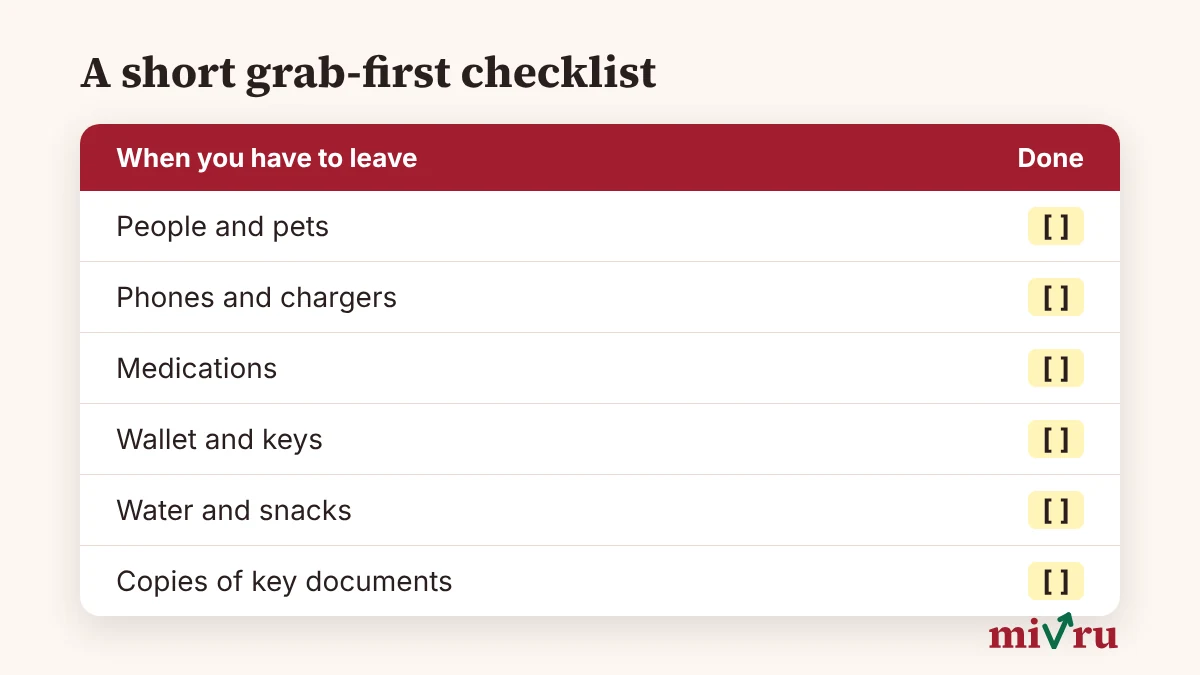
5. A grab-first checklist. People and pets, phones and chargers, medications, wallet and keys, water and snacks, a flashlight, a change of clothes and copies of key documents.
6. Home details. Where the water and gas shut-offs and the electrical panel are, and who has a spare key.
Keep copies where you can reach them
A binder at home is only useful if you can get to it. Ready.gov suggests keeping important documents in a safety deposit box, on an external drive or in cloud storage so you can reach them in a disaster. A simple approach is to keep the paper binder at home and a scan of the contacts and document list in a cloud folder that a trusted adult can open.
The same page says to be careful about sharing bank account, Social Security and credit card numbers. So do not write them in the binder. Write where the cards and papers are kept.
A free one-page checklist
The free emergency contacts and key documents checklist is a single US Letter page. The top half is a table for seven emergency contacts. The bottom half is a checklist of the documents most households should be able to find: passports, driver licenses, birth certificates, home or renters insurance, auto and health insurance, tax returns, a will, a power of attorney, mortgage or lease papers, the car title and registration. Each has a box and a "where kept" line.
How to fill it in 20 minutes
- Write the date and your household name at the top.
- Fill the contacts table: partner, an out-of-area relative, a neighbor, your doctor, your insurance claims line.
- Walk to where your papers live. Tick each document you have and write its home next to it.
- Circle anything you cannot find. That is your short list for the weekend.
- Put the page at the front of the binder, or on the fridge if your household is comfortable with that.
Make it a habit
Choose two dates a year and put them in your calendar. On those days, check phone numbers, expiry dates and where the grab-first items are. Practice the plan with everyone in the household, as Ready.gov recommends, and change the binder if anything goes wrong in the drill.
If you are also organizing your household money, our guide on how to keep track of bills is a good next step. For the full set of pages, see the printable household binder guide and the household binder printables guide. This is general information, not emergency or legal advice.
What to check twice a year
Pick two easy dates, such as the days the clocks change, and go through the binder:
- Phone numbers. Call one or two to check that they still work.
- Medications and allergies. Update anything that has changed.
- Insurance and account details. Check the policy numbers and the contact numbers on the cards.
- Meeting places. Make sure everyone, including children, still knows where to go.
- Copies. Replace any copy that is faded or out of date.
Who should have a copy
| Person | What they should have |
|---|---|
| Another adult in the home | The whole binder, and where it is kept |
| A trusted relative or friend out of the area | Emergency contacts and the one-page checklist |
| Older children | A simple page with who to call and where to go |
| Your doctor or school, if you wish | Only the details they need |
A binder is most useful when more than one person knows it exists. Do not put full account numbers or passwords on pages you share. Write where they are kept instead.
Want the whole binder?
The Mivru Household Binder adds a family information page, a full document log, an accounts list, an "if we have to leave" checklist, a home and vehicle page and a renewal calendar, 11 printable pages in all, plus a spreadsheet for Excel and Google Sheets that shows what is missing and what is about to expire. See the Household Binder Printables & Spreadsheet.
Frequently asked questions
What is a family emergency binder?
It is a binder with your emergency contacts, a list of where key documents are kept, medical and insurance contacts and a short plan for what to do if you have to leave home.
Is there a free family emergency binder printable?
Yes. Mivru has a free one-page PDF with an emergency contacts table and a key documents checklist. Download it from the free page.
What should I grab first if I have to leave?
People and pets, phones and chargers, medications, wallet and keys, water and snacks. Then copies of key documents if you have time.
Should I store copies of documents in the cloud?
Ready.gov suggests keeping important documents in places you can reach during a disaster, such as a safety deposit box, an external drive or cloud storage. Use a service you trust and protect it with a strong password.
How often should I practice the plan?
Ready.gov says to practice your plan with your household. Walk through it once or twice a year and update the binder afterward.