Debt Payoff Tracker Example: Six Debts, Month by Month
See a filled-in debt payoff tracker: six example debts, the avalanche plan month by month, the debt-free date and the interest saved. Free worksheet.
This debt payoff tracker example shows a complete plan for six debts, filled in and calculated month by month. The names and numbers are made up. Use it as a pattern for your own tracker.
The debts
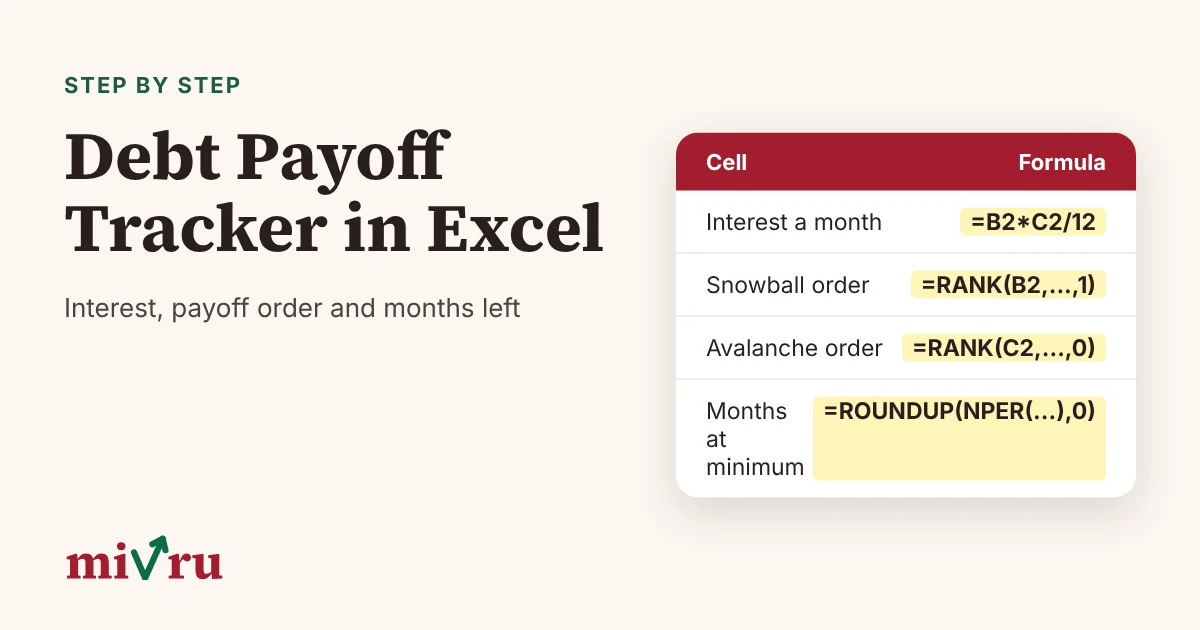
The household owes $34,070 across six debts. Interest is worked out each month as balance x APR / 12.
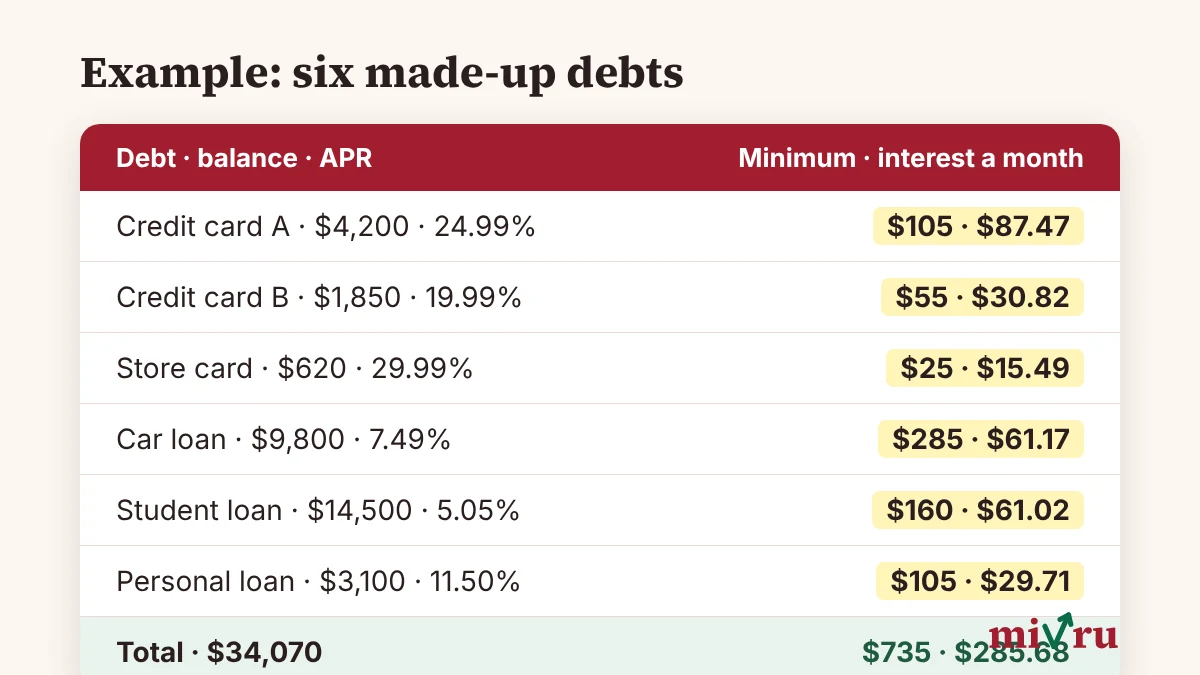
Example: Credit card A $4,200 at 24.99% (minimum $105, interest $87.47 a month). Credit card B $1,850 at 19.99% (minimum $55, interest $30.82). Store card $620 at 29.99% (minimum $25, interest $15.49). Car loan $9,800 at 7.49% (minimum $285, interest $61.17). Student loan $14,500 at 5.05% (minimum $160, interest $61.02). Personal loan $3,100 at 11.50% (minimum $105, interest $29.71).
Together the debts cost $285.68 in interest in the first month, and the minimums add up to $735.
The plan
The household chooses the avalanche: highest interest rate first. It can add $200 extra a month, so it pays $935 a month in total. The first payment is August 2026.
The payoff order is the store card (29.99%), credit card A (24.99%), credit card B (19.99%), the personal loan (11.50%), the car loan (7.49%) and the student loan (5.05%).
The first months
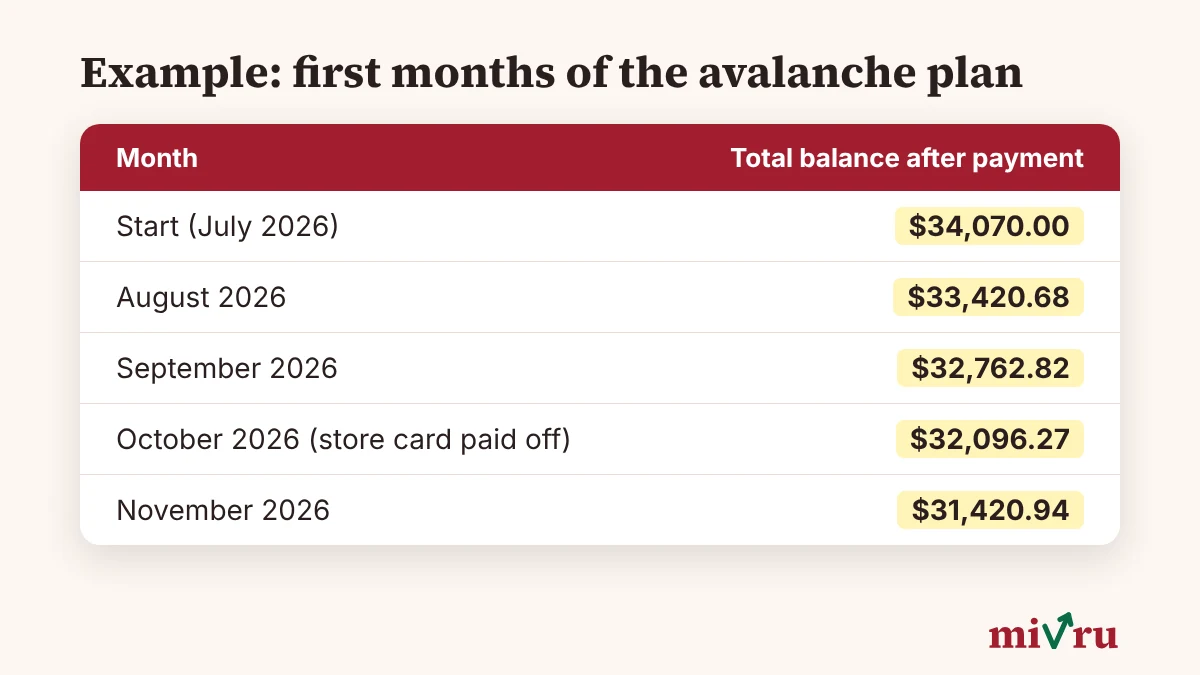
In August 2026 every debt gets its minimum, and the store card gets the extra $200 on top of its $25, a payment of $225. The total balance falls from $34,070 to $33,420.68.
In October the store card is paid off with a final payment of $200.64. From November, the freed-up $225 rolls onto credit card A, which now gets $330 a month ($105 + $225).
The milestones
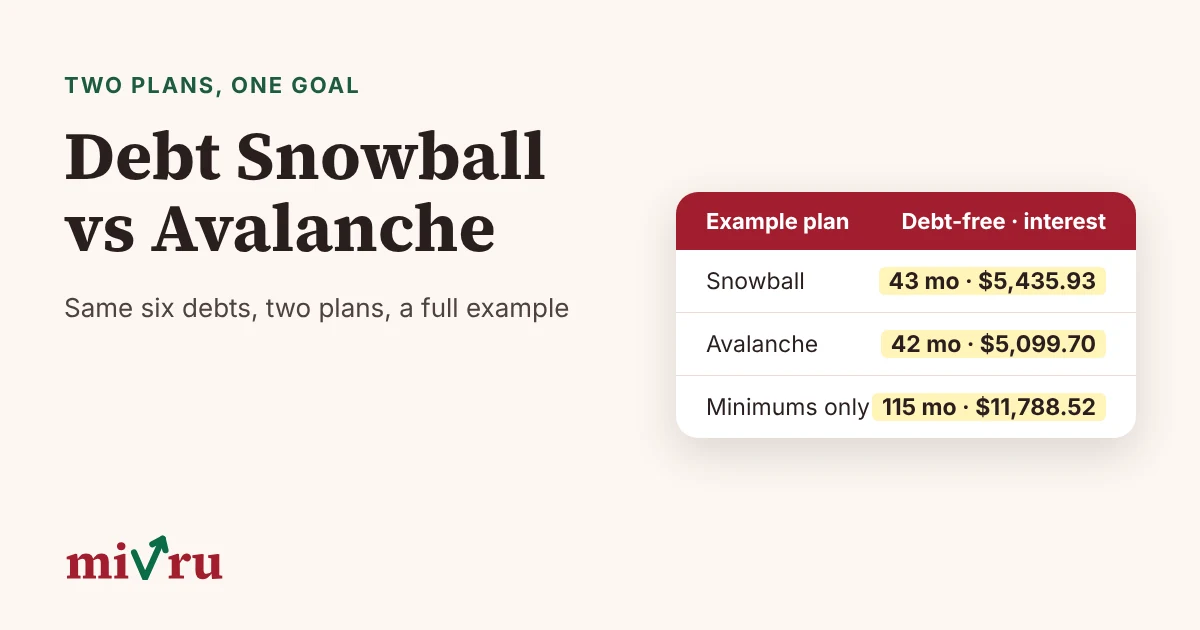
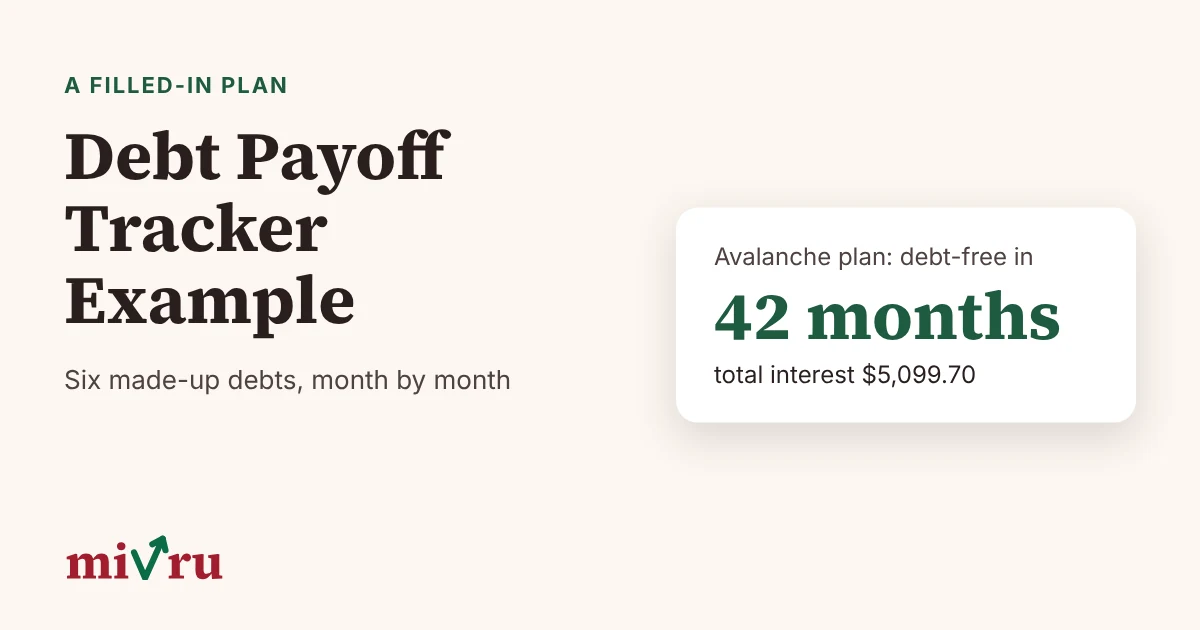
Example: With the avalanche, the debts are paid off in this order: store card October 2026, credit card A January 2028, credit card B May 2028, personal loan August 2028, car loan January 2029 and the student loan January 2030. Everything is paid off after 42 months, with total interest of $5,099.70.
After 12 payments (July 2027) the total balance is about $25,716. After 24 payments (July 2028) it is about $16,056.
Compared with the minimums
If the household paid only the minimums, the same debts would take 115 months (February 2036) and cost $11,788.52 in interest. The avalanche plan finishes 73 months sooner and saves $6,688.82 in interest.
The snowball plan, with the smallest balance first, takes 43 months and costs $5,435.93. That is $336.23 more than the avalanche. Our guide to debt snowball vs avalanche explains how to choose.
Tracking real progress
A plan is a forecast. A tracker also records what really happens. Each month the household writes down the balance of every debt and compares the total with the plan. Seeing progress matters: a study in the Journal of Consumer Research found that concentrating repayments on fewer accounts increased consumers' motivation to get out of debt. In the example, after August the total is $33,395.68 against a plan of $33,420.68, so the household is $25 ahead because it paid a little extra on credit card A. After September it is $60 ahead.
What to watch for
- A minimum below the interest. If a minimum payment is lower than the monthly interest, the balance grows. A tracker should warn you.
- New debt. The plan assumes no new purchases on the cards.
- Rate changes. If a card's rate changes, update it and the dates move.
This is general information, not financial advice. The U.S. Federal Trade Commission's guide Choosing a Credit Counselor lists what to ask before you work with a credit counseling organization.
How to make your own
- List every debt with its balance, APR and minimum payment.
- Choose snowball or avalanche and number the debts.
- Decide how much extra you can pay each month.
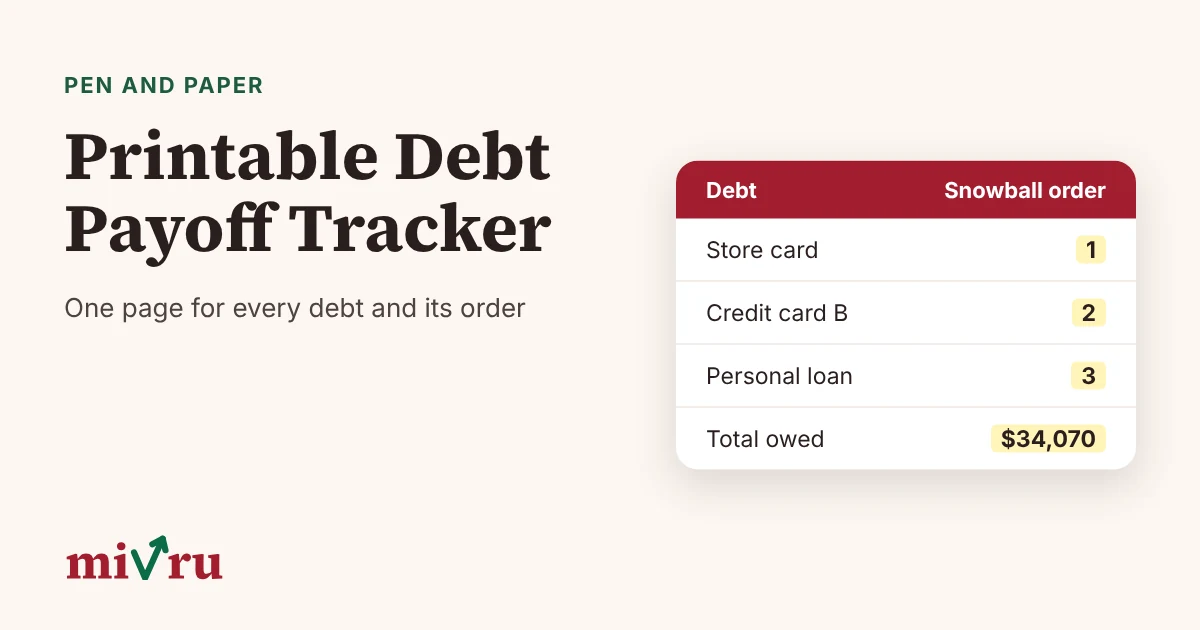
- Work out each month's payments and balances, or let a spreadsheet do it. See how to build one in Excel or print the free worksheet.
- Record your real balances every month.
If you also want to find extra money to put on your debts, our subscription tracker example shows how one household found $228 a year in cancelled subscriptions, and the expense tracker example shows where a month of spending goes.
The six debts at a glance
| Debt | Balance | APR | Minimum | Interest, first month |
|---|---|---|---|---|
| Credit card A | $4,200 | 24.99% | $105 | $87.47 |
| Credit card B | $1,850 | 19.99% | $55 | $30.82 |
| Store card | $620 | 29.99% | $25 | $15.49 |
| Car loan | $9,800 | 7.49% | $285 | $61.17 |
| Student loan | $14,500 | 5.05% | $160 | $61.02 |
| Personal loan | $3,100 | 11.50% | $105 | $29.71 |
Every minimum is higher than that debt's monthly interest, so each balance goes down even before any extra money is added. If a minimum were lower than the interest, the balance would grow, and that is the first thing to check on your own list.
How the payoff order shows up in a tracker
A good tracker shows the payoff month of each debt, so you can see the plan working. In the avalanche example the first debt is gone in October 2026 and the last in January 2030. Between those dates the payment you were making on a paid-off debt moves to the next one, so the total you pay stays the same while the number of debts falls.
A monthly check you can do in ten minutes
- Enter each new balance from your statements, not from memory.
- Compare it with the plan. Is each balance at or below where the plan says it should be?
- Note any month you paid extra or less. Small changes show up in the debt-free date.
- Look at the next debt in the order. Make sure its extra payment is set up before the current one is paid off.
- Write down one thing you will do differently if you are behind.
Want it filled in for you?
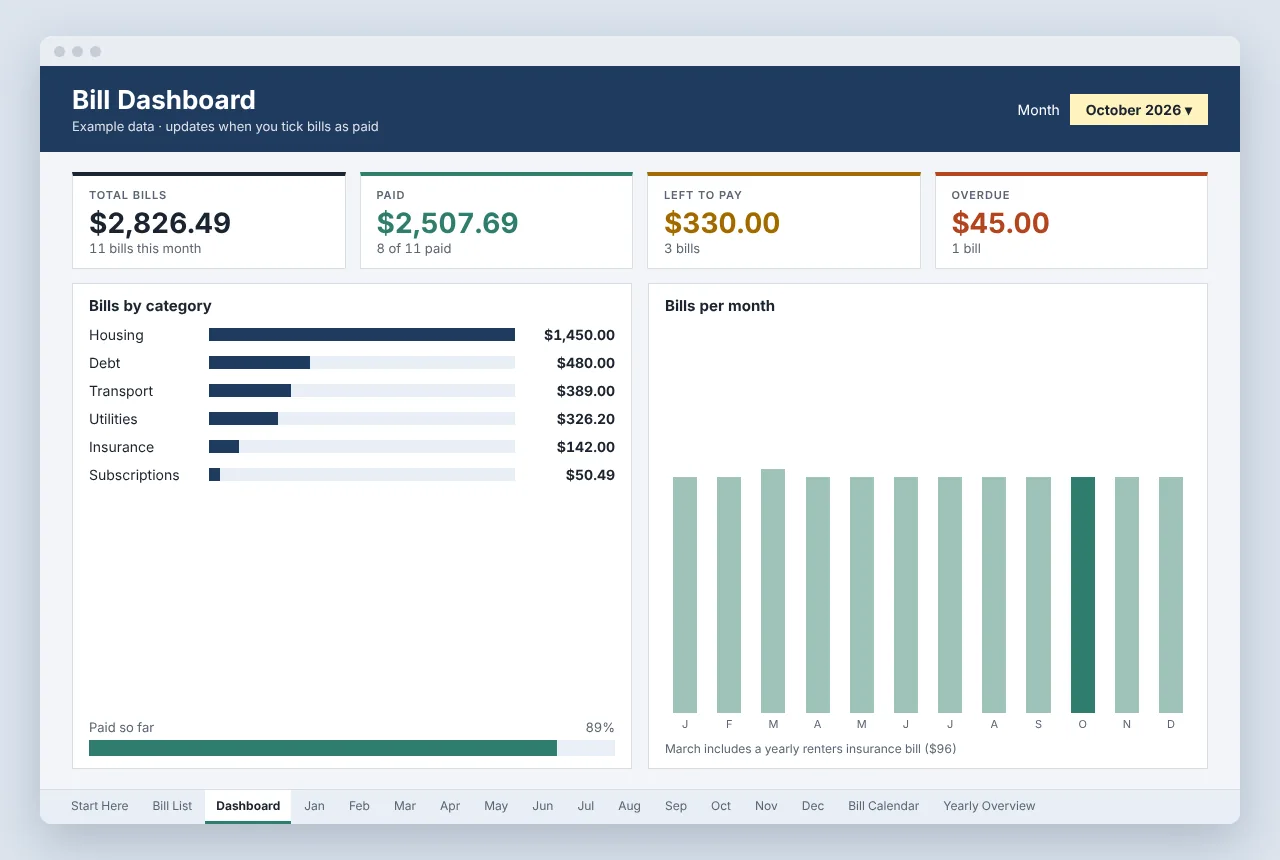
The Mivru Debt Payoff Tracker has this plan ready: both the snowball and the avalanche calculated month by month for up to 10 debts, with a dashboard, a progress sheet and a 12-page printable planner. The example is included so you can see how it works. Clear it and enter your own debts. See the Debt Payoff Tracker Spreadsheet.
Frequently asked questions
What does a filled-in debt payoff tracker look like?
It lists each debt with its balance, interest rate and minimum payment, shows which debt to pay first, and tracks the payment and remaining balance for every month until all debts are paid. This page walks through a complete made-up example.
What should a debt payoff tracker include?
The balance, APR and minimum payment of each debt, your extra monthly payment, the payoff order, a month-by-month schedule, and a way to record your real balances so you can compare them with the plan.
Are the numbers in this example real?
No. The six debts, balances and rates are made up to show how a tracker works. Use your own numbers.
How is the interest worked out?
Each month the interest is the balance times the APR divided by 12. Real lenders may use daily balances and billing dates, so actual dates can differ a little.
Where can I get a template?
You can build a basic one in Excel or Google Sheets with our step-by-step guides, print the free worksheet, or use a ready-made spreadsheet that runs the plans for you.