How to Avoid Holiday Debt: A Simple Plan for This Christmas
Learn how to avoid holiday debt with seven simple steps: a fixed budget, a savings pot, cash limits and a plan if you already owe on a card.
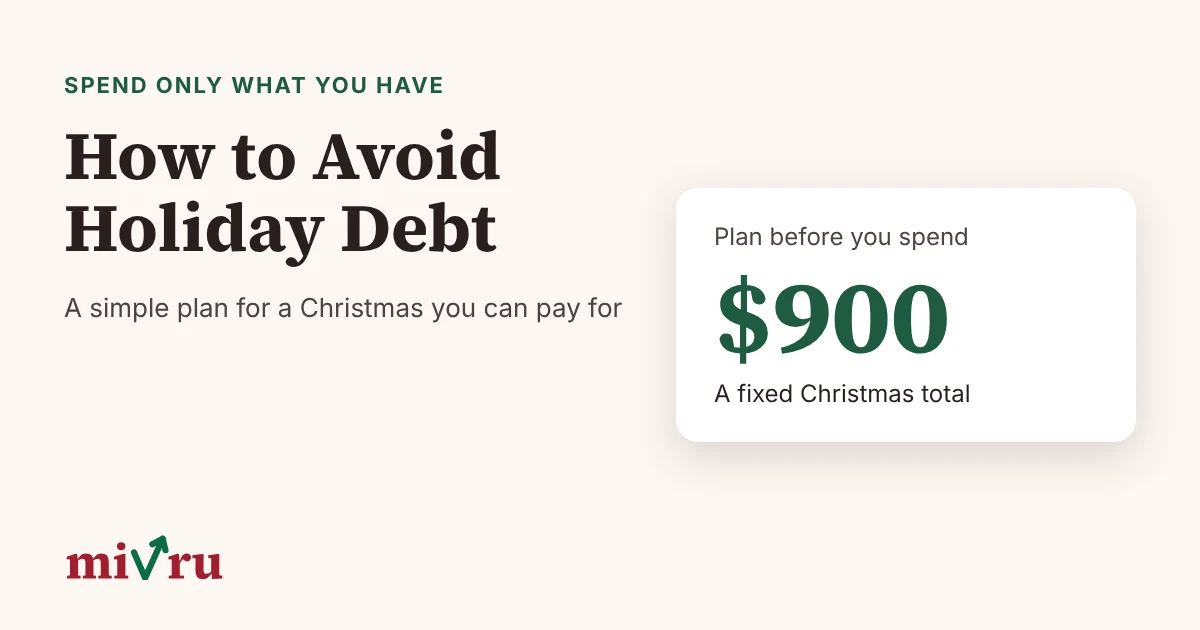
If you want to know how to avoid holiday debt, the answer is simple but not easy: decide how much Christmas costs before you start spending, then spend only that. The seven steps below turn that into a plan you can finish in an evening.
Holiday debt is common. A survey reported by Chain Store Age found that 37% of Americans took on holiday debt the previous season, averaging $1,223. Much of it takes months to pay off, long after the gifts have been opened.
Step 1: set a fixed total
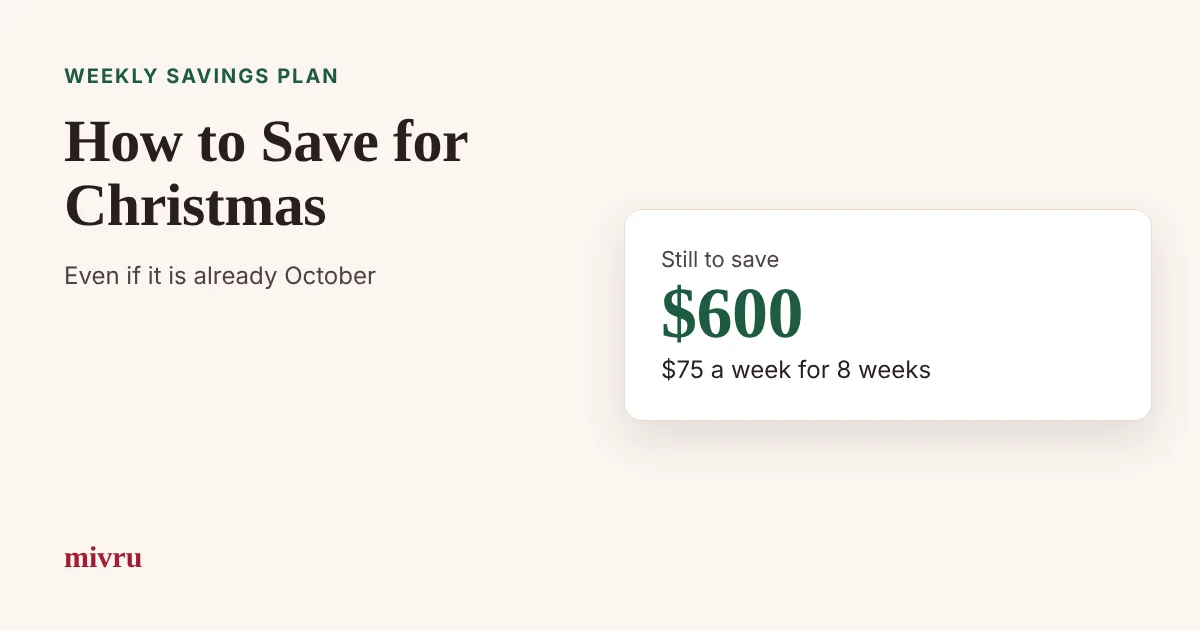
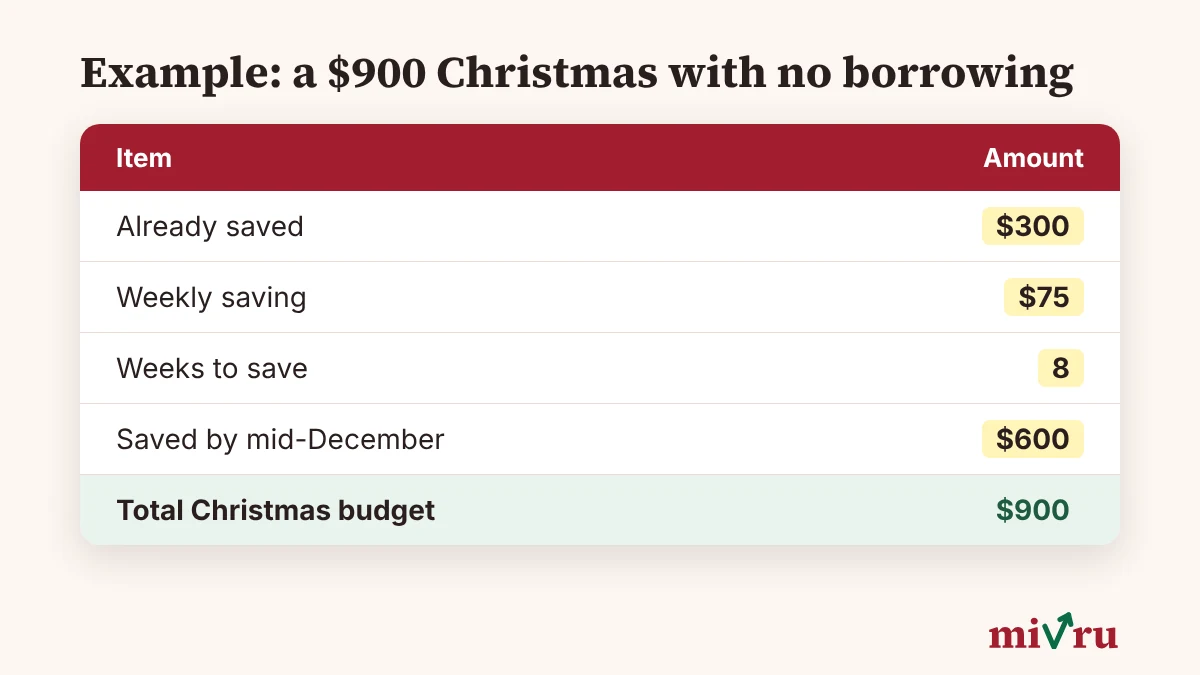
Add up what you have already saved and what you can save before December 25. In our example, that is $300 saved plus $75 a week for 8 weeks ($600), for a $900 Christmas. The total is not what you wish you could spend. It is what you can pay for without borrowing.
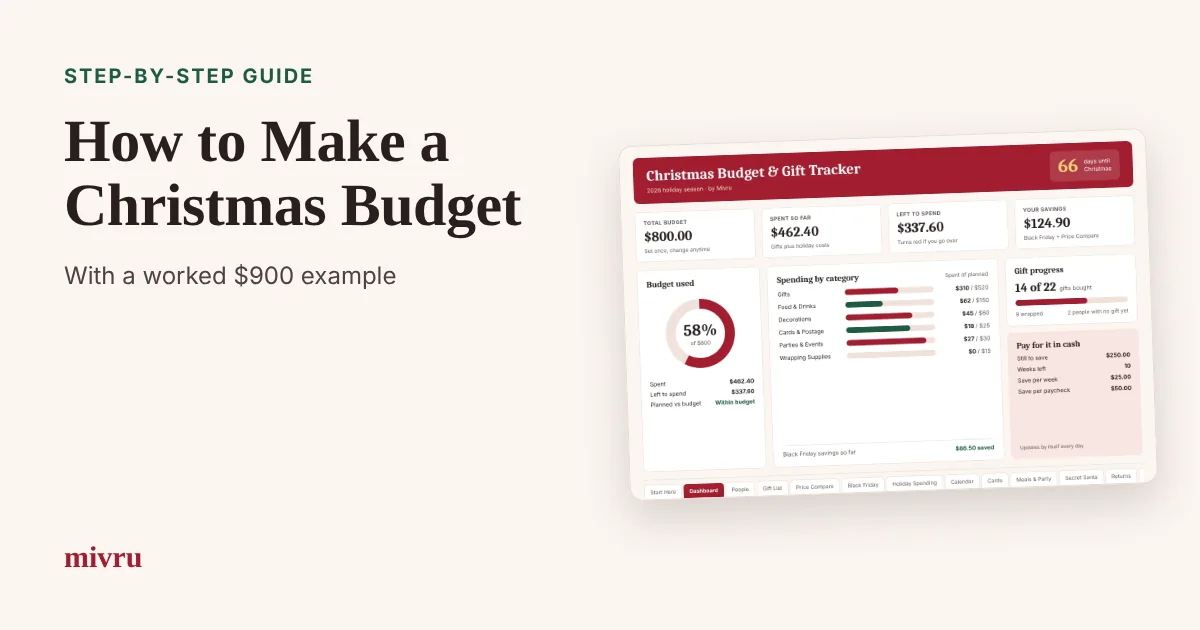
Our step-by-step Christmas budget guide shows how to split that total into gifts, food, travel, decorations, cards and a buffer.
Step 2: save in a separate pot
Open a savings pot or account labelled "Christmas" and move money into it on payday. A separate pot stops the money mixing with rent and groceries. Our guide on how to save for Christmas explains how to pick the weekly amount.
Step 3: write the gift list with a price next to every name
A budget only works if every name has a number. If the numbers add up to more than your gift budget, lower them now, not in December. You can use our free printable gift list for this.
Step 4: use cash, a debit card or a card you pay in full
Use a method where you cannot spend more than you have. If you use a credit card for rewards, only do so if you will pay it off in full when the bill arrives.
Step 5: wait 24 hours for anything not on the list
Sale emails are designed to create urgency. For anything that is not on your list, add it to a "maybe" note and decide tomorrow. Many items will look less necessary after a night. For the ones that still matter, choose what to remove to make room.
Step 6: watch for the hidden costs
Wrapping, shipping, party food and travel extras all add up. Add a line for them and a buffer of about 10 percent of your total. See our guide to hidden holiday costs.
Step 7: track every purchase
Write down each purchase on the day you make it. A spreadsheet with a "left" column for each category makes it obvious when you are close to a limit. Our Christmas budget spreadsheet guide shows how to build one for free.
If you already have holiday debt
If you are paying off a balance from last year, the same ideas apply:
- Pay more than the minimum. The FTC suggests paying a little extra or making more than one payment a month.
- Know how long it will take. Card statements must show how long it will take to pay off your balance if you only make minimum payments, and what monthly amount would clear it in 36 months, according to the Consumer Financial Protection Bureau.
- Pay the most expensive card first (the one with the highest interest rate) while making minimums on the others.
- Call early. If you cannot make a payment, contact the card company before the due date. They may offer a payment plan.
If money is very tight this year, read our guide to Christmas on a tight budget.
One page to keep it all together
All of the steps above fit on one tracker. Our Christmas Budget & Gift Tracker has the budget, gift list, price compare and savings plan in one file, and a 22-page printable planner.
A simple timeline to stay out of debt
| When | What to do |
|---|---|
| This week | Set the total and open a separate savings pot |
| Next week | Write the gift list with a price next to each name |
| Every week until December | Move a fixed amount into the pot |
| Before you shop | Check the list and the pot balance |
| Black Friday week | Buy only what is on the list |
| December | Track every purchase and stop when the pot is empty |
| January | Review what you spent and what you would change |
Five questions to ask before you pay
- Is it on the list? If not, wait 24 hours.
- Is the money already in the pot? If not, it is borrowing.
- Will I be able to pay this card off in full next month? If you are unsure, use cash or a debit card.
- Does the person need the gift, or do I need to feel I gave enough? The second is a feeling, not a bill.
- Is there a cheaper way to say the same thing? A handwritten card, a shared meal or your time can matter more than the price.
Signs you are drifting
- You stopped writing purchases down.
- You are buying things "just in case someone else gives me a gift".
- The number you say you will spend and the number on your statement are different.
- You are relying on the January statement to tell you how it went.
If you notice one of these, stop and look at the log. A small correction in early December is far easier than a large one in January.
Summary
To avoid holiday debt: set a total you can pay for, save into a separate pot, put a price next to every name, use a payment method with a limit, wait before unplanned purchases, budget for hidden costs and track everything. If you are already in debt, pay more than the minimum and call your card company early.
Frequently asked questions
How do I avoid going into debt at Christmas?
Set a fixed total before you shop, save for it weekly, and only spend what you have saved. If a purchase is not in the plan, wait a day before buying it.
Is it okay to put Christmas gifts on a credit card?
Yes, if you pay the balance in full when the bill arrives. Problems start when the balance is carried over, because interest then adds to the cost of every gift.
What if I already have holiday debt?
Pay more than the minimum, pay the card with the highest interest rate first, and call your card company early if you cannot make the payment. Many offer payment plans.
How much should I save each week for Christmas?
Divide your budget by the weeks left. In our example, $75 a week for 8 weeks adds $600 to $300 already saved, for a $900 Christmas.