How to Save for Christmas (Even If It's Already October)
Turn your Christmas total into a simple weekly savings number, find the money in your budget, and pay for the holidays without a January credit card bill.
If Christmas usually ends with a credit card statement you would rather not open, you are far from alone. In a LendingTree survey after the 2025 holidays, 37% of Americans said they took on holiday debt, averaging $1,223. Bankrate found that 57% of holiday shoppers planned to use credit cards, and about a fifth expected to carry a balance.
The fix is not to spend nothing. It is to save the money first, then spend it. Even starting in late October, there is time. Here is a simple week-by-week plan.
Step 1: Know your number
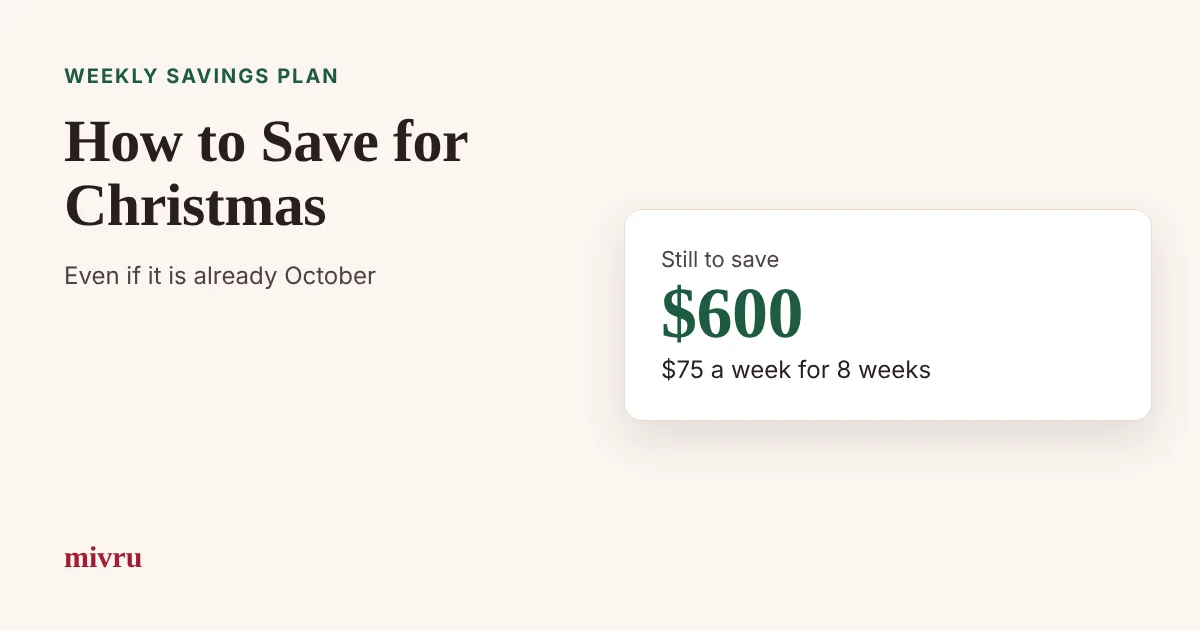
You cannot save for "Christmas". You can save for $600 by December 15.
Your number is your total Christmas budget minus what you already have set aside. If you do not have a total yet, our guide to making a Christmas budget helps you set one, including food, travel and decorations — not just gifts.
Example: A family plans a $900 Christmas. They already have $300 saved, so they still need $600.
Step 2: Turn it into a weekly amount
Count the weeks from now until about mid-December. Aim to finish then, not on Christmas Eve — you need the money in hand while you shop.
Weekly amount = money still needed ÷ weeks left
From the week of October 26, 2026 to the week of December 14, there are eight weeks:
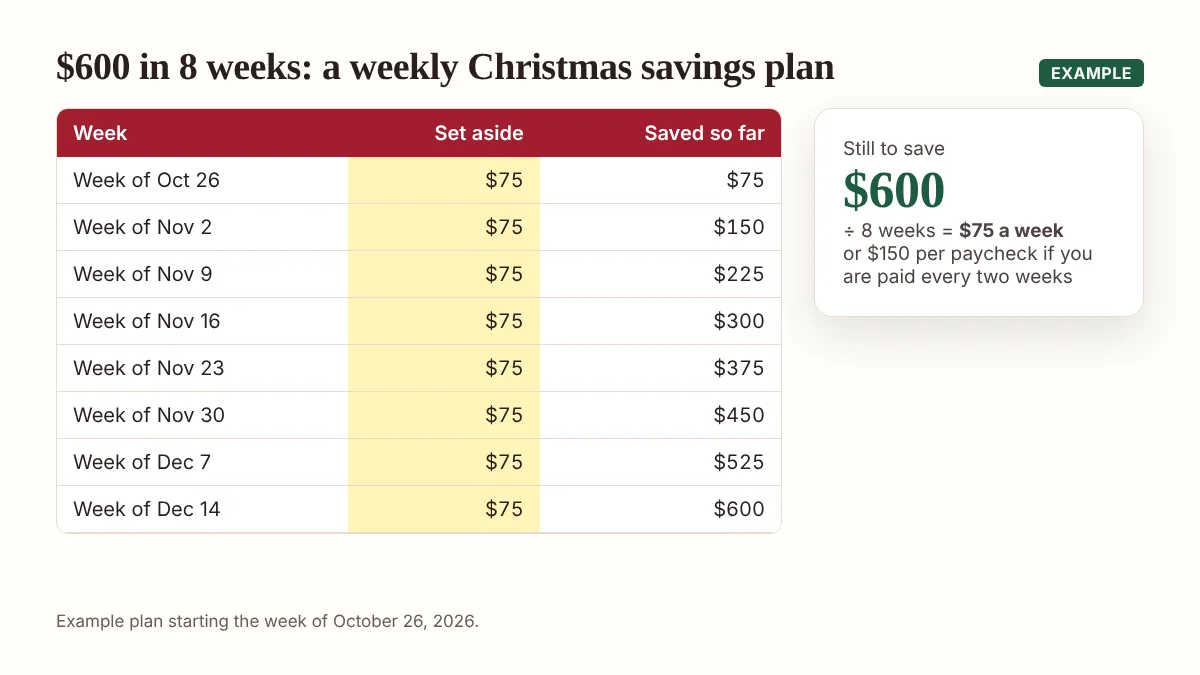
| Week of | Set aside | Saved so far |
|---|---|---|
| Oct 26 | $75 | $75 |
| Nov 2 | $75 | $150 |
| Nov 9 | $75 | $225 |
| Nov 16 | $75 | $300 |
| Nov 23 | $75 | $375 |
| Nov 30 | $75 | $450 |
| Dec 7 | $75 | $525 |
| Dec 14 | $75 | $600 |
Paid every two weeks? Use $150 per paycheck instead. Paid monthly? Two transfers of $300.
How much can you save by mid-December?
If you are not sure what is realistic, look at it the other way round. Here is what different weekly amounts add up to over the eight weeks from late October:
| Save each week | After 8 weeks |
|---|---|
| $25 | $200 |
| $50 | $400 |
| $75 | $600 |
| $100 | $800 |
| $150 | $1,200 |
Pick the row you can actually keep up, add what you already have, and that is your honest Christmas total.
Step 3: Keep the money out of reach
Money sitting in your everyday account tends to disappear. Give your Christmas savings their own home:
- A separate savings account or a savings "pot" in your banking app, named "Christmas".
- An automatic transfer on payday, so saving happens before spending.
- Cash envelopes, if you prefer physical money — one per category, like gifts or food.
The goal is simple: every dollar in that account already has a job.
Step 4: Find the money
$75 a week can feel like a lot. Most people find it in a mix of small changes rather than one big sacrifice:
| Idea | Typical weekly saving |
|---|---|
| Cook two more dinners at home instead of takeout | depends on your takeout habit |
| Pause one or two subscriptions until January | the cost of those subscriptions |
| Sell things you no longer use (toys, clothes, electronics) | one-off, often a good boost |
| Bring lunch to work three days a week | the price of three lunches |
| Put any cash-back, refund or bonus straight into the pot | one-off |
Write down which changes you will make and roughly what each one frees up. The numbers are personal; the habit is what matters.
Step 5: Make every dollar go further
Saving is half the job. The other half is spending the money well:
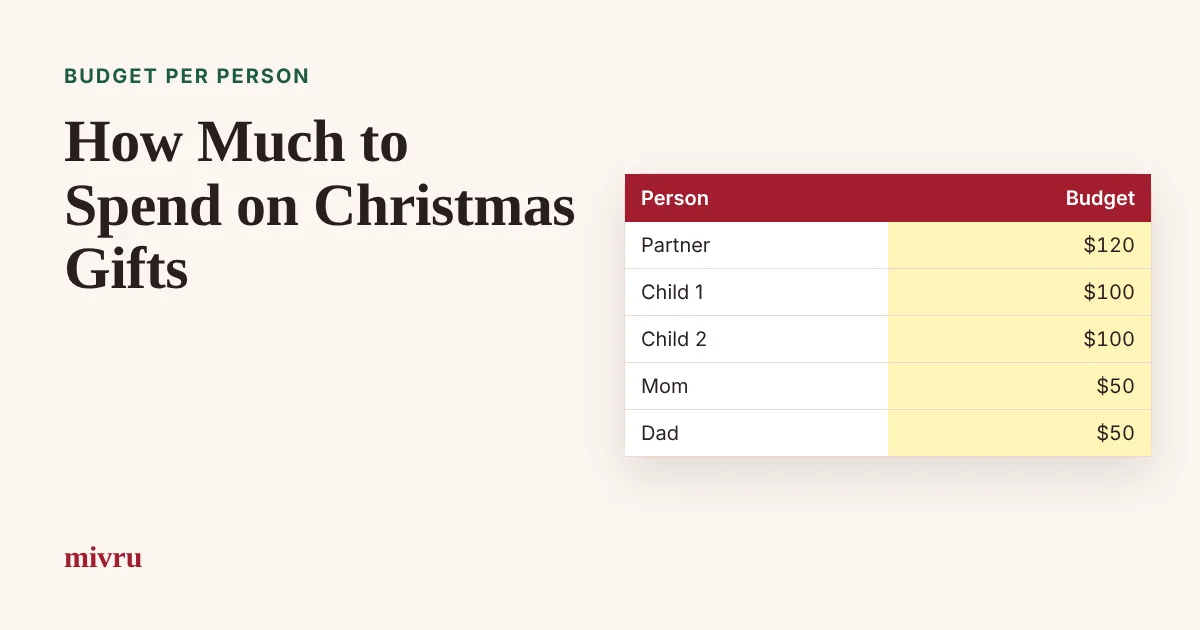
- Give everyone a gift budget before you shop. Our guide on how much to spend on Christmas gifts shows a fair way to share it out.
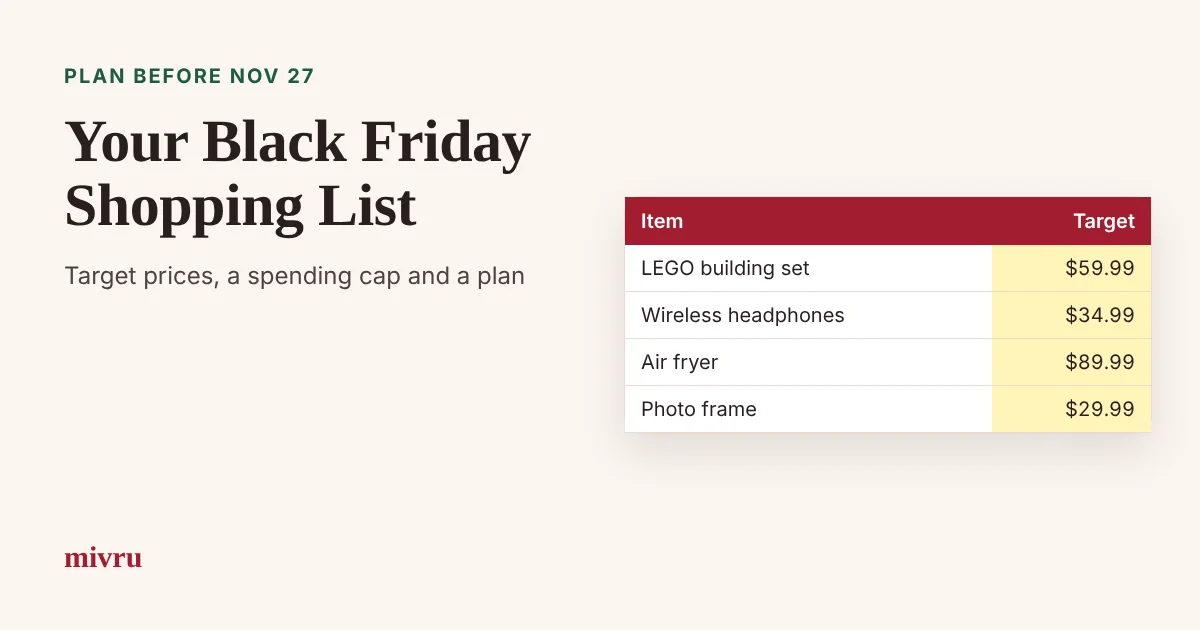
- Plan Black Friday (November 27, 2026) with target prices, so the sales stretch your savings instead of tempting you to spend more. See our Black Friday shopping list guide.
- Track spending weekly against the money you have saved, not the money you hope to have.
What if you fall behind?
Life happens. A car repair or a sick week can wipe out a savings week. If that happens:
- Do not try to double up next week if it means missing a bill. Spread the missing amount over the weeks left instead.
- Trim the plan, not the essentials. Lower the buffer or one gift category, and update your list so it matches the money you will really have.
- Move some gifts to January. A "Christmas in January" present for an adult friend is cheaper in the sales and still lovely to receive.
- Keep going. Saving $50 of a planned $75 still beats putting the whole difference on a card.
Sinking funds and Christmas clubs
A sinking fund is just money saved little by little for a known future cost — Christmas is the classic example. Some banks and credit unions offer a Christmas club account, which takes a fixed amount each payday and releases it in November. If yours does not, a separate savings account with an automatic transfer does the same job.
Step 6: Start next Christmas in January
The easiest Christmas to pay for is the one you started saving for eleven months early. Divide next year's total by 12 and set up an automatic transfer in January:
- A $600 Christmas = $50 a month
- A $900 Christmas = $75 a month
- A $1,200 Christmas = $100 a month
Do that, and next October you will be choosing gifts instead of worrying about how to pay for them.
Let a spreadsheet do the math
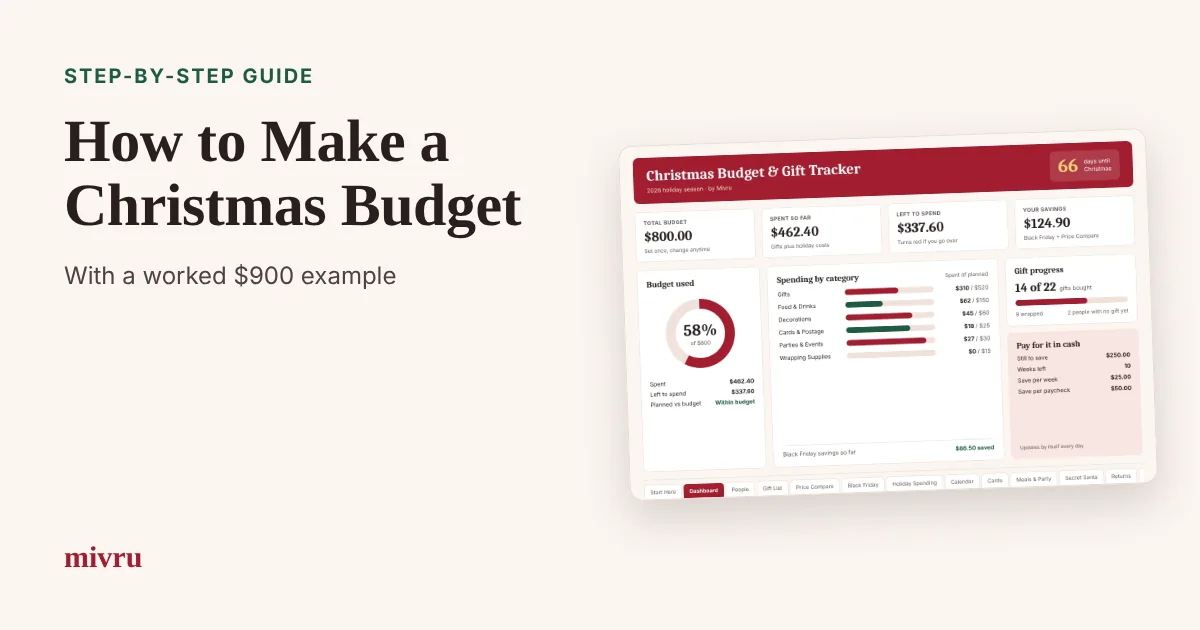
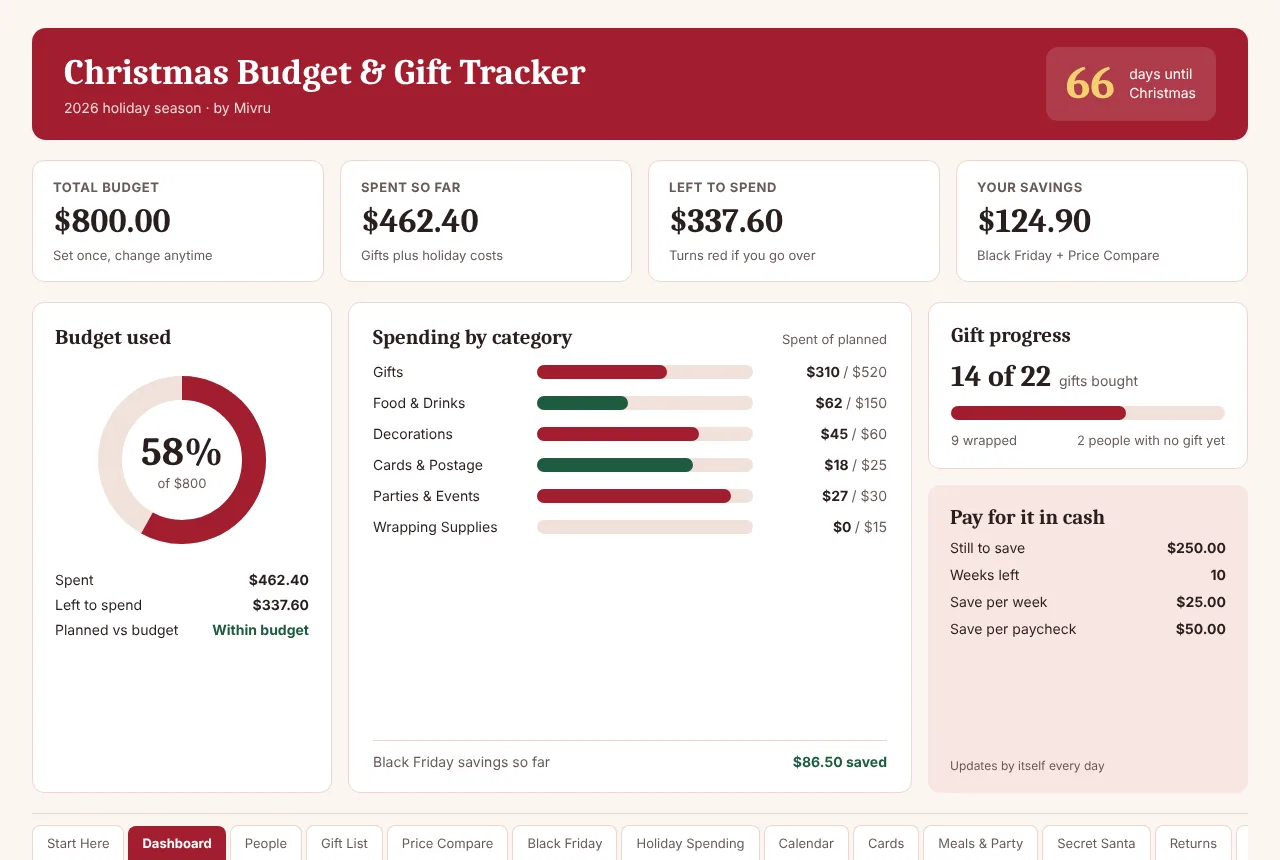
If you would rather not recalculate every week, our Christmas Budget & Gift Tracker works it out for you. Enter your total and what you have saved, and it shows what to set aside each week or each paycheck until Christmas. The Next Year tab spreads 2027's Christmas across monthly amounts, so next season is paid for before it starts.
The short version
Find your number, divide it by the weeks left, move that amount on payday into a separate account, and spend only what is already saved. It is not complicated — it just has to start this week.
Frequently asked questions
How much should I save each week for Christmas?
Take the amount you still need, subtract what you already have, and divide by the weeks left until about mid-December. In our example, $600 over 8 weeks is $75 a week, or $150 per paycheck if you are paid every two weeks.
Is it too late to start saving for Christmas in October?
No. Late October still leaves about eight weeks of paychecks before mid-December. If the weekly number is too high, lower your Christmas total now rather than borrowing later.
Where should I keep my Christmas savings?
Somewhere separate from your everyday account, so it is not spent by accident: a second savings account, a savings "pot" in your banking app, or a Christmas club account if your bank offers one.
How do I start saving for next Christmas?
Divide next year's total by 12 and set up an automatic monthly transfer in January. A $600 Christmas is $50 a month when you start early.