Christmas Card List: Who to Send To and What It Costs
Make a Christmas card list that fits your budget. See what stamps and cards really cost, with a worked example, a template and ways to send fewer cards.
Greeting cards are one of the small costs that sit outside most gift budgets. A Christmas card list fixes that. It tells you who gets a card, how many stamps to buy and what the whole job will cost before you start writing.
In our sample Christmas budget, cards get $30 of the $900 total. They belong to the seasonal items (food, decorations and cards) that made up $262.56 of the average shopper's planned spending in the National Retail Federation's 2025 survey. This guide shows what that buys, step by step.
What a Christmas card really costs
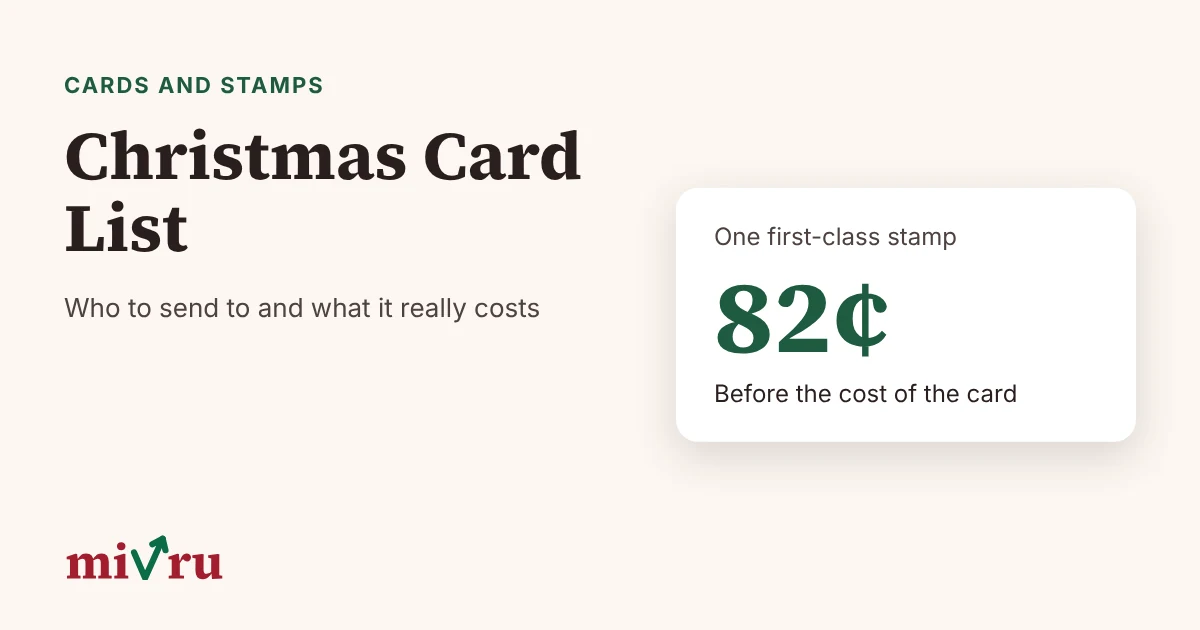
Each card has two costs: the card and the stamp. The Postal Service lists the price of a 1-ounce First-Class Mail stamped letter, the usual Forever stamp, at 82 cents on its price list. Check the current price at the post office before you buy, as stamp prices change from time to time.
Cards vary a lot in price. A box of cards might cost less than a dollar per card, while a single boutique card can cost several dollars. The amounts below are examples only.
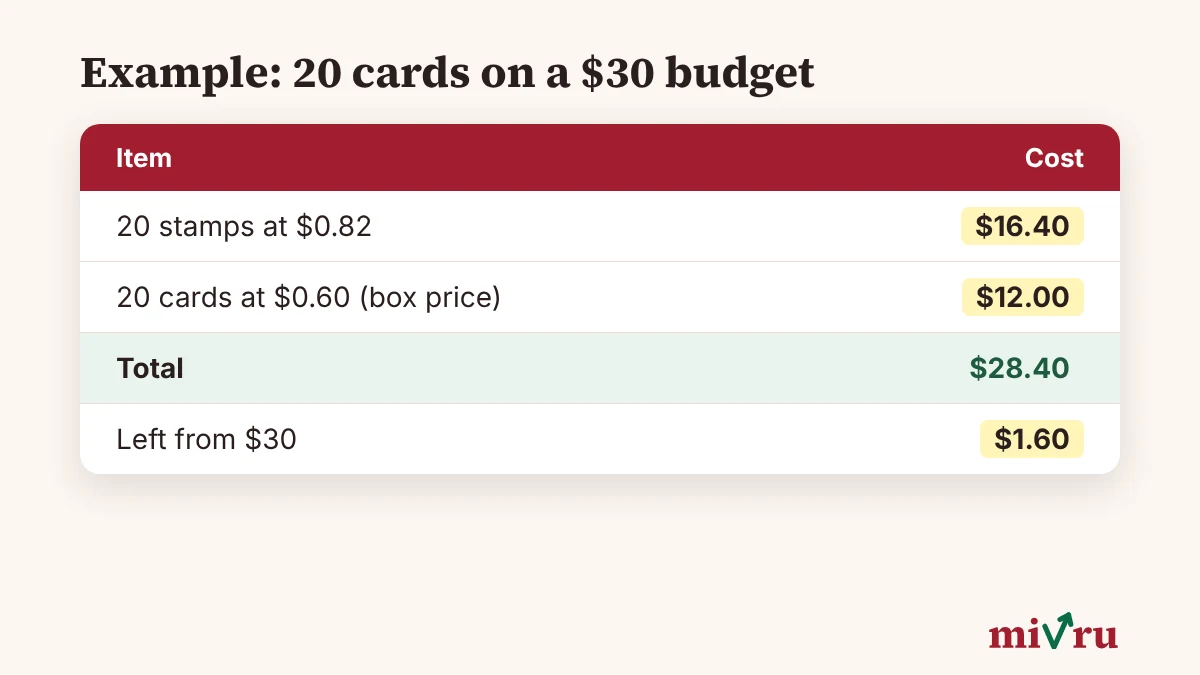
Example: a $30 card budget - 20 cards sent by post - Stamps: 20 × $0.82 = $16.40 - Cards: 20 × $0.60 (a box price, for illustration) = $12.00 - Total: $28.40, which leaves $1.60
If you want a nicer card at $2.00 each, 20 cards would cost $40 for cards plus $16.40 for stamps, which is $56.40 and well over budget.
So the number of cards matters. Doubling the list doubles the cost.
How to build the list
Step 1: write everyone down. Start with last year's list and the cards you received.
Step 2: sort the names into three groups:
- Must send: relatives and close friends you will not see before Christmas.
- Nice to send: neighbors, colleagues and old friends.
- E-card or message: people you are in contact with already, or who live nearby.
Step 3: add the addresses. Update any that changed. Check them again before you buy stamps.
Step 4: count. The number of names in groups 1 and 2 is the number of paper cards you need.
Step 5: multiply by the cost of a card plus a stamp, and compare it with your card budget.
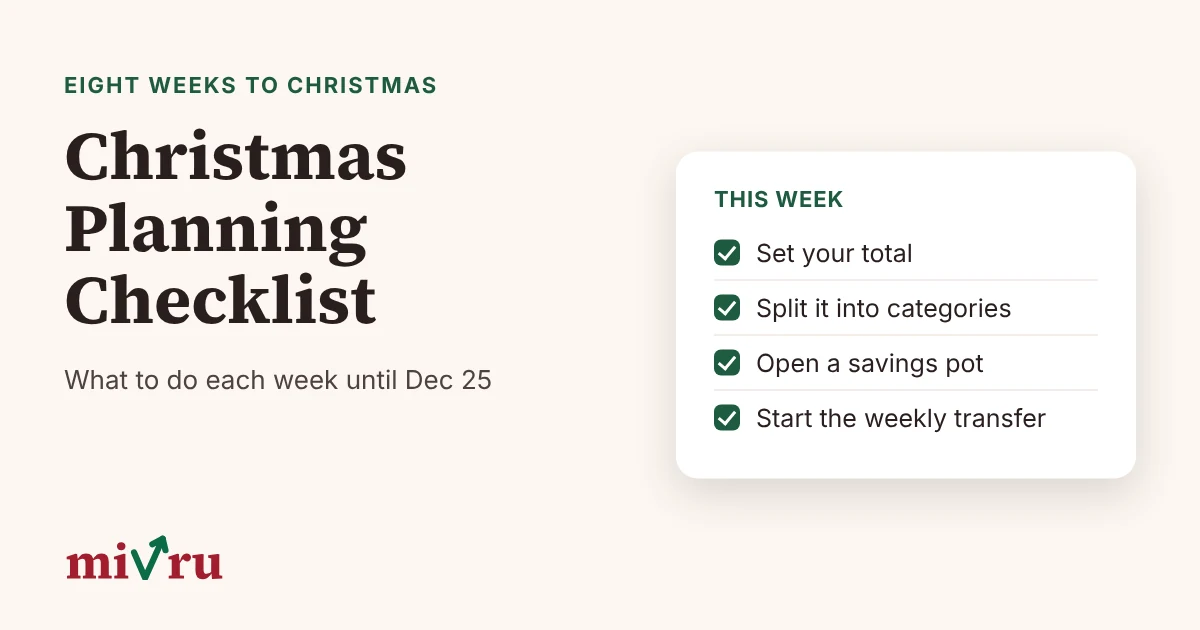
Our planning checklist shows when in the schedule to do this: write and send cards in early December.
When to send
Post cards early enough to arrive before Christmas. A good plan is the first week or two of December. The Postal Service publishes recommended mailing dates each year, and they vary by destination, so check its website before you post.
Ways to spend less on cards
- Send fewer paper cards. Keep paper for people who would love one, and use e-cards or a message for the rest.
- Buy a box, not individual cards. It usually costs much less per card.
- Buy after Christmas for next year. Many shops discount cards in January.
- Make your own with plain card and a stamp or drawing, if you enjoy it.
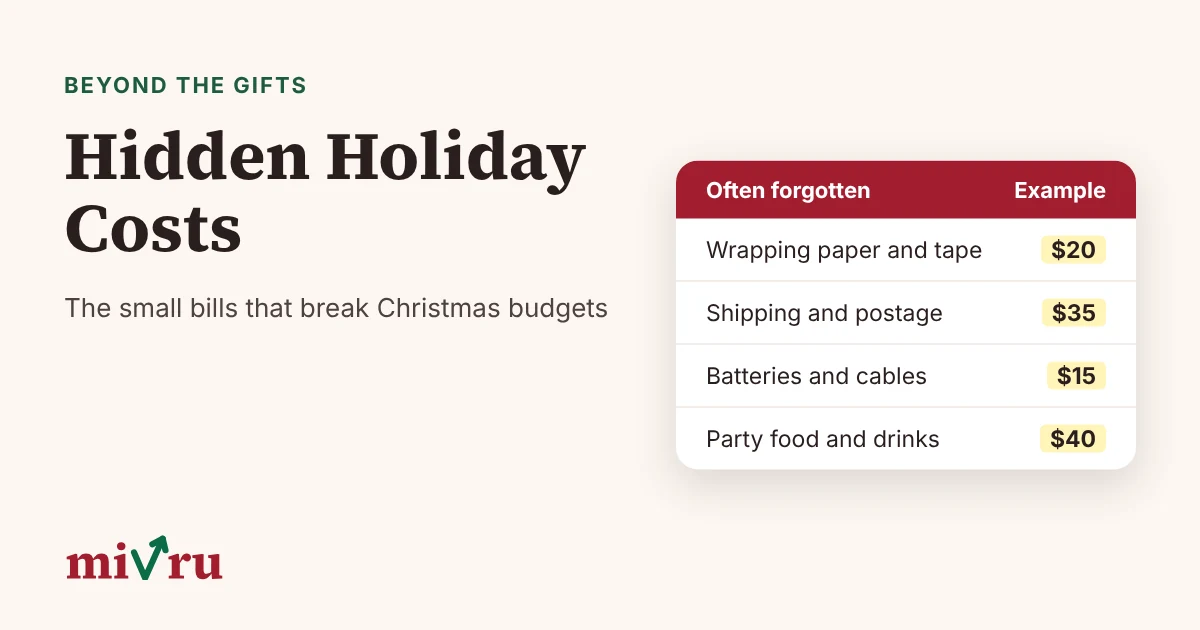
- Combine a card with a gift if you are posting one already, so you only pay once for delivery. See the shipping line in hidden holiday costs.
- Send one card per household, not one per person.
Keep the list for next year
Save the list and the number you sent, then note who sent you one. Next year you will not start from zero. A simple list with columns for name, address, sent, received is all you need.
Our free printable gift list has space for names, budgets and notes, and it works well as a card list too.
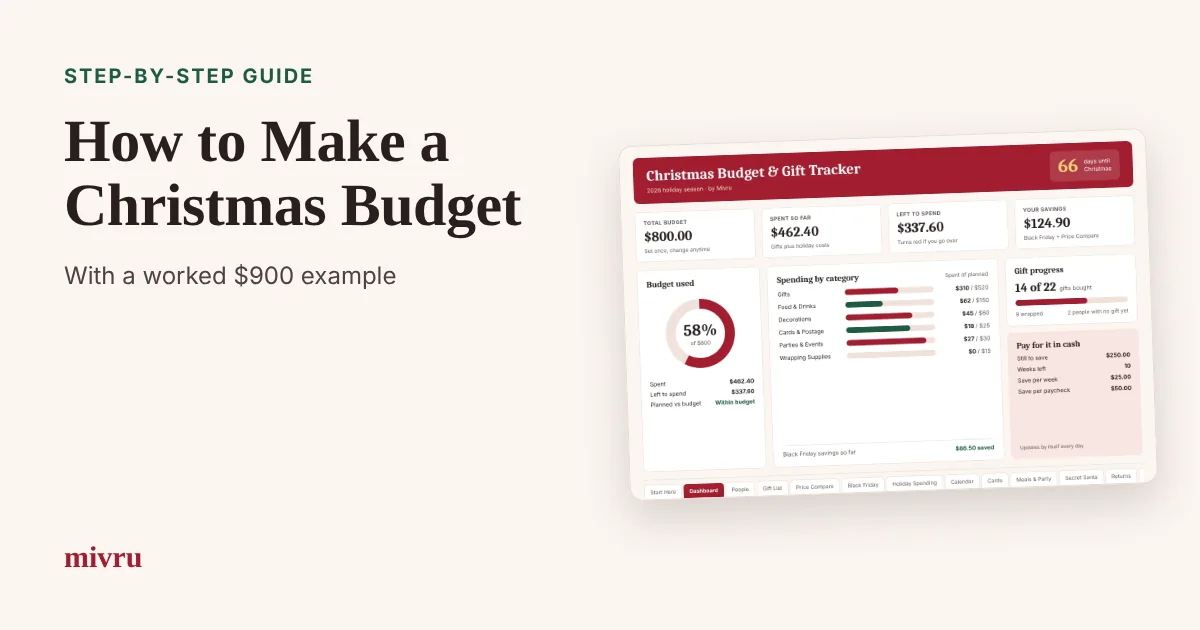
If you want your cards, gifts and extras in one budget, our Christmas Budget & Gift Tracker has a budget with a line for each category and a 22-page printable planner.
What the cost looks like for different list sizes
Using the post's figures of $0.82 a stamp and $0.60 a card (a box price, for illustration):
| Cards by post | Stamps | Cards | Total |
|---|---|---|---|
| 10 | $8.20 | $6.00 | $14.20 |
| 20 | $16.40 | $12.00 | $28.40 |
| 30 | $24.60 | $18.00 | $42.60 |
| 40 | $32.80 | $24.00 | $56.80 |
Stamps cost more than the cards in this example, so the biggest saving is to send fewer cards by post, not to buy cheaper cards.
How to decide who gets a card
- Start with last year's list. Add anyone new and remove anyone who has moved or passed away.
- Mark the people you would be sorry to lose touch with. They go first.
- Mark those you can reach another way. A message or call may be enough.
- Count the list and check the cost in the table. If it is over your budget, cut the people you see often.
Keep the list from year to year
Save the list in a spreadsheet or a notebook with the name, the address, whether you sent a card this year and whether you got one. After two or three years you will see who keeps in touch, which makes the next year's list easier to cut or grow.
Summary
A Christmas card costs the card plus a stamp. A first-class stamp is 82 cents at the time of writing, so 20 cards cost $16.40 in stamps alone. Decide who gets a paper card, count them, multiply by the full cost, and send early in December.
Frequently asked questions
How much does it cost to send Christmas cards?
Each card needs a card and a stamp. A first-class stamp costs 82 cents, so 20 cards cost $16.40 in stamps before the cards themselves.
When should I send Christmas cards?
Plan to post them in the first week or two of December. Check the Postal Service website for its recommended mailing dates, which vary for each destination.
How do I decide who gets a Christmas card?
Start with people you will not see in person before Christmas, plus anyone who sent you one last year. Then decide whether each remaining name is worth a stamp.
Is it okay to send e-cards instead?
Yes, many people do. E-cards are free or cheap, and they work well for friends and colleagues. Save paper cards for relatives and people who would love to get one.