Secret Santa Budget: How to Set a Price Limit Everyone Likes
Set a Secret Santa budget that works for everyone. Learn how to pick a price limit, run the draw, handle wishlists and avoid awkward gift mismatches.
Secret Santa is one of the easiest ways to cut Christmas costs: instead of buying for everyone, each person buys one gift. It only works if the Secret Santa budget is fair. Set it too high and some people feel stretched. Set it too low and the gifts feel like an afterthought.
For scale, the National Retail Federation's 2025 survey found the average shopper planned to spend $627.93 on gifts, so one $25 gift is a small part of a normal gift budget.
This guide explains how to pick a price limit, run the draw and keep it fun for everyone, whether you are organising it at work, with friends or for the family.
How Secret Santa works
- Everyone in the group puts their name in a hat (or an online draw).
- Each person draws one name and keeps it secret.
- Everyone buys one gift for that person, within the agreed price limit.
- Gifts are exchanged on an agreed day, often with a guessing game.
The big saving is simple. In a group of 10, a normal gift swap means each person buys nine gifts. With Secret Santa they buy one.
Example: the savings in a group of 10
These numbers are an example, not averages.
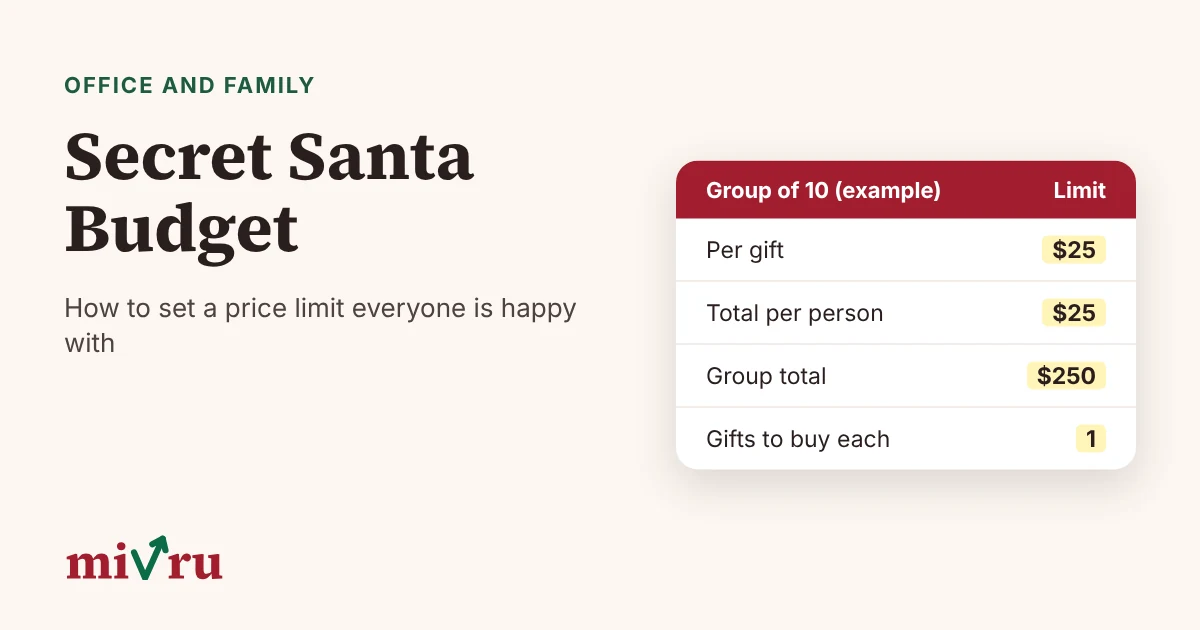
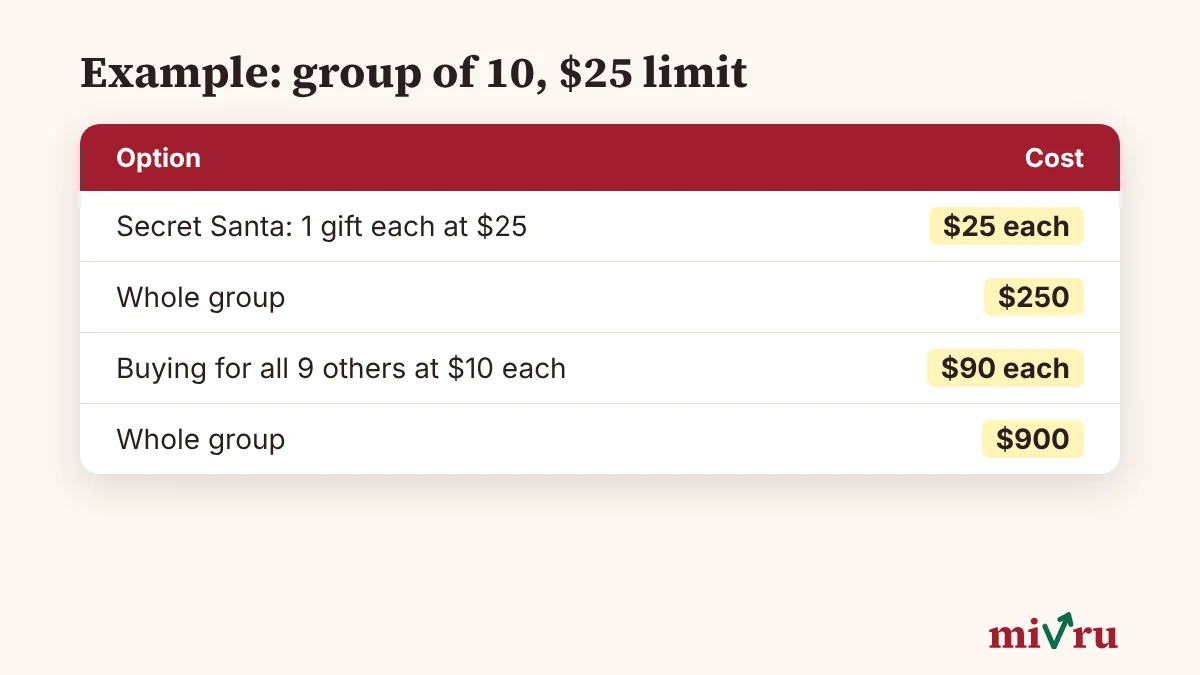
Group of 10 with a $25 limit - Each person buys 1 gift, so spends about $25 - The whole group spends $250 in total - Without Secret Santa, 9 gifts at $10 each would cost $90 per person, or $900 across the group
Even with a bigger limit, one thoughtful gift costs far less than buying for everyone, and the saved money can go back into your plan. See how to make a Christmas budget for the full example.
How to choose the price limit
Ask what the least comfortable person in the group can afford. Then use these steps:
- Start low. $15 to $25 is common, and $10 works well for large groups or when money is tight.
- Include tax and shipping in the limit.
- Take a quick vote or poll if there is no clear answer. A private message to the organiser is better than a group chat.
- Say what counts: gift cards, handmade gifts and second-hand items can all be allowed.
- Write it in the invitation. "$20 including tax, handmade gifts welcome" leaves no room for doubt.
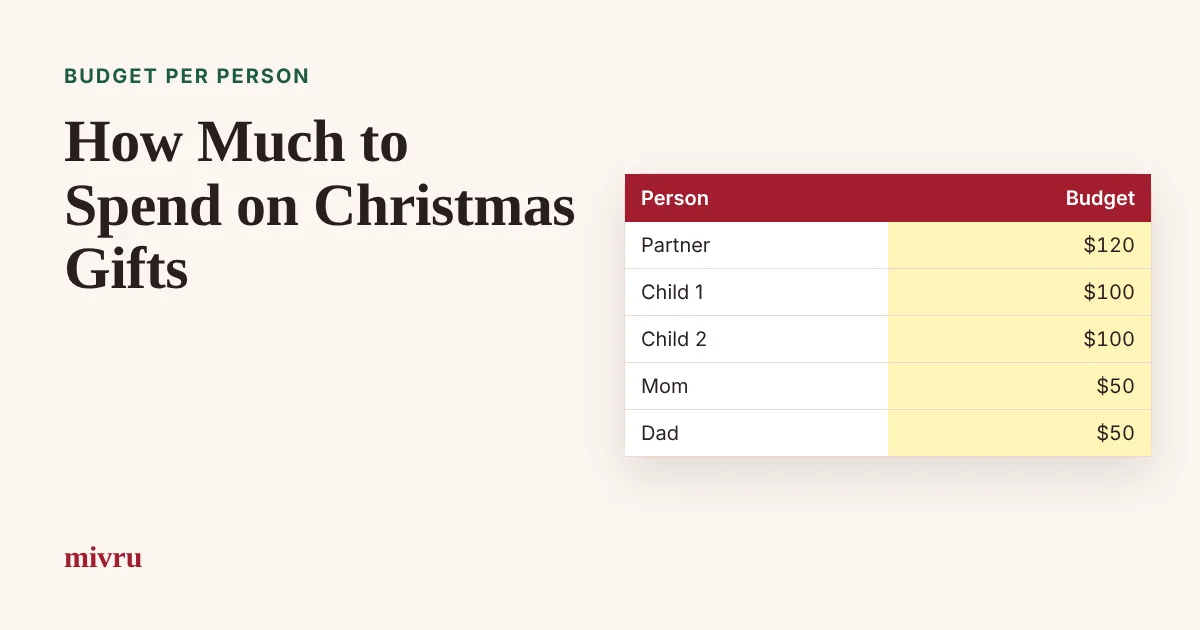
Our guide on how much to spend on Christmas gifts explains how to think about the number against your own gift budget.
Rules that keep it fair
- Everyone gives and receives one gift. No exceptions for the organiser.
- Do not go over the limit. If it is a surprise, the whole group notices.
- Add a wishlist. Each person lists three ideas at different prices. It prevents duplicates and "what do I buy?" panic.
- Set a date to buy by. Many gifts are bought the night before, which usually costs more.
- No names in the group chat. Use a private link or a draw app for the names.
- Plan for who is missing. Decide in advance what happens if someone drops out.
Gift ideas that fit most limits
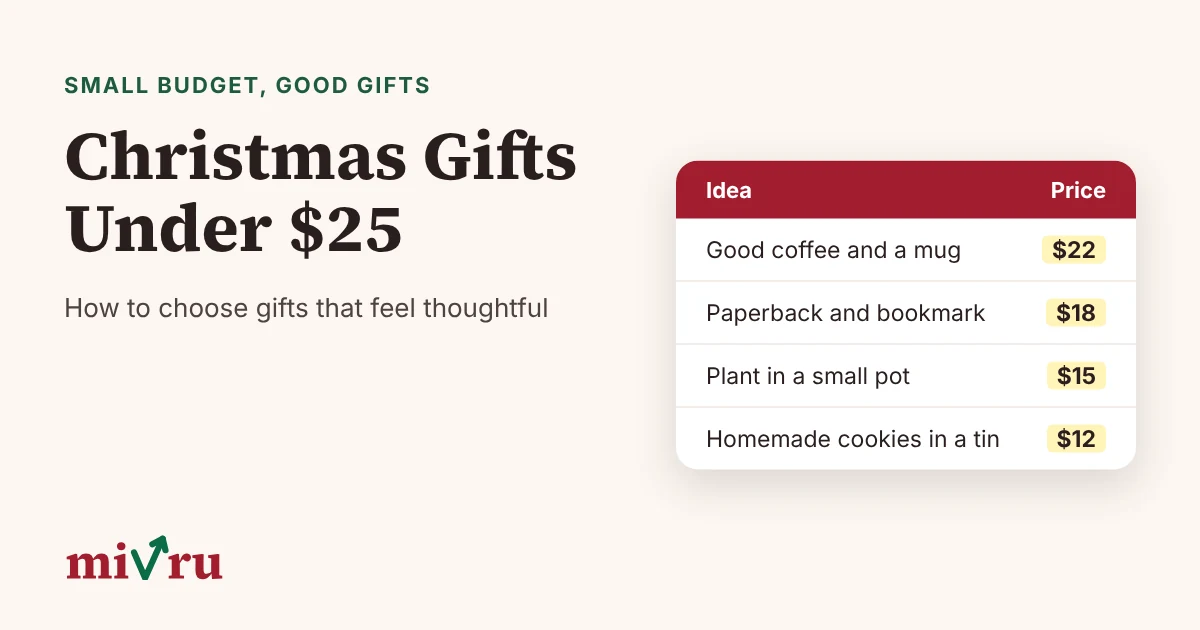
If you need ideas, our guide to Christmas gifts under $25 lists categories that work for almost anyone. Gift cards are a common choice in Secret Santa groups, and scams involving them are common too. The FTC has advice on how to check gift cards before you buy them.
For a tight budget
If money is tight, suggest a low limit of $10 and allow handmade gifts. Our Christmas on a tight budget guide has more ways to cut costs without feeling like you are doing less.
Keep your Secret Santa organised
Write down who you drew, their wishlist, the price limit and the day you need to buy by. The free printable gift list is a good place for this.
If you are also buying for others, our Christmas Budget & Gift Tracker tracks every name, budget and purchase in one place.
What different group sizes and limits cost
Total spending for the group is simply the number of people times the price limit, because each person buys one gift.
| People | $20 limit | $25 limit | $30 limit |
|---|---|---|---|
| 6 | $120 | $150 | $180 |
| 10 | $200 | $250 | $300 |
| 15 | $300 | $375 | $450 |
| 20 | $400 | $500 | $600 |
Example: In the group of 10 with a $25 limit, the group spends $250 in total and each person spends about $25. Buying separate $10 gifts for the other nine would cost each person $90.
Picking a limit that everyone can afford
Ask the group to name a number they are comfortable with, and then choose the lowest of the numbers that were suggested. A limit that is easy for one person and hard for another is not a fair limit. If someone is on a tight budget, a lower limit or a handmade-gift rule helps everyone.
How to run it smoothly
- Draw names in one place and one time. A shared list or a hat works.
- Tell everyone the limit, the date and the delivery plan in the same message.
- Ask for a short wish list. Three ideas per person is enough.
- Set a date for gifts to be bought. It stops last-minute scrambles.
- Keep a record of the names and the limit. Next year you can reuse it.
Summary
A good Secret Santa budget is one the least comfortable person can afford. Pick a low limit, include tax and shipping, ask for wishlists, set a buying deadline and keep names private. Done well, it cuts the cost of Christmas and makes the gifts more thoughtful.
Frequently asked questions
What is a good Secret Santa price limit?
$20 to $25 is common for workplaces and friend groups, and $10 to $15 works well when money is tight. The best limit is one every person in the group can afford without worry.
How does Secret Santa work?
Everyone in a group draws one name at random and buys one gift for that person, within an agreed price limit. Gifts are opened together, often with a guessing game about who gave what.
Should the price limit include tax and shipping?
Yes, say so in the rules. A limit of $25 total is clearer than $25 before tax and shipping, and it stops the amount creeping up.
What if someone cannot afford the limit?
Offer a low limit from the start, allow handmade gifts and make joining optional. A group is more welcoming if no one has to explain why they opted out.